


The evaluation of risk-benefit ratio for gut tissue sampling in HIV cure research
- PMID: 29057085
- PMCID: PMC5632548
- DOI: 10.1016/S2055-6640(20)30316-2
The evaluation of risk-benefit ratio for gut tissue sampling in HIV cure research
Abstract
Introduction: Antiretroviral therapy (ART) does not cure HIV infection due to the persistence of HIV reservoirs in long-lived memory CD4 T cells present in the blood, lymph nodes, intestinal tract, and other tissues. Interest grows in obtaining gut-tissue samples for HIV persistence studies, which poses an ethical challenge to provide study volunteers with adequate information on risks and benefits. Herein we assess the risks and benefits of undergoing gut biopsy procedures for HIV pathogenesis and reservoir studies.
Methods: A group discussion was organised with physicians and community representatives on performing either a flexible sigmoidoscopy or a colonoscopy. Consensus was reached on conducting colonoscopy in persons ≥50 years. Thirty HIV-infected, ART-treated and nine uninfected participants were recruited. Colonoscopy was performed to collect 30 gut mucosal biopsies. When present, polyps were removed and abnormal mucosal findings were biopsied for pathological analysis. Participants were interviewed on potential discomfort following colonoscopic examination.
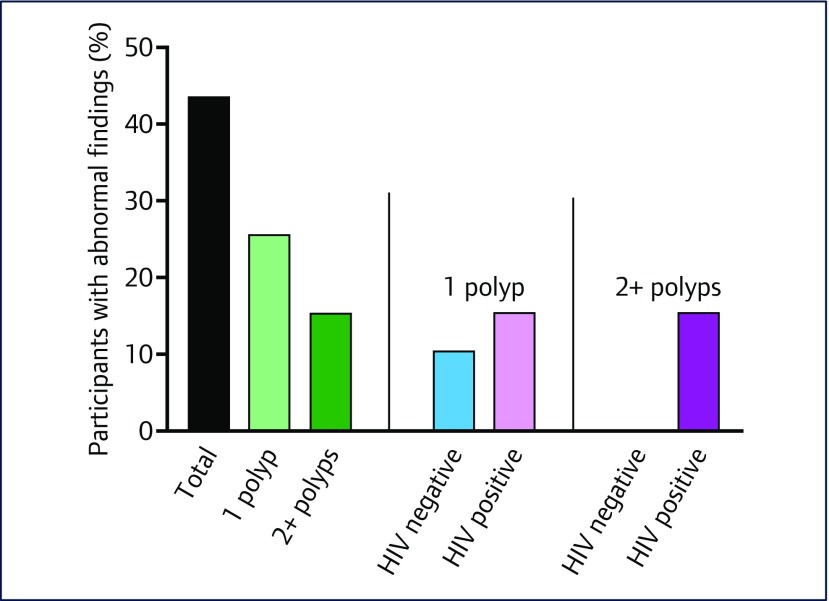
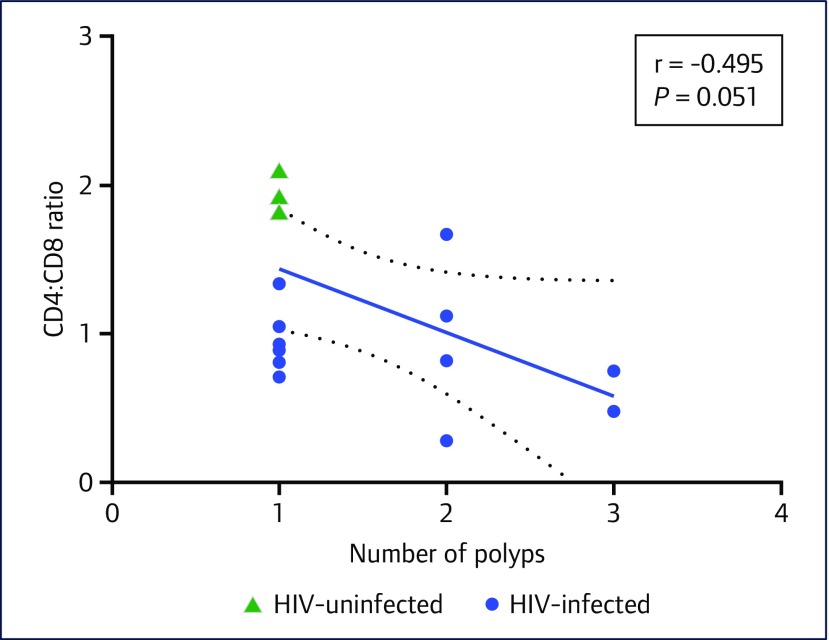
Results: The HIV-infected and uninfected groups were comparable in terms of age and gender with more men who have sex with men (MSM) in the former group. Abnormal colonoscopic findings were observed in 43.6% of all the participants and did not differ by HIV status. In total, 24 polyps were removed with a higher mean number of polyps removed in HIV-infected versus uninfected participants (1.7 vs 1.0, P=0.013). The number of polyps marginally correlated with inverted CD4:CD8 ratio. Based on our findings, colonoscopic examination was safe to use for gut biopsy procedures where almost half of the participants had polyps removed.
Conclusion: Participation in the study provided colon cancer screening as an ancillary benefit that participants could have received in standard medical care, thus mitigating burdens of invasive procedures. Dialogue between community representatives and clinical researchers can increase participation and advance HIV cure research.
Keywords: HIV cure research, colonoscopy, risks/benefits, polyps, gut mucosal biopsy, ageing.
Figures
References
-
- World Health Organization 2016. Prevent HIV, test and treat all – WHO support for country impact. Available at: http://www.who.int/hiv/pub/progressreports/2016-progress-report/en/ ( accessed September 2017).
-
- Boulassel MR, Chomont N, Pai NP et al. . CD4 T cell nadir independently predicts the magnitude of the HIV reservoir after prolonged suppressive antiretroviral therapy. J Clin Virol 2012; 53: 29– 32. - PubMed
Publication types
LinkOut - more resources
Full Text Sources
Research Materials