


Silencing Nfix rescues muscular dystrophy by delaying muscle regeneration
- PMID: 29057908
- PMCID: PMC5651883
- DOI: 10.1038/s41467-017-01098-y
Silencing Nfix rescues muscular dystrophy by delaying muscle regeneration
Abstract
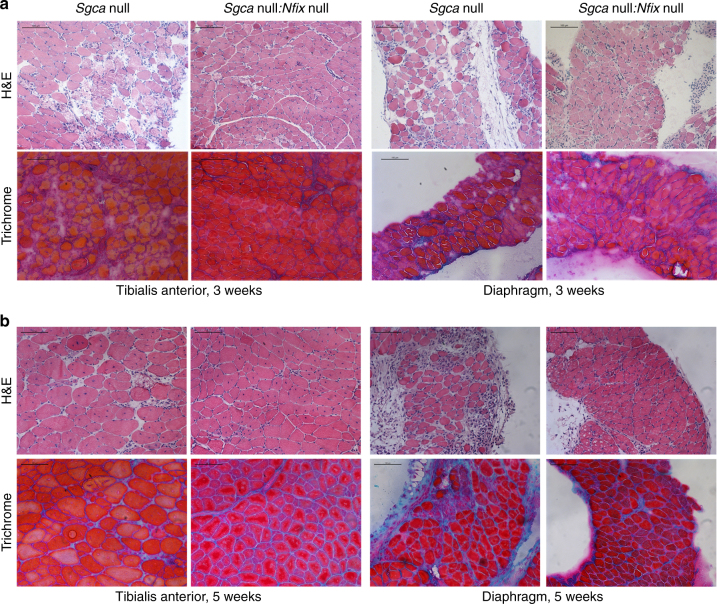
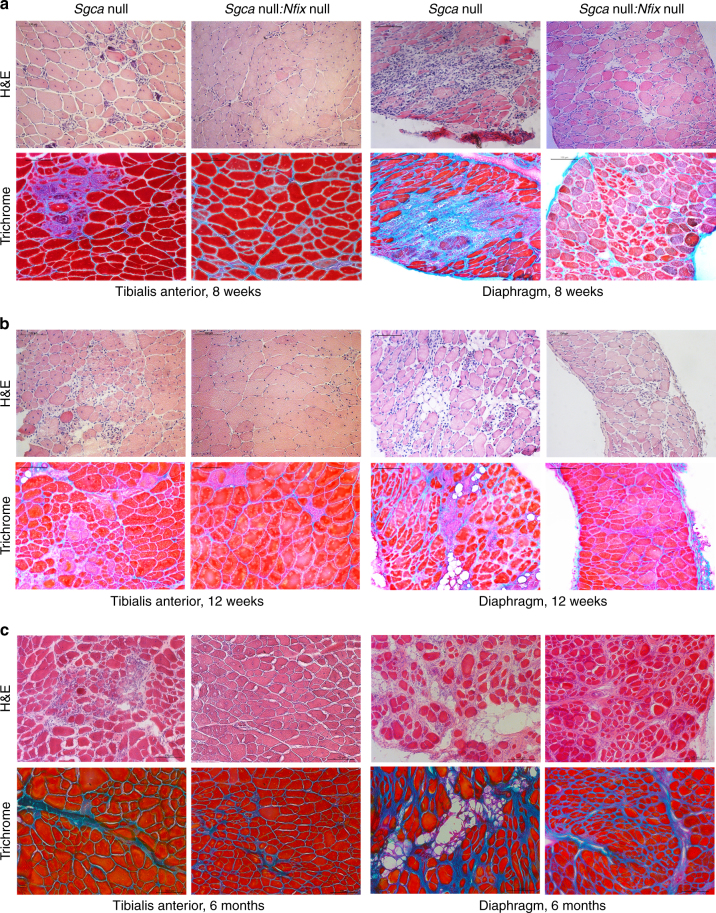
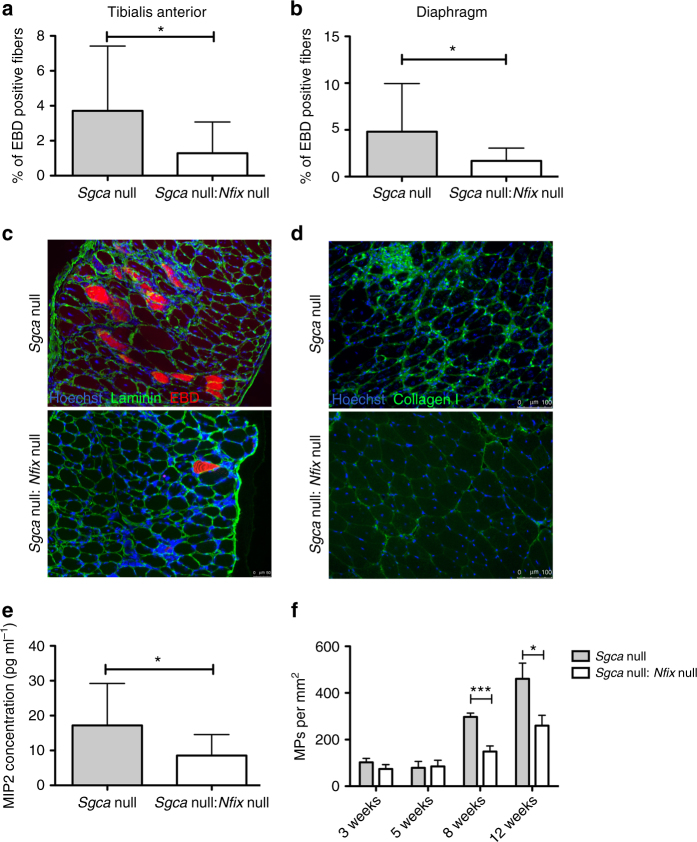
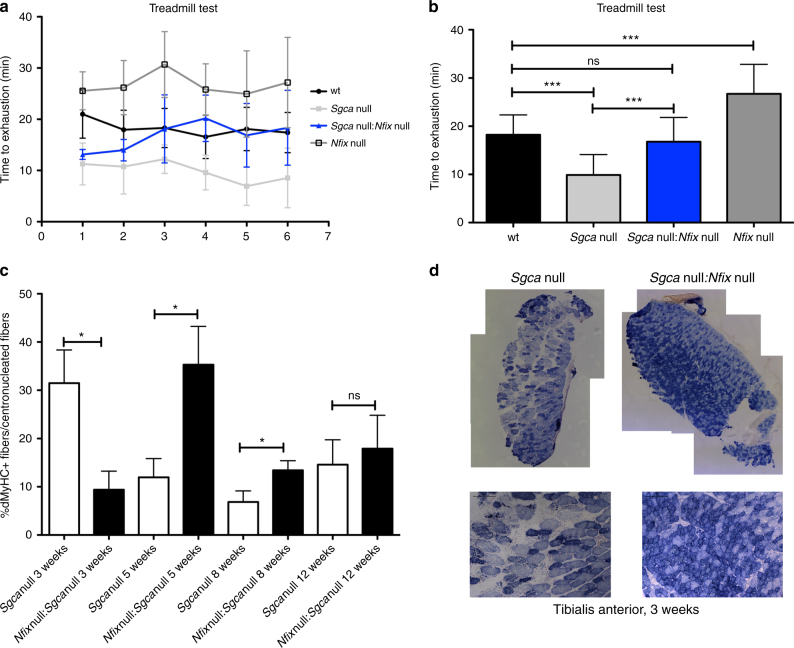
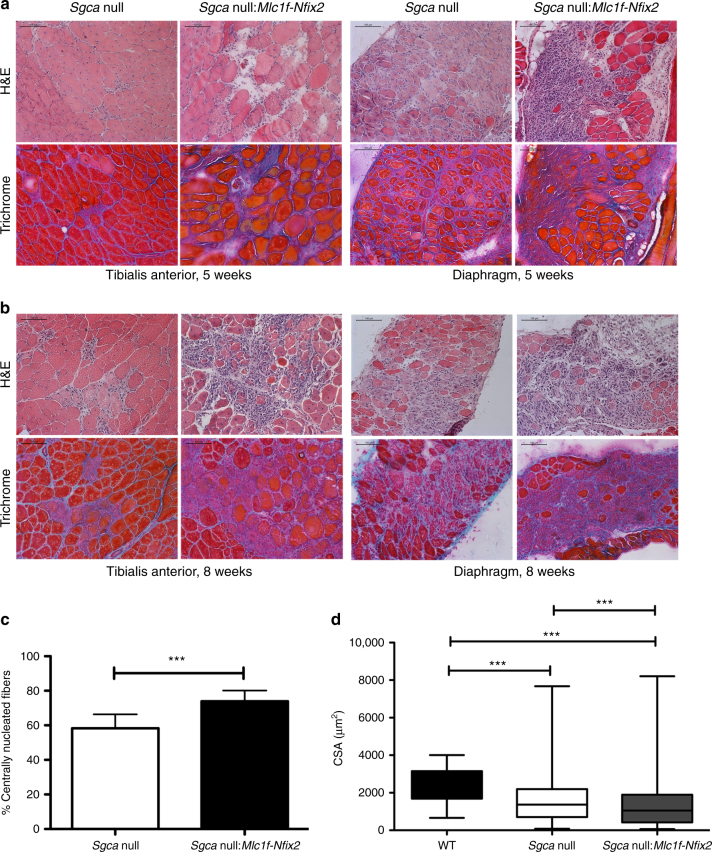
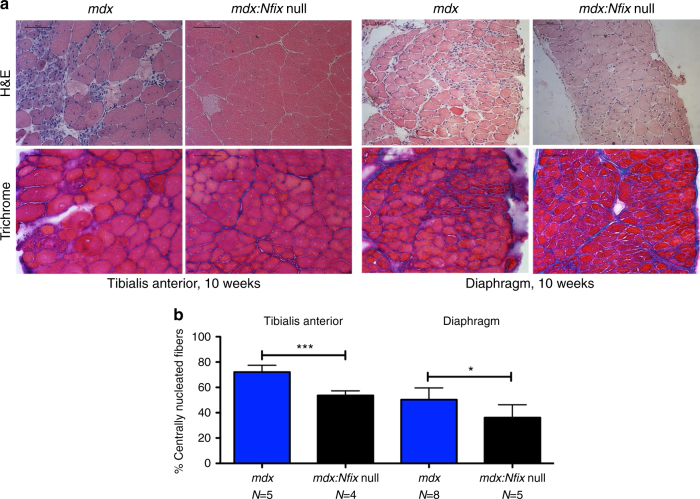
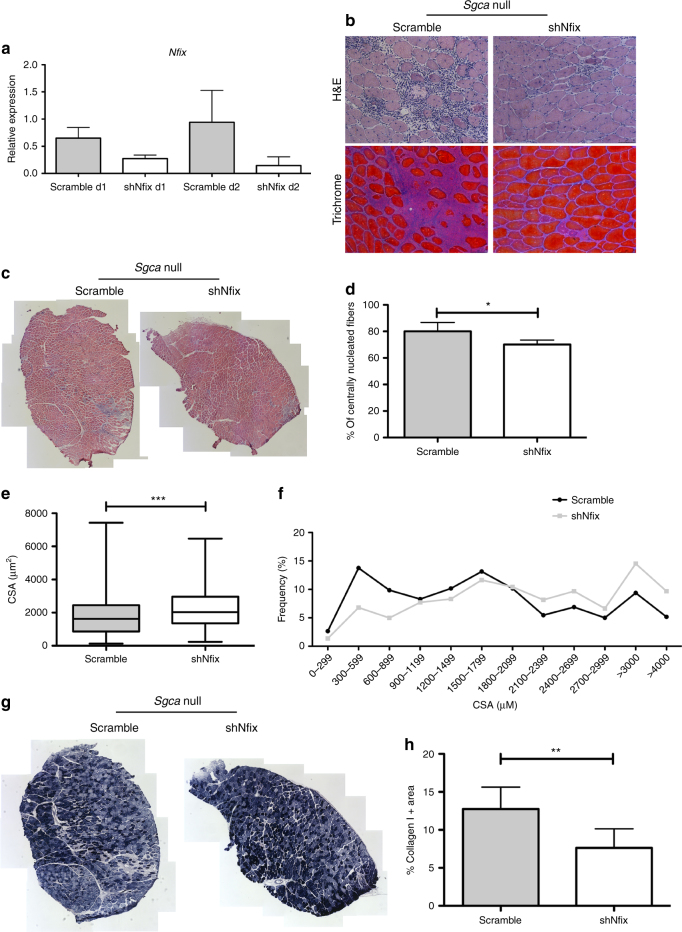
Muscular dystrophies are severe disorders due to mutations in structural genes, and are characterized by skeletal muscle wasting, compromised patient mobility, and respiratory functions. Although previous works suggested enhancing regeneration and muscle mass as therapeutic strategies, these led to no long-term benefits in humans. Mice lacking the transcription factor Nfix have delayed regeneration and a shift toward an oxidative fiber type. Here, we show that ablating or silencing the transcription factor Nfix ameliorates pathology in several forms of muscular dystrophy. Silencing Nfix in postnatal dystrophic mice, when the first signs of the disease already occurred, rescues the pathology and, conversely, Nfix overexpression in dystrophic muscles increases regeneration and markedly exacerbates the pathology. We therefore offer a proof of principle for a novel therapeutic approach for muscular dystrophies based on delaying muscle regeneration.
Conflict of interest statement
The authors declare no competing financial interests.
Figures
Comment in
-
Targeting Nfix to fix muscular dystrophies.Cell Stress. 2017 Dec 12;2(1):17-19. doi: 10.15698/cst2018.01.121. Cell Stress. 2017. PMID: 31225448 Free PMC article.
References
-
- Urtasun M, et al. Muscular dystrophy due to a mutation in the gene of alpha-sarcoglycan subunit of dystrophin associated protein complex. Med. Clin. 1998;110:538–542. - PubMed
Publication types
MeSH terms
Substances
LinkOut - more resources
Full Text Sources
Other Literature Sources
Medical
Molecular Biology Databases
