


An Effective Intervention for Diabetic Lipohypertrophy: Results of a Randomized, Controlled, Prospective Multicenter Study in France
- PMID: 29058477
- PMCID: PMC5750448
- DOI: 10.1089/dia.2017.0165
An Effective Intervention for Diabetic Lipohypertrophy: Results of a Randomized, Controlled, Prospective Multicenter Study in France
Abstract
Background: Lipohypertrophy (LH) is highly prevalent and is potentially harmful to insulin-injecting patients.
Methods: In this study, we assessed the impact of injection technique (IT) education, including use of a 4-mm pen needle on insulin-treated patients with clinically observed LH in a randomized, controlled, prospective multicenter study in France with follow-up of 6 months. Intensive education and between-visit reinforcement were given to the intervention group. Control patients received similar messages at study outset.
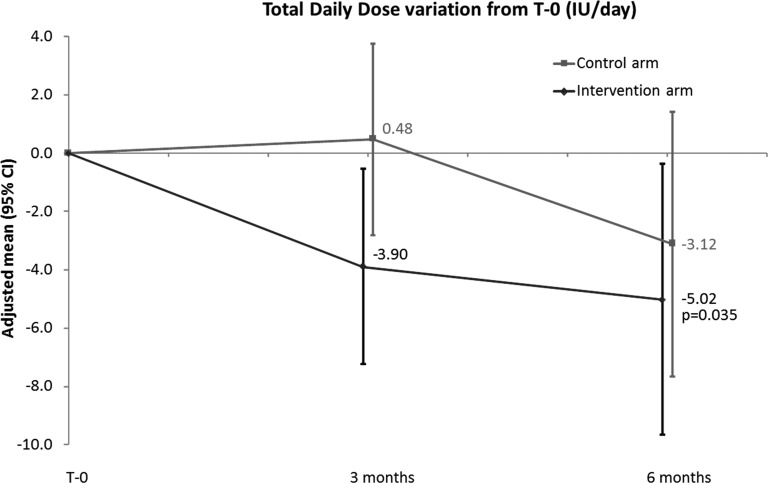
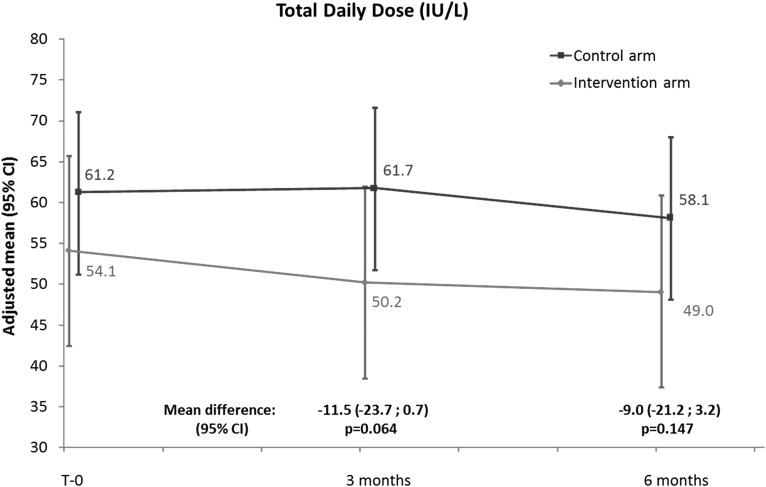
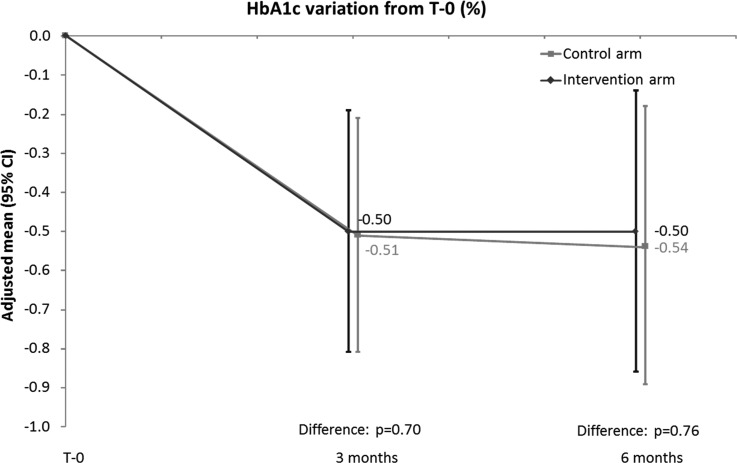
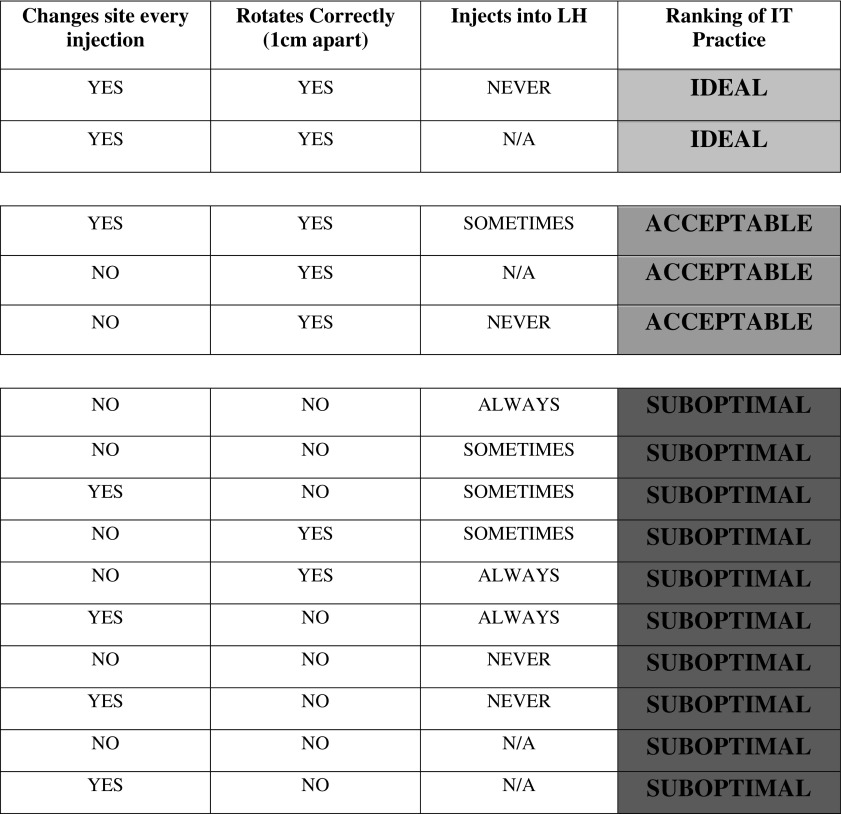
Results: A total of 123 patients were recruited (age 52.1 ± 15.7 years; men 70.7%; body mass index >30 kg/m2: 34.2%; type 1: 53.7%; years with diabetes mellitus: 18.1 ± 10.5), of which 109 patients were included in the final analysis. The intervention group (n = 53) showed a significant decrease of total daily dose of insulin (average at baseline: 54.1 IU) at 3 months (T-3) and 6 months (T-6), reaching just over 5 IU versus baseline (P = 0.035). Corresponding, although not significant, decreases occurred in controls (n = 56); between-group differences were not significant. There were significant decreases in HbA1c (up to 0.5%) at T-3 and T-6 in both groups, with no significant differences between groups. A significant number of intervention patients improved their IT habits; about half achieved ideal IT habits by T-3 versus a quarter of control patients. By T-6, 2/3 of intervention patients achieved either ideal or acceptable IT habits, while only 1/3 of control patients did.
Conclusions: Our intervention was effective in both study arms, however, to a greater degree and more rapidly in the intervention group. Widespread application of this intervention could be highly cost-effective.
Keywords: Injections; Insulin; Lipodystrophy; Lipohypertrophy; Needles; Subcutaneous.
Conflict of interest statement
Authors K.W.S., L.H., D.M., and C.A. are employees of BD, a manufacturer of injecting devices. All other authors declare they have no conflict of interests.
Figures
References
-
- Hajheydari Z, Kashi Z, Akha O, Akbarzadeh S: Frequency of lipodystrophy induced by recombinant human insulin. Eur Rev Med Pharmacol Sci 2011;15:1196–1201 - PubMed
-
- Raile K, Noelle V, Landgraf R, Schwarz HP: Insulin antibodies are associated with lipoatrophy but also with lipohypertrophy in children and adolescents with type 1 diabetes. Exp Clin Endocrinol Diabetes 2001;109:393–396 - PubMed
-
- Partanen TM, Rissanen A: Insulin injection practices. Pract Diab Int 2000;17:252–254
-
- Kordonouri O, Lauterborn R, Deiss D: Lipohypertrophy in young patients with type 1 diabetes. Diabetes Care 2002;25:634 - PubMed
-
- Seyoum B, Abdulkadir J: Systematic inspection of insulin injection sites for local complications related to incorrect injection technique. Trop Doct 1996;26:159–161 - PubMed
Publication types
MeSH terms
Substances
LinkOut - more resources
Full Text Sources
Other Literature Sources
Medical
