


Toll-Like Receptor Signaling in Burn Wound Healing and Scarring
- PMID: 29062590
- PMCID: PMC5649422
- DOI: 10.1089/wound.2017.0733
Toll-Like Receptor Signaling in Burn Wound Healing and Scarring
Abstract
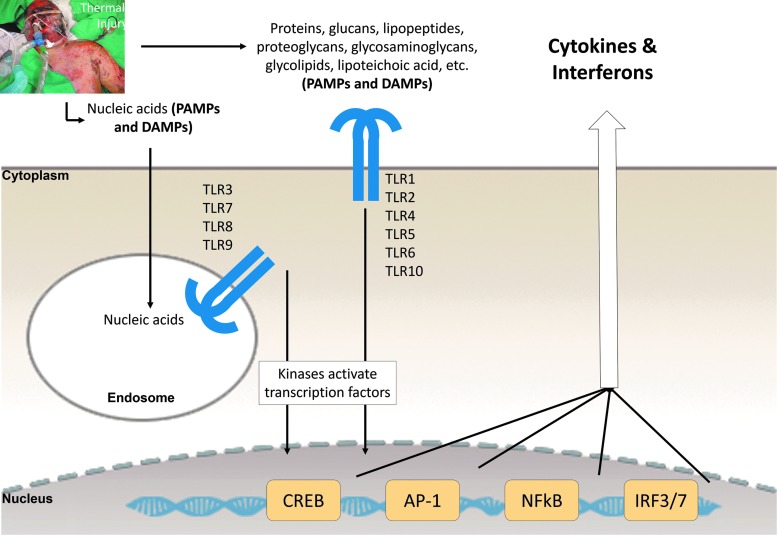
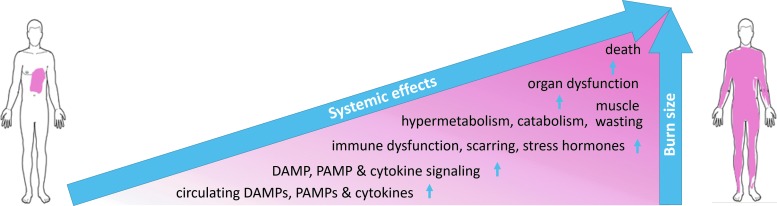
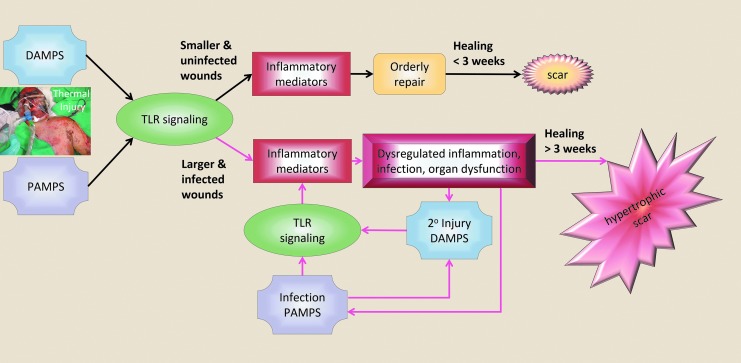
Significance: Damage-associated molecular patterns (DAMPs) and pathogen-associated molecular patterns (PAMPs) emanate from burn-injured tissue and enter systemic circulation. Locally and systemically, they activate pattern-recognition receptors, including toll-like receptors (TLRs), to stimulate cytokine secretion, which in the severest burns typically results in extreme systemic cytokine levels, a dysfunctioning immune system, infection, impaired healing, and excessive scarring. This system-wide disruption of homeostasis can advance to life-threatening, multiorgan dysfunction syndrome. Knowledge of DAMP- and PAMP-TLR signaling may lead to treatments that ameliorate local and systemic inflammation and reduce scarring and other burn injury sequela. Recent Advances: Many PAMPs and DAMPs, the TLRs they activate, and their downstream signaling molecules have been shown to contribute to local and systemic inflammation and tissue damage following burn injury. Critical Issues: Whether TLR-pathway-targeting treatments applied at different times postburn injury might improve scarring remains an open question. The evaluation of this question requires the use of appropriate preclinical and clinical burn models carried out until after mature scar has formed. Future Directions: After TLR-pathway-targeting treatments are evaluated in porcine burn wound models and their safety is demonstrated, they can be tested in proof-of-concept clinical burn wound models.
Keywords: burns; experimental models; inflammation; scar; tissue death.
Conflict of interest statement
The authors do not have any commercial or financial conflicts of interest to declare. This article was written exclusively by the authors without ghostwriters.
Figures

References
-
- Kwan PO, Ding J, Tredget EE. Serum Decorin, IL-1beta, and TGF-beta predict hypertrophic scarring postburn. J Burn Care Res 2016;37:356–366 - PubMed
-
- Allgower M, Schoenenberger GA, Sparkes BG. Pernicious effectors in burns. Burns 2008;34 Suppl 1:S1–S55 - PubMed
-
- O'Neill LA, Golenbock D, Bowie AG. The history of Toll-like receptors—redefining innate immunity. Nat Rev Immunol 2013;13:453–460 - PubMed
Publication types
LinkOut - more resources
Full Text Sources
Other Literature Sources
