. 2017 Oct 19:5:e3933.
doi: 10.7717/peerj.3933. eCollection 2017.

The neuroprotective effect of nicotine in Parkinson's disease models is associated with inhibiting PARP-1 and caspase-3 cleavage

Affiliations

The neuroprotective effect of nicotine in Parkinson's disease models is associated with inhibiting PARP-1 and caspase-3 cleavage

Justin Y D Lu et al. PeerJ. .

Abstract

Clinical evidence points to neuroprotective effects of smoking in Parkinson's disease (PD), but the molecular mechanisms remain unclear. We investigated the pharmacological pathways involved in these neuroprotective effects, which could provide novel ideas for developing targeted neuroprotective treatments for PD. We used the ETC complex I inhibitor methylpyridinium ion (MPP+) to induce cell death in SH-SY5Y cells as a cellular model for PD and found that nicotine inhibits cell death. Using choline as a nicotinic acetylcholine receptor (nAChR) agonist, we found that nAChR stimulation was sufficient to protect SH-SY5Y cells against cell death from MPP+. Blocking α7 nAChR with methyllycaconitine (MLA) prevented the protective effects of nicotine, demonstrating that these receptors are necessary for the neuroprotective effects of nicotine. The neuroprotective effect of nicotine involves other pathways relevant to PD. Cleaved Poly (ADP-ribose) polymerase-1 (PARP-1) and cleaved caspase-3 were decreased by nicotine in 6-hydroxydopamine (6-OHDA) lesioned mice and in MPP+-treated SH-SY5Y cells. In conclusion, our data indicate that nicotine likely exerts neuroprotective effects in PD through the α7 nAChR and downstream pathways including PARP-1 and caspase-3. This knowledge could be pursued in future research to develop neuroprotective treatments for PD.

Keywords: 6-OHDA; Caspase-3; MPP+; Mouse; Neuroprotection; Nicotine; PARP-1; Parkinson’s disease; Smoking.


Conflict of interest statement

Albert H.C. Wong is an Academic Editor for PeerJ.

Figures
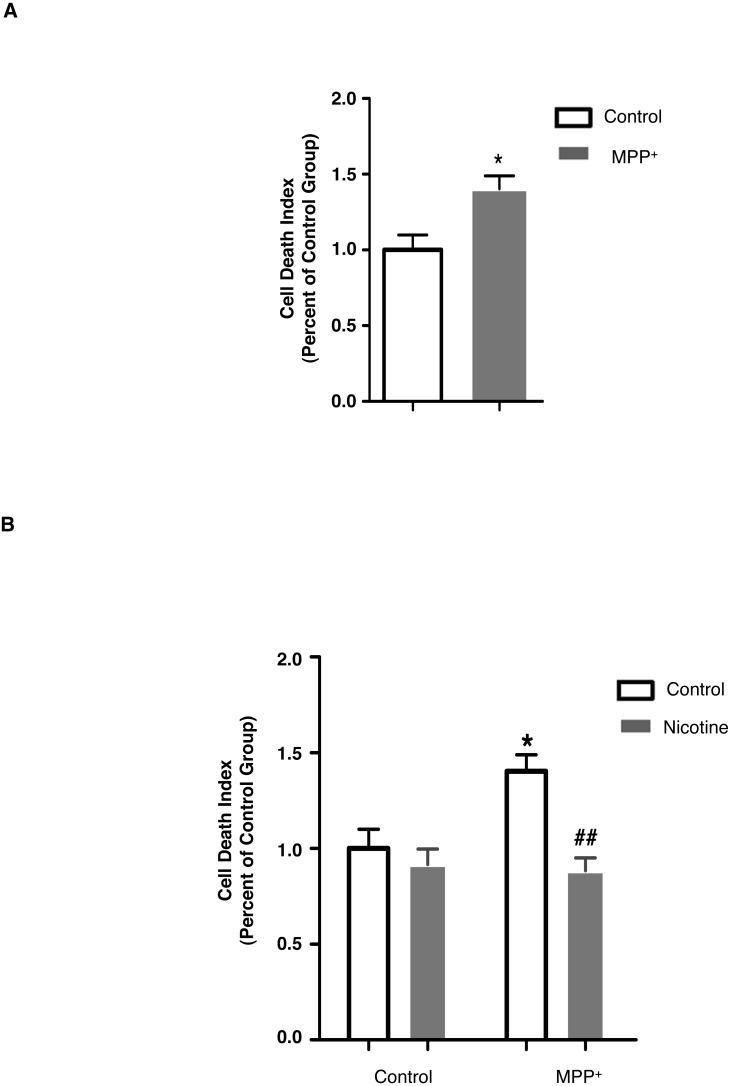
Figure 1
Figure 1. Nicotine protects SH-SY5Y cells against MPP+-induced cell death.
(A) MPP+ treatment (500 µM, 24 hrs) in SH-SY5Y cells increased the level of cell death, as compared to control cells. *p < 0.05 as compared to those in control group, n = 5, t-test. (B) Pre-treatment with nicotine (2 mM, 30 min) prior to MPP+ exposure in SH-SY5Y cells decreased the level of cell death as compared to those treated with MPP+ only. *p < 0.05 as compared to those of control group, ##p < 0.01 as compared to MPP+ group, n = 5 for control and MPP+ groups, n = 3 for nicotine and MPP+ with nicotine groups, two-way ANOVA followed by Bonferroni post-tests. All data are shown as mean ± SEM. The level of cell death was detected using PI (50 µg/ml) and Hoechst33342 (20 µg/ml) double staining, and was defined as the ratio of fluorescent intensity of PI: Hoechst33342.
Figure 2
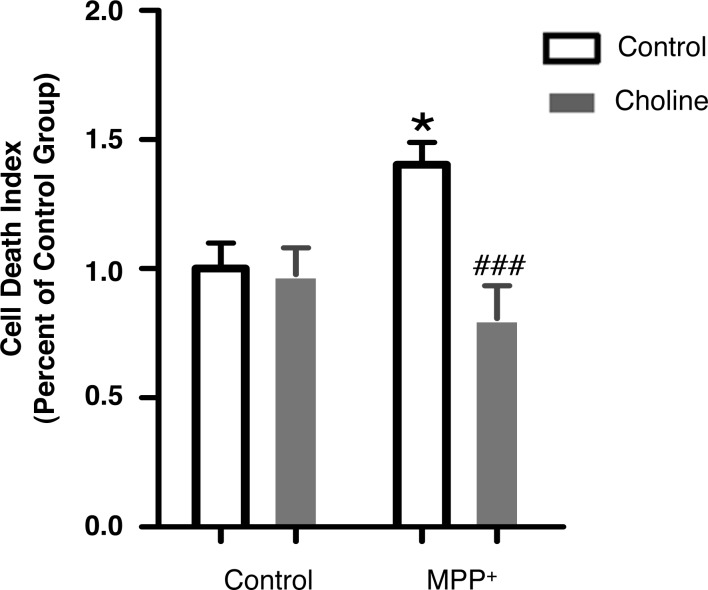
Figure 2. Choline protects SH-SY5Y cells against MPP+-induced cell death.
Pre-treatment with choline (1 mM, 30 min), a specific nAChR agonist, followed by MPP+ treatment (500 µM, 24 hrs) in SH-SY5Y cells decreased the level of cell death as compared to those treated with MPP+ only. *p < 0.05 as compared to those of control group, ###p < 0.001 as compared to MPP+ group, n = 5, two-way ANOVA followed by Bonferroni post-tests. All data are shown as mean ± SEM. The level of cell death was detected using PI and Hoechst33342 double staining, and was defined as the ratio of fluorescent intensity of PI: Hoechst33342.
Figure 3
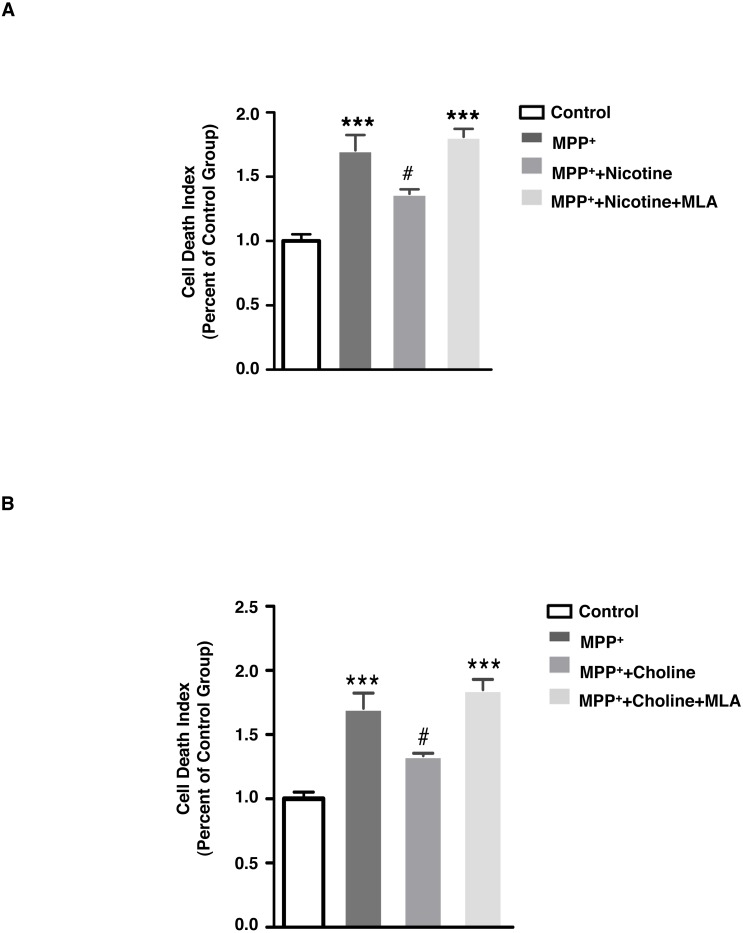
Figure 3. Blockade of α7 nAChR inhibits the protective effect of nicotine and choline against MPP+-induced SH-SY5Y cell death.
(A) MLA (20 µM, 30 min), a specific antagonist of α 7 nAChR, increased the level of cell death when administered prior to nicotine (2 mM, 30 min) and MPP+ (500 µM, 24 hrs) treatments in SH-SY5Y cells, as compared to those treated with nicotine and MPP+ alone. ***p < 0.001 as compared to those of control group, #p < 0.05 as compared to MPP+ group, n = 4, one-way ANOVA followed by Tukey’s test. (B) MLA (20 µM, 30 min), a specific antagonist of α7 nAChR, increased the level of SH-SY5Y cell death when administered prior to choline (1 mM, 30 min) and MPP+ (500 µM, 24 hrs) treatments, as compared to those treated with choline and MPP+ alone. ***p < 0.001 compared to the control group, #p < 0.05 as compared to the MPP + group, n = 4, one-way ANOVA followed by Tukey’s test. All data are shown as mean ± SEM. The level of cell death was detected using PI and Hoechst33342 double staining, and was defined as the ratio of fluorescent intensity of PI: Hoechst33342.
Figure 4
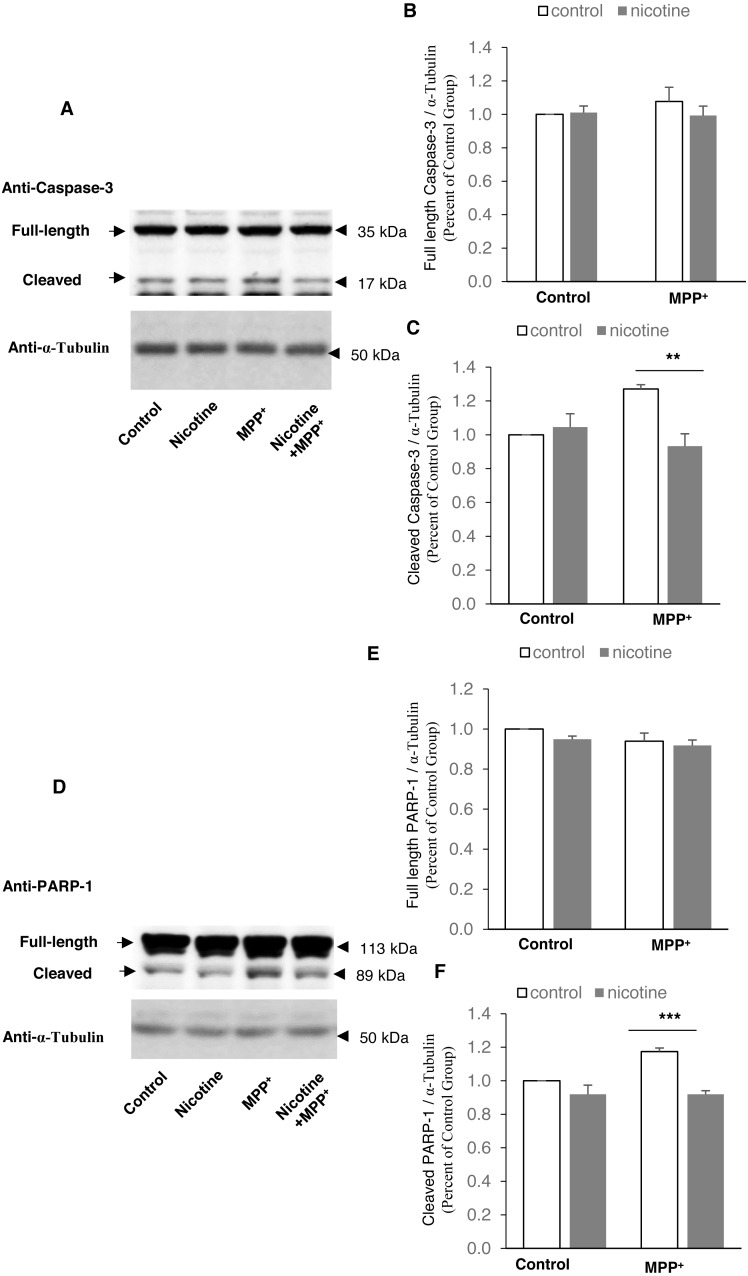
Figure 4. Nicotine pre-treatment inhibits PARP-1 and caspase-3 cleavage in MPP+-treated SH-SY5Y neuroblastoma cells.
(A) Western blot analysis showing that cleaved caspase-3 decreased in SH-SY5Y cells pre-treated with nicotine before MPP+ treatment, as compared to those treated with MPP+ only. α-Tubulin was used as a loading control. (B and C) Densitometric analysis of expression levels of full length (B) and cleaved (C) caspase-3. The expression level of caspase-3 was defined as the ratio of the intensity of caspase-3: α-Tubulin, and was normalized as percentage of the control group, **p < 0.01, n = 3, two-way ANOVA. (D) Western blot analysis showing that cleaved PARP-1 was decreased in SH-SY5Y cells pre-treated with nicotine before MPP+ treatment, as compared to those treated with MPP+ only. α-Tubulin was used as a loading control. (E and F) Densitometric analysis of the intensity of expression levels of full length (E) and cleaved (F) PARP-1. The expression level of PARP-1 was defined as the ratio of the intensity of PARP-1: α-Tubulin, and was normalized as percentage of the control group, ***p < 0.001, n = 3, two-way ANOVA. All data are shown as mean ± SEM.
Figure 5
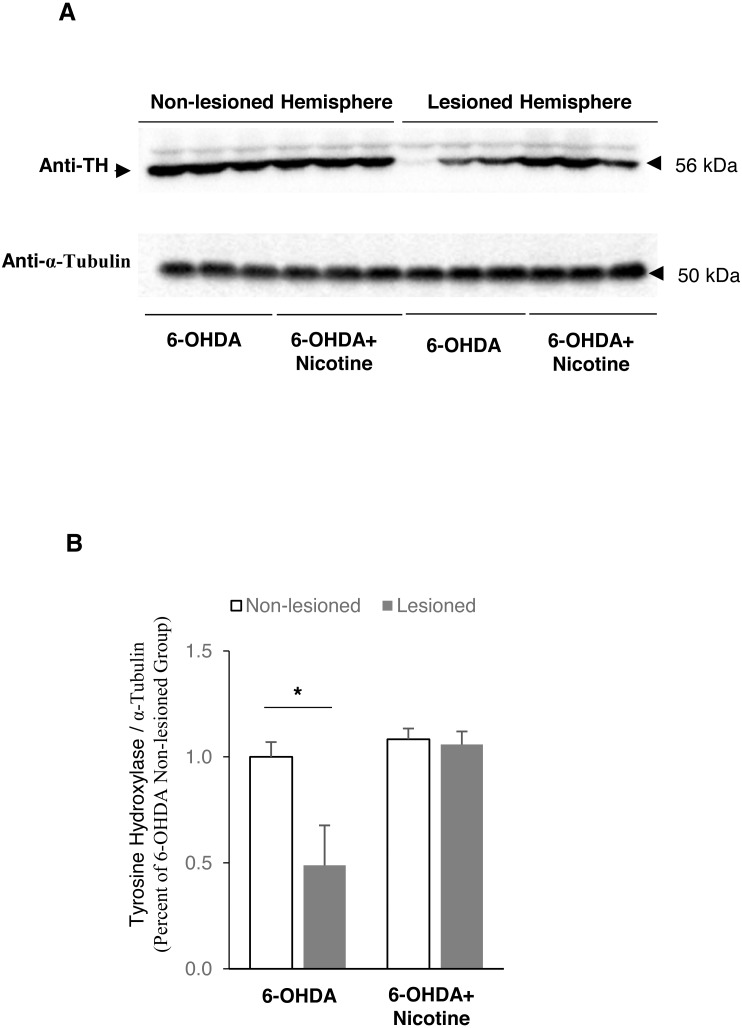
Figure 5. Tyrosine Hydroxylase expression level decreased in lesioned hemisphere of 6-OHDA mouse model of PD.
(A) Western blot analysis showing that tyrosine hydroxylase expression level decreased in striatal tissues of lesioned hemisphere from mice exposed to 6-OHDA only, but did not change in mice pretreated with nicotine before 6-OHDA exposure. α-Tubulin was used as a loading control. (B) Densitometric analysis of expression levels of tyrosine hydroxylase. The expression level of tyrosine hydroxylase was defined as the ratio of the intensity of tyrosine hydroxylase: α-Tubulin, and was normalized as percentage of non-lesioned hemisphere exposed to 6-OHDA only, n = 3, two-way ANOVA. All data are shown as mean ± SEM. *p < 0.05 as compared to Non-lesioned hemisphere in 6-OHDA mice.
Figure 6
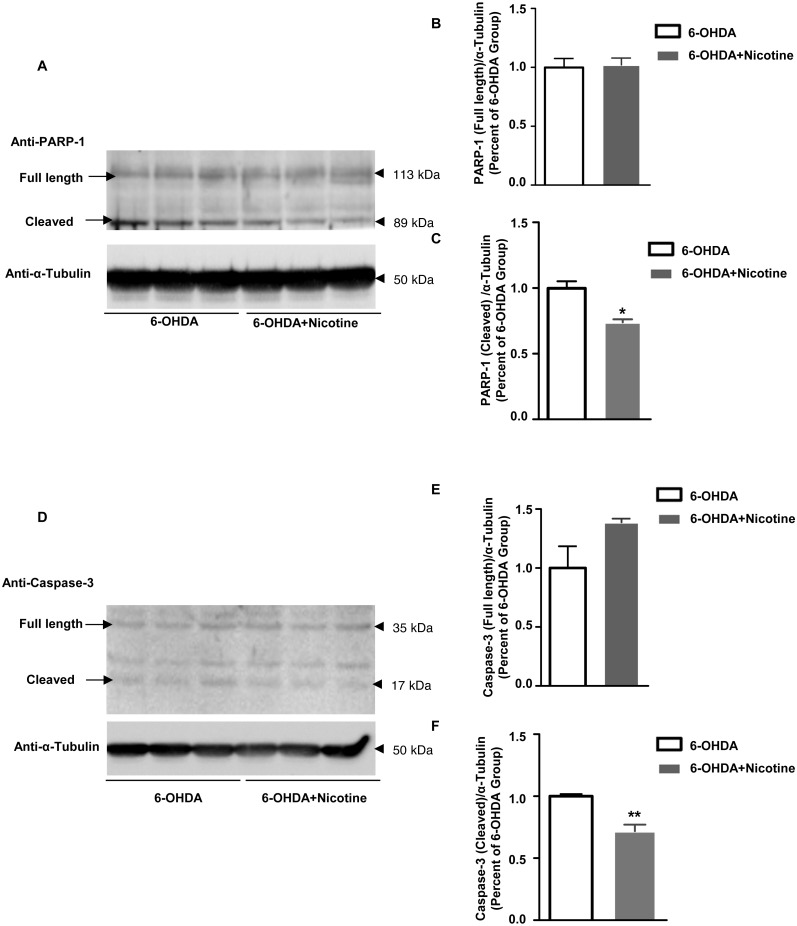
Figure 6. Nicotine pre-treatment inhibits PARP-1 and caspase-3 cleavage in striatal tissue from 6-OHDA mouse model of PD.
(A) Western blot analysis showing that cleaved PARP-1 decreased in striatal tissues from mice pre-treated with nicotine before 6-OHDA exposure, as compared to those exposed to 6-OHDA only. α-Tubulin was used as a loading control. (B and C) Densitometric analysis of expression levels of full length (B) and cleaved (C) PARP-1. The expression level of PARP-1 was defined as the ratio of the intensity of PARP-1: α -Tubulin, and was normalized as percentage of the 6-OHDA group, *p < 0.05 compared to the 6-OHDA group, n = 3, t-test. (D) Western blot analysis showing that cleaved caspase-3 was decreased in striatal tissues from mice pre-treated with nicotine prior to 6-OHDA exposure, as compared to those exposed to 6-OHDA only. α-Tubulin was used as a loading control. (E and F) Densitometric analysis of the intensity of expression levels of full length (E) and cleaved (F) caspase-3. The expression level of caspase-3 was defined as the ratio of the intensity of caspase-3: α-Tubulin, and was normalized as percentage of the 6-OHDA group, **p < 0.01 compared to the 6-OHDA group, n = 3, t-test. All data are shown as mean ± SEM.
Figure 7
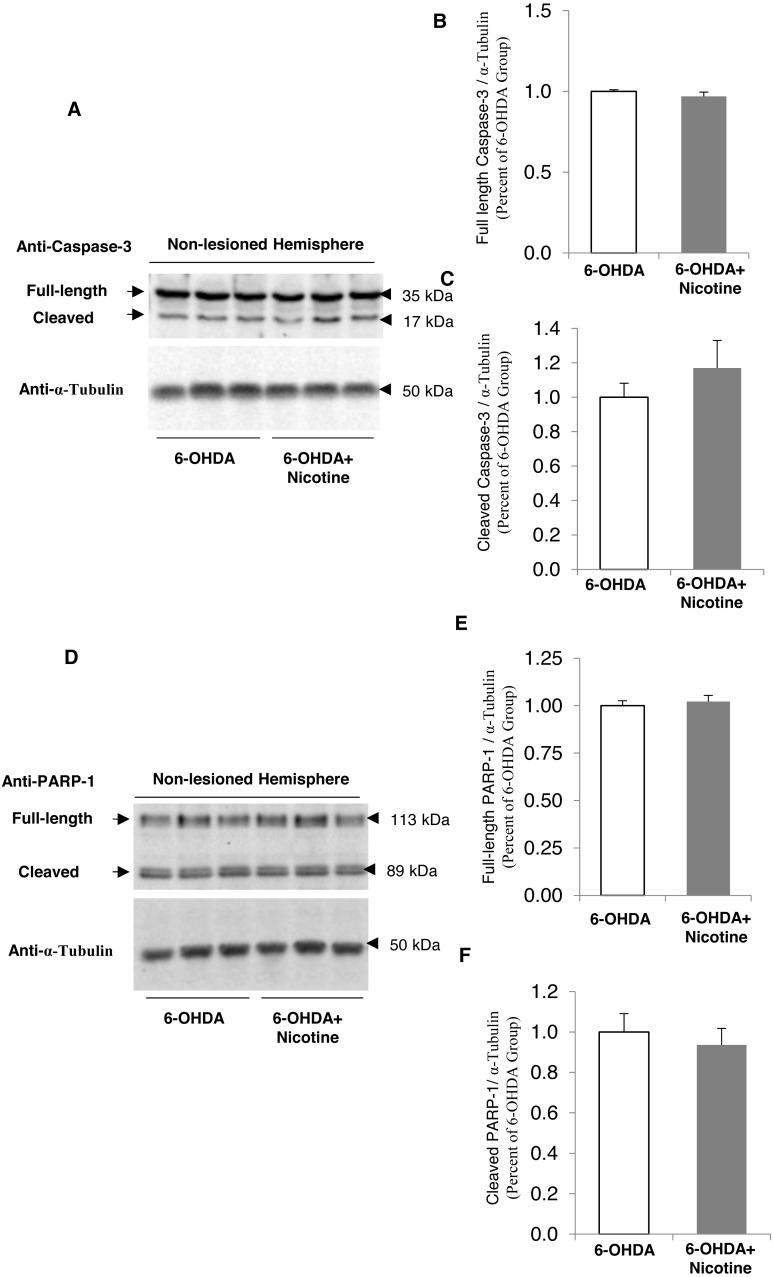
Figure 7. Nicotine pre-treatment does not change PARP-1 and caspase-3 cleavage in striatal tissue from non-lesioned hemisphere of 6-OHDA mouse model of PD.
(A) Western blot analysis showing no difference of cleaved caspase-3 in striatal tissues of non-lesioned hemisphere from mice pre-treated with nicotine before 6-OHDA exposure, as compared to those exposed to 6-OHDA only. α-Tubulin was used as a loading control. (B and C) Densitometric analysis of expression levels of full length (B) and cleaved (C) caspase-3. The expression level of caspase-3 was defined as the ratio of the intensity of caspase-3: α-Tubulin, and was normalized as percentage of the 6-OHDA group, n = 3, t-test. (D) Western blot analysis showing no difference of cleaved PARP-1 was decreased in striatal tissues of the non-lesioned hemisphere from mice pre-treated with nicotine prior to 6-OHDA exposure, as compared to those exposed to 6-OHDA only. α-Tubulin was used as a loading control. (E and F) Densitometric analysis of the intensity of expression levels of full length (E) and cleaved (F) PARP-1. The expression level of PARP-1 was defined as the ratio of the intensity of PARP-1: α-Tubulin, and was normalized as percentage of the 6-OHDA group, n = 3, t-test. All data are shown as mean ± SEM.

References

    1. Alano CC, Garnier P, Ying W, Higashi Y, Kauppinen TM, Swanson RA. NAD+ depletion is necessary and sufficient for poly(ADP-ribose) polymerase-1-mediated neuronal death. Journal of Neuroscience. 2010;30:2967–2978. doi: 10.1523/jneurosci.5552-09.2010. - DOI - PMC - PubMed
    1. Anderson G, Maes M. Neurodegeneration in Parkinson’s disease: interactions of oxidative stress, tryptophan catabolites and depression with mitochondria and sirtuins. Molecular Neurobiology. 2014;49:771–783. doi: 10.1007/s12035-013-8554-z. - DOI - PubMed
    1. Anderson G, Seo M, Berk M, Carvalho AF, Maes M. Gut permeability and microbiota in parkinson’s disease: role of depression, tryptophan catabolites, oxidative and nitrosative stress and melatonergic pathways. Current Pharmaceutical Design. 2016;22:6142–6151. doi: 10.2174/1381612822666160906161513. - DOI - PubMed
    1. Ascherio A, Schwarzschild MA. The epidemiology of Parkinson’s disease: risk factors and prevention. Lancet Neurology. 2016;15:1257–1272. doi: 10.1016/s1474-4422(16)30230-7. - DOI - PubMed
    1. Baron JA. Beneficial effects of nicotine and cigarette smoking: the real, the possible and the spurious. British Medical Bulletin. 1996;52:58–73. doi: 10.1093/oxfordjournals.bmb.a011533. - DOI - PubMed

LinkOut - more resources