


Impact of mentorship on WHO-AFRO Strengthening Laboratory Quality Improvement Process Towards Accreditation (SLIPTA)
- PMID: 29062726
- PMCID: PMC5644515
- DOI: 10.4102/ajlm.v1i1.6
Impact of mentorship on WHO-AFRO Strengthening Laboratory Quality Improvement Process Towards Accreditation (SLIPTA)
Abstract
Background: The improvment of the quality of testing services in public laboratories is a high priority in many countries. Consequently, initiatives to train laboratory staff on quality management are being implemented, for example, the World Health Organization Regional Headquarters for Africa (WHO-AFRO) Strengthening Laboratory Management Towards Accreditation (SLMTA). Mentorship may be an effective way to augment these efforts.
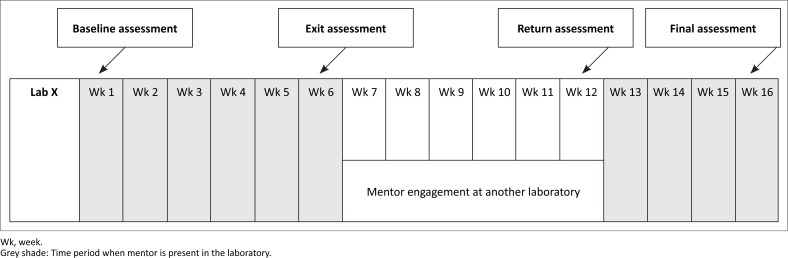
Methods: Mentorship was implemented at four hospital laboratories in Lesotho, three districts and one central laboratory, between June 2009 and December 2010. The mentorship model that was implemented had the mentor fully embedded within the operations of each of the laboratories. It was delivered in a series of two mentoring engagements of six and four week initial and follow-up visits respectively. In total, each laboratory received 10 weeks mentorship that was separated by 6-8 weeks. Quality improvements were measured at baseline and at intervals during the mentorship using the WHO-AFRO Strengthening Laboratory Quality Improvement Process Towards Accreditation (SLIPTA) checklist and scoring system.
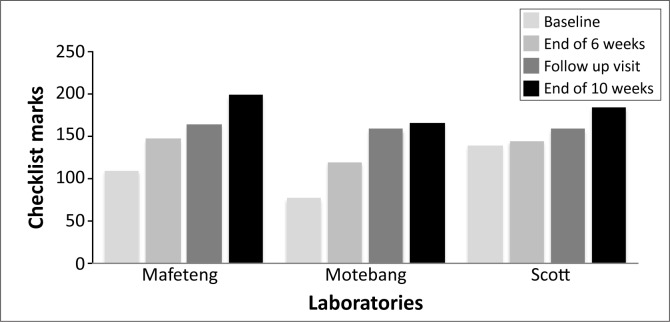
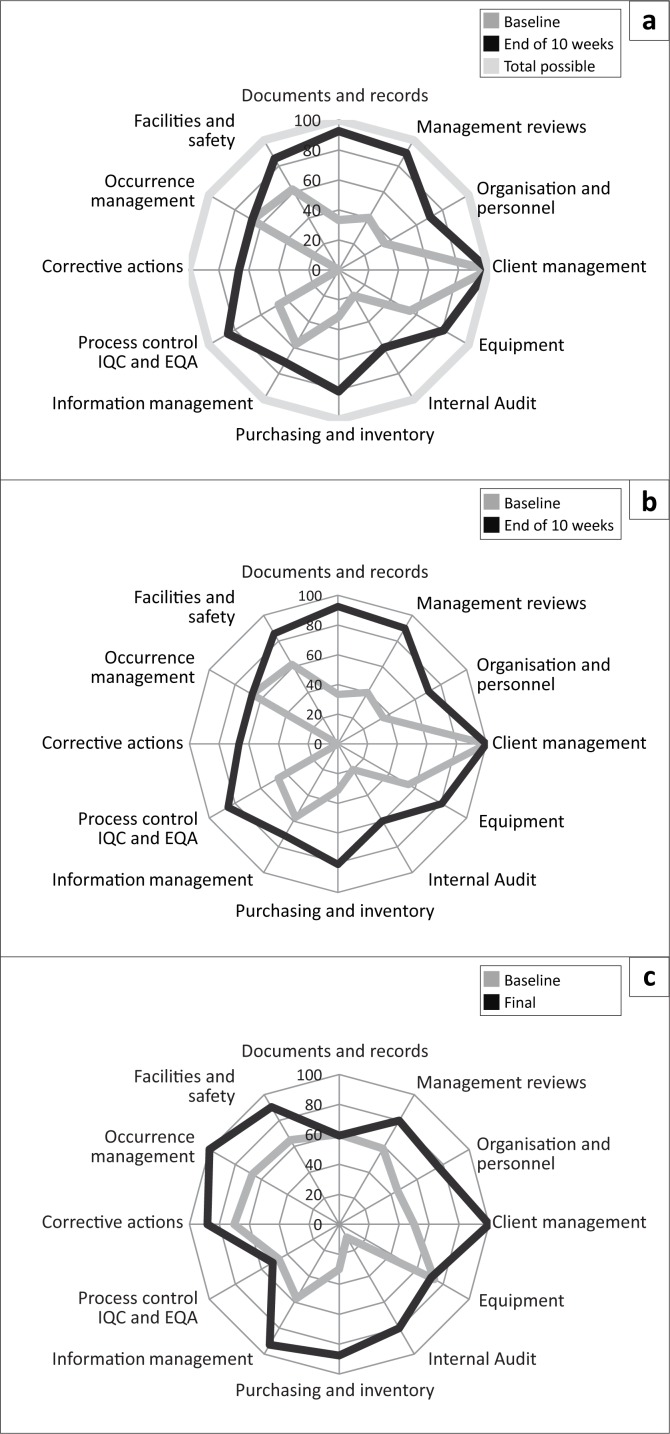
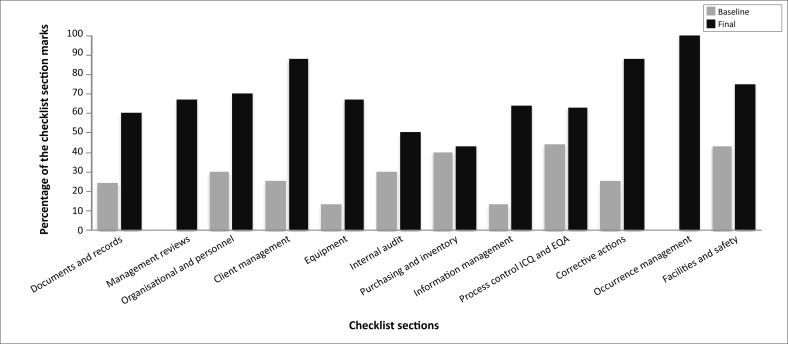
Results: At the beginning of the mentorship, all laboratories were at the SLIPTA zero star rating. After the initial six weeks of mentorship, two of the three district laboratories had improved from zero to one (out of five) star although the difference between their baseline (107.7) and the end of the six weeks (136.3) average scores was not statistically significant (p = 0.25). After 10 weeks of mentorship there was a significant improvement in average scores (182.3; p = 0.034) with one laboratory achieving WHO-AFRO three out of a possible five star status and the two remaining laboratories achieving a two star status. At Queen Elizabeth II (QE II) Central Laboratory, the average baseline score was 44%, measured using a section-specific checklist. There was a significant improvement by five weeks (57.2%; p = 0.021).
Conclusion: The mentorship programme in this study resulted in significant measurable improvements towards preparation for the WHO-AFRO SLIPTA process in less than six months. We recommend that mentorship be incorporated into laboratory quality improvement and management training programmes such as SLMTA, in order to accelerate the progress of laboratories towards achieving accreditation.
Conflict of interest statement
The authors declare that they have no financial or personal relationship(s) which may have inappropriately influenced them in writing this article.
Figures
References
-
- Yao K, McKinney B, Murphy A, et al. Improving quality management systems of laboratories in developing countries. An innovative training approach to accelerate laboratory accreditation. Am J Clin Path. 2010;134:401–409. http://dx.doi.org/10.1309/AJCPNBBL53FWUIQJ, PMid: - DOI - PubMed
-
- Lesotho Ministry of Health and Social Welfare Laboratory Services National Policy of 2008.
-
- Gershy-Damet G-M, Rotz P, Cross D, et al. The World Health Organization African Region Laboratory Accreditation Process. Improving the quality of laboratory systems in the African region. Am J Clin Pathol. 2010;134(3):393–400. - PubMed
-
- Guzel O, Guner EI. ISO 15189 accreditation: Requirements for quality and competence of medical laboratories, experience of a laboratory I. Clin Biochem. 2009;42(4-5):274–278. http://dx.doi.org/10.1016/j.clinbiochem.2008.09.011, PMid: - DOI - PubMed
-
- World Health Organization Kigali host the launch of a program to accelerate national laboratory service capacity building towards accreditation in the African region [press release]. Kigali: WHO-AFRO; c2009. [cited 2011 Jun 10]. Available from: http://www.who.int/hiv/amds/diagnostics/amds_kigali_pr_lab.pdf
LinkOut - more resources
Full Text Sources