


In silico methods for linking genes and secondary metabolites: The way forward
- PMID: 29062931
- PMCID: PMC5640692
- DOI: 10.1016/j.synbio.2016.03.001
In silico methods for linking genes and secondary metabolites: The way forward
Abstract
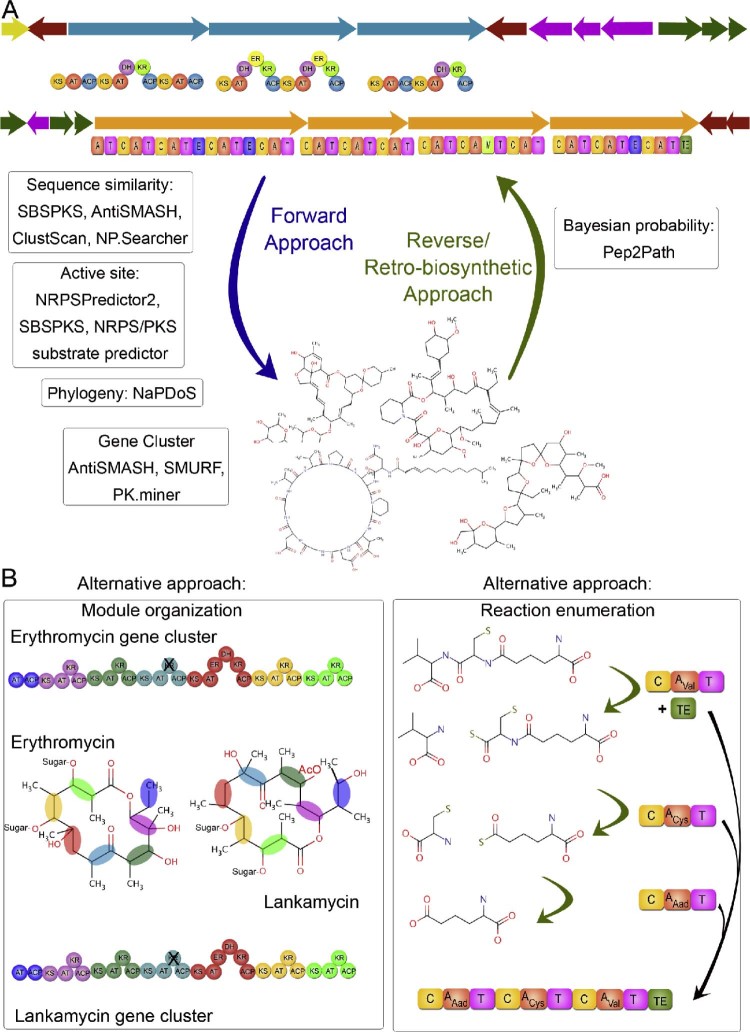
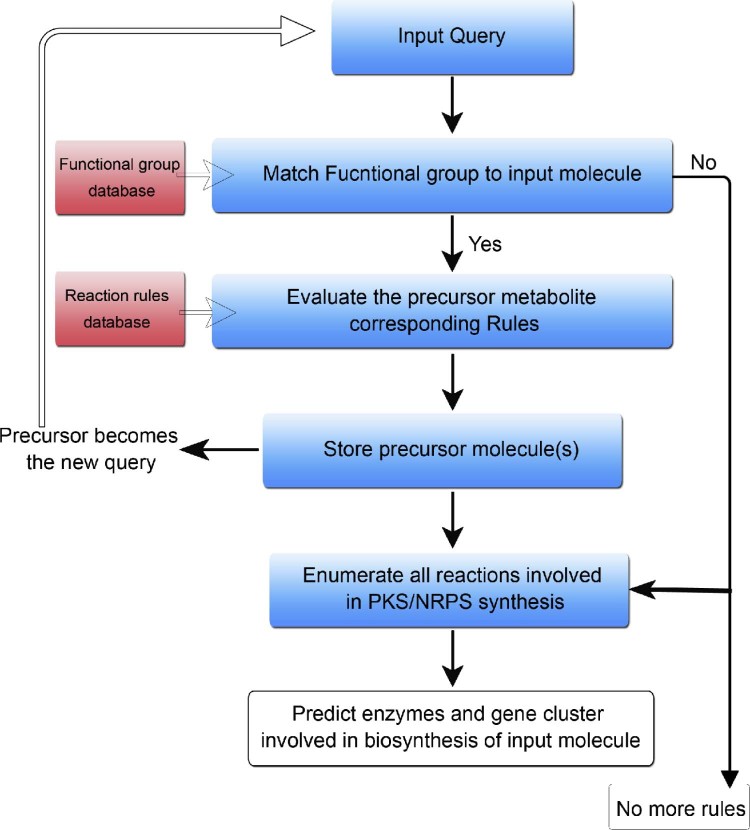
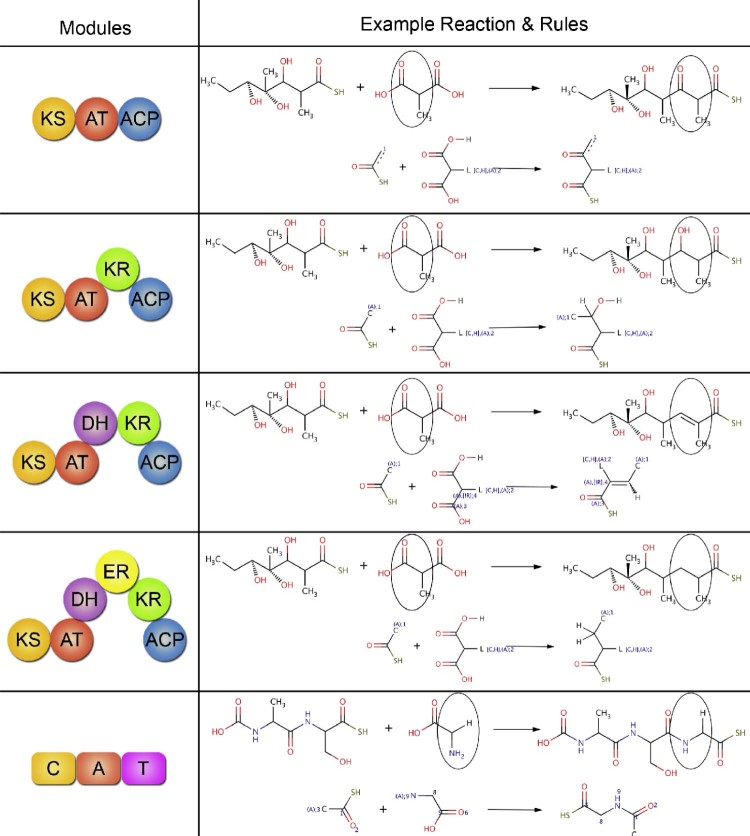
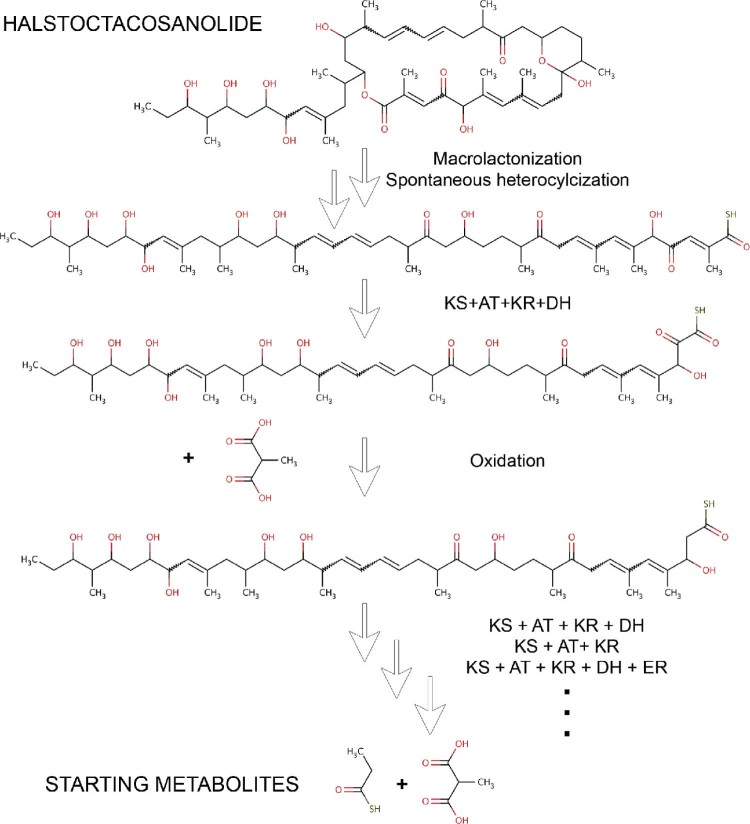
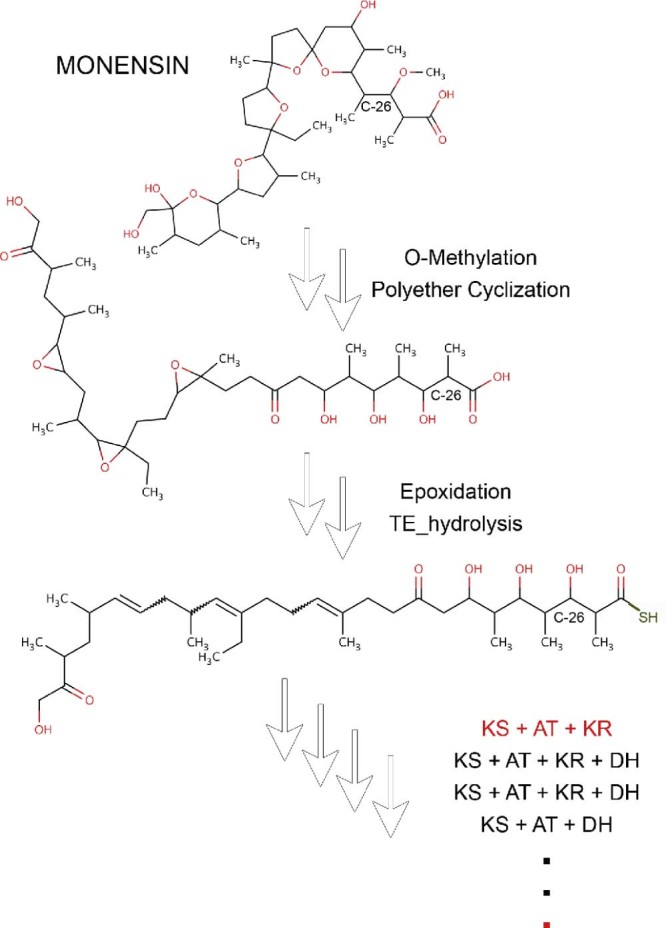
In silico methods for linking genomic space to chemical space have played a crucial role in genomics driven discovery of new natural products as well as biosynthesis of altered natural products by engineering of biosynthetic pathways. Here we give an overview of available computational tools and then briefly describe a novel computational framework, namely retro-biosynthetic enumeration of biosynthetic reactions, which can add to the repertoire of computational tools available for connecting natural products to their biosynthetic gene clusters. Most of the currently available bioinformatics tools for analysis of secondary metabolite biosynthetic gene clusters utilize the "Genes to Metabolites" approach. In contrast to the "Genes to Metabolites" approach, the "Metabolites to Genes" or retro-biosynthetic approach would involve enumerating the various biochemical transformations or enzymatic reactions which would generate the given chemical moiety starting from a set of precursor molecules and identifying enzymatic domains which can potentially catalyze the enumerated biochemical transformations. In this article, we first give a brief overview of the presently available in silico tools and approaches for analysis of secondary metabolite biosynthetic pathways. We also discuss our preliminary work on development of algorithms for retro-biosynthetic enumeration of biochemical transformations to formulate a novel computational method for identifying genes associated with biosynthesis of a given polyketide or nonribosomal peptide.
Keywords: Biosynthetic gene cluster; Genes to metabolites; Genome mining; Metabolites to genes; Nonribosomal peptides; Polyketides; Retro-biosynthetic enumeration; Secondary metabolite.
Figures
References
-
- Cane D.E., Walsh C.T. The parallel and convergent universes of polyketide synthases and nonribosomal peptide synthetases. Chem Biol. 1999;6:R319–25. - PubMed
-
- McKenney J.M. Lovastatin: a new cholesterol-lowering agent. Clin Pharm. 1988;7:21–36. - PubMed
-
- Hertweck C. The biosynthetic logic of polyketide diversity. Angew Chem Int Ed Engl. 2009;48:4688–4716. - PubMed
LinkOut - more resources
Full Text Sources
Other Literature Sources
