


Detection of respiratory viral and bacterial pathogens causing pediatric community-acquired pneumonia in Beijing using real-time PCR
- PMID: 29062995
- PMCID: PMC5643733
- DOI: 10.1016/j.cdtm.2015.06.002
Detection of respiratory viral and bacterial pathogens causing pediatric community-acquired pneumonia in Beijing using real-time PCR
Abstract
Objective: The aim of this study was to determine the etiology and prevalence of pediatric CAP in Beijing using a real-time polymerase chain reaction (PCR) technique.
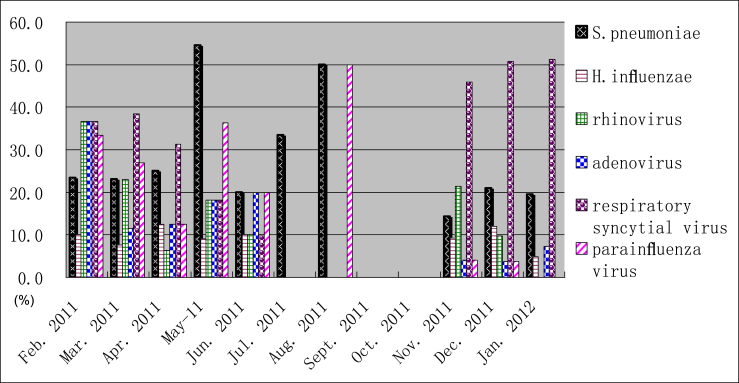
Methods: Between February 15, 2011 and January 18, 2012, 371 pediatric patients with CAP were enrolled at Beijing Children's Hospital. Sixteen respiratory viruses and two bacteria were detected from tracheal aspirate specimens using commercially available multiplex real-time reverse transcription PCR (RT-PCR) kits.
Results: A single viral pathogen was detected in 35.3% of enrolled patients, multiple viruses in 11.6%, and virus/bacteria coinfection in 17.8%. In contrast, only 6.5% of patients had a single bacterial pathogen and 2.2% were infected with multiple bacteria. The etiological agent was unknown for 26.7% of patients. The most common viruses were respiratory syncytial virus (RSV) (43.9%), rhinovirus (14.8%), parainfluenza virus (9.4%), and adenovirus (8.6%). In patients under three years of age, RSV (44.6%), rhinovirus (12.8%), and Streptococcus pneumoniae (9.9%) were the most frequent pathogens. In children aged 3-7 years, S. pneumoniae (38.9%), RSV (30.6%), Haemophilus influenzae (19.4%), and adenovirus (19.4%) were most prevalent. Finally in children over seven years, RSV (47.3%), S. pneumoniae (41.9%), and rhinovirus (21.5%) infections were most frequent.
Conclusions: Viral pathogens, specifically RSV, were responsible for the majority of CAP in pediatric patients. However, both S. pneumoniae and H. influenzae contributed as major causes of disease. Commercially available multiplexing real-time PCR allowed for rapid detection of the etiological agent.
Keywords: Community-acquired pneumonia; Real-time reverse transcription polymerase chain reaction (RT-PCR); Respiratory virus.
Figures
References
-
- Stein R.T., Marostica P.J. Community-acquired pneumonia: a review and recent advances. Pediatr Pulmonol. 2007;42:1095–1103. - PubMed
-
- Bartlett J.G., Mundy L.M. Community-acquired pneumonia. N Engl J Med. 1995;333:1618–1624. - PubMed
-
- McCracken G.H. Etiology and treatment of pneumonia. Pediatr Infect Dis J. 2000;19:373–377. - PubMed
-
- McIntosh K. Community-acquired pneumonia in children. N Engl J Med. 2002;346:429–437. - PubMed
LinkOut - more resources
Full Text Sources
Other Literature Sources
Miscellaneous
