


The Assessment of Toxic Metals in Plants Used in Cosmetics and Cosmetology
- PMID: 29064437
- PMCID: PMC5664780
- DOI: 10.3390/ijerph14101280
The Assessment of Toxic Metals in Plants Used in Cosmetics and Cosmetology
Abstract
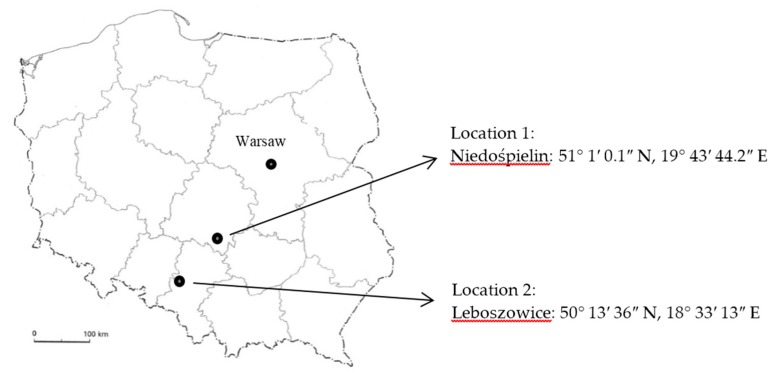
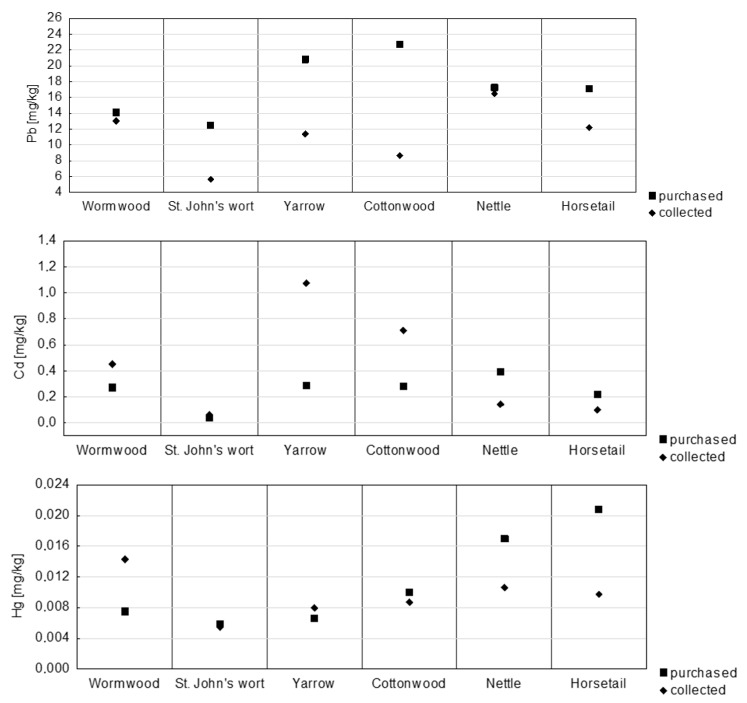
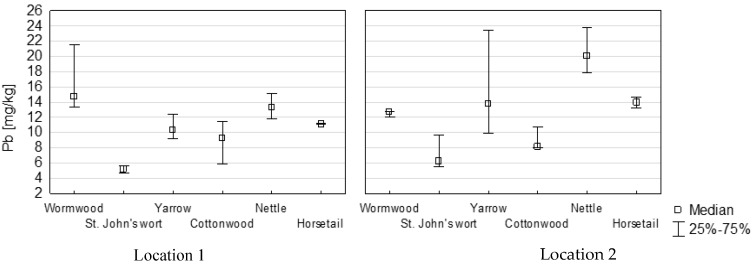
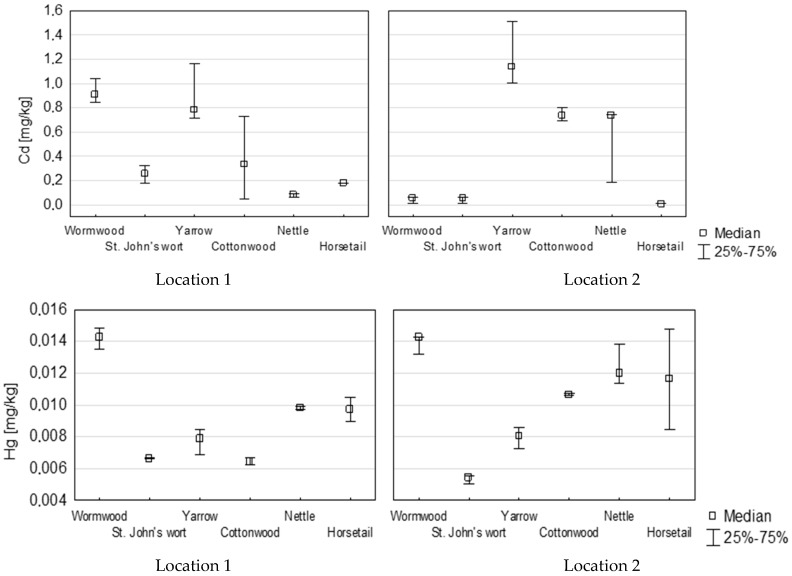
Heavy metals polluting the natural environment are absorbed by plants. The use of herbs as components of cosmetics may pose a health risk for humans. The aim of the study was to determine the concentrations of Pb, Cd and Hg in selected species of herbs (horsetail Equisetum arvense, nettle Urtica dioica, St. John's wort Hypericum perforatum, wormwood Artemisia absinthium, yarrow Achillea millefolium, cottonwood Solidago virgaurea) self-collected from the natural environment in two different locations, and purchased in stores on the territory of Poland. The concentration of the metals studied was: 4.67-23.8 mg/kg Pb, 0.01-1.51 mg/kg Cd, 0.005-0.028 mg/kg Hg. Different concentrations of metals, depending on species and origin of plants, were found. The mean concentration of all studied metals was the lowest in St. John's wort, and the highest in nettle. In herbs purchased in Polish stores, the concentration of Pb was higher than in plants self-collected in the natural environment.
Keywords: AAS; cadmium; lead; mercury; plants.
Conflict of interest statement
The authors declare no conflict of interest.
Figures
References
-
- Szynkowska M.I., Pawlaczyk A., Leśniewska E., Paryjczak T. Toxic metal distribution in rural and urban soil samples affected by industry and traffic. Pol. J. Environ. Stud. 2009;18:1141–1150.
-
- Pivic R., Stanojkovic-Sebic A., Josic D., Dinic Z. Evaluation of the heavy metals content in soil and plant material at different distances from the from the motorway e75 in the section Belgrade-Presevo (Serbia) Bulg. J. Agric. Sci. 2014;20:330–336.
-
- Siti Zulaikha R., Sharifah Norkhadijah S.I., Praveena S.M. Hazardous ingredients in cosmetics and personal care products and health concern: A review. Public Health Res. 2015;5:7–15.
-
- Łopaciuk A., Łoboda M. Global beauty industry trends in the 21st century; Proceedings of the Management, Knowledge and Learning International Conference; Zadar, Croatia. 19–21 June 2013; pp. 19–21.
-
- Adepoju-Bello A.A., Oguntibeju O.O., Adebisi R.A., Okpala N., Coker H.A.B. Evaluation of the concentration of toxic metals in cosmetic products in Nigeria. Afr. J. Biotechnol. 2012;11:16360–16364.
MeSH terms
Substances
LinkOut - more resources
Full Text Sources
Other Literature Sources
Medical
