


Estimation of the Potential Effectiveness of Lowering the Blood Alcohol Concentration (BAC) Limit for Driving from 0.08 to 0.05 Grams per Deciliter in the United States
- PMID: 29064571
- PMCID: PMC5790204
- DOI: 10.1111/acer.13501
Estimation of the Potential Effectiveness of Lowering the Blood Alcohol Concentration (BAC) Limit for Driving from 0.08 to 0.05 Grams per Deciliter in the United States
Abstract
Background: In 2013, the National Transportation Safety Board (NTSB) issued a report recommending that states lower the illegal blood alcohol concentration (BAC) limit for driving from 0.08 to 0.05 g/dl. The NTSB concluded that there is a strong evidence-based foundation for a BAC limit of 0.05 or lower. Most industrialized nations have already enacted a 0.05 illegal BAC limit. This study was undertaken to contribute to the scientific evidence as to whether lowering the BAC limit to 0.05 will be an effective alcohol policy in the United States.
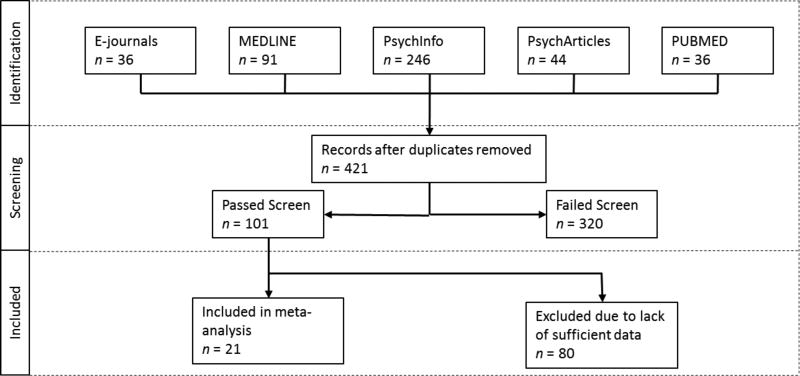
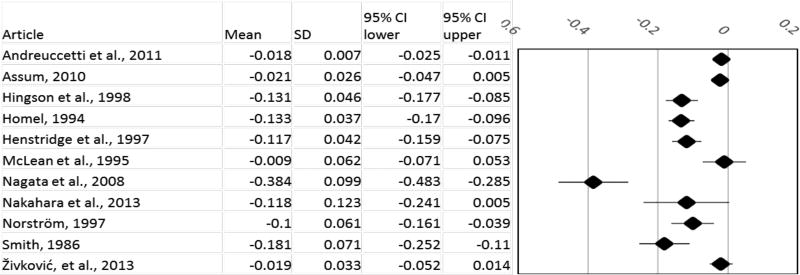
Methods: We accomplished our objective by: (i) conducting a meta-analysis of qualifying international studies to estimate the range and distribution of the most likely effect size from a reduction to 0.05 BAC or lower; (ii) translating this synthesis toward estimating the effects of reducing the current 0.08 BAC limit to 0.05 in the United States; and (iii) estimating the life-saving benefits of the proposed 0.03 reduction in the driving limit from 0.08 to 0.05 BAC.
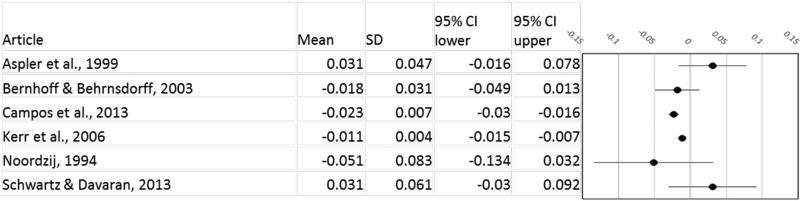
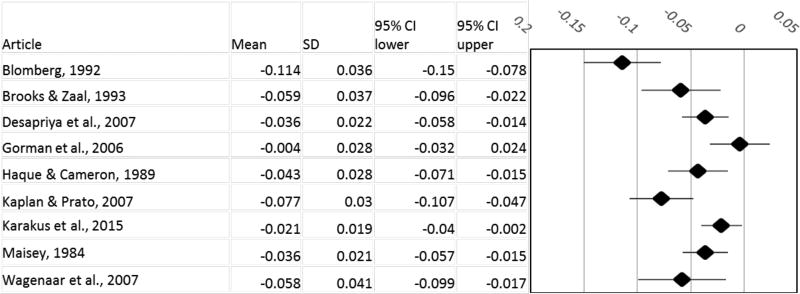
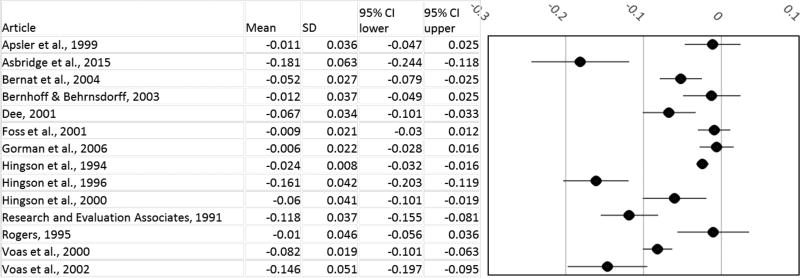
Results: In our meta-analysis of studies on lowering the BAC limit in general, we found a 5.0% decline in nonfatal alcohol-related crashes, a 9.2% decline in fatal alcohol-related crashes from lowering the BAC to 0.08, and an 11.1% decline in fatal alcohol-related crashes from lowering the BAC to 0.05 or lower. We estimate that 1,790 lives would be saved each year if all states adopted a 0.05 BAC limit.
Conclusions: This study provides strong evidence of the relationship between lowering the BAC limit for driving and the general deterrent effect on alcohol-related crashes.
Keywords: 0.05 g/dl; BAC Limit; Effectiveness; Lives Saved; Meta-Analysis.
Copyright © 2017 by the Research Society on Alcoholism.
Figures
References
-
- Andreuccetti G, Carvalho HB, Cherpitel CJ, Ye Y, Ponce JC, Kahn T, Leyton V. Reducing the legal blood alcohol concentration limit for driving in developing countries: a time for change? Results and implications derived from a time-series analysis (2001–10) conducted in Brazil. Addiction. 2011;106:2124–2131. - PMC - PubMed
-
- Apsler R, Char AR, Harding WM, Klein TM. The effects of .08 BAC laws, in Series The effects of .08 BAC laws, U.S. Department of Transportation, National Highway Traffic Safety Administration; Washington, DC: 1999.
-
- Arnold LS, Teftt BC. Driving Under the Influence of Alcohol and Marijuana: Beliefs and Behaviors, United States, 2013–2015, in Series Driving Under the Influence of Alcohol and Marijuana: Beliefs and Behaviors, United States, 2013–2015. AAA Foundation for Traffic Safety; Washington, DC: 2016.
-
- Asbridge M, Cartwright J, Langille D. Driving under the influence of opioids among high school students in Atlantic Canada: prevalence, correlates, and the role of medical versus recreational consumption. Accident Analysis & Prevention. 2015;75:184–191. - PubMed
-
- Assum T. Reduction of the blood alcohol concentration limit in Norway--effects on knowledge, behavior and accidents. Accident Analysis & Prevention. 2010;42:1523–1530. - PubMed
Publication types
MeSH terms
Substances
Grants and funding
LinkOut - more resources
Full Text Sources
Other Literature Sources
