


Metabolic syndrome and Chronic Obstructive Pulmonary Disease (COPD): The interplay among smoking, insulin resistance and vitamin D
- PMID: 29065130
- PMCID: PMC5655494
- DOI: 10.1371/journal.pone.0186708
Metabolic syndrome and Chronic Obstructive Pulmonary Disease (COPD): The interplay among smoking, insulin resistance and vitamin D
Abstract
Background: A close relationship between Metabolic Syndrome (MetS) and Chronic Obstructive Pulmonary Disease (COPD) has been described, but the exact nature of this link remains unclear. Current epidemiological data refer exclusively to the MetS prevalence among patients with COPD and data about the prevalence of COPD in MetS patients are still unavailable.
Aim of the study: To analyse and compare risk factors, clinical and metabolic characteristics, as well as the main respiratory function parameters, among patients affected by MetS, COPD or both diseases.
Patients: We recruited 59 outpatients with MetS and 76 outpatients with COPD. After medical history collection, physical examination, blood sampling for routine analysis, spirometric evaluation, they were subdivided into MetS (n = 46), MetS+COPD (n = 60), COPD (n = 29).
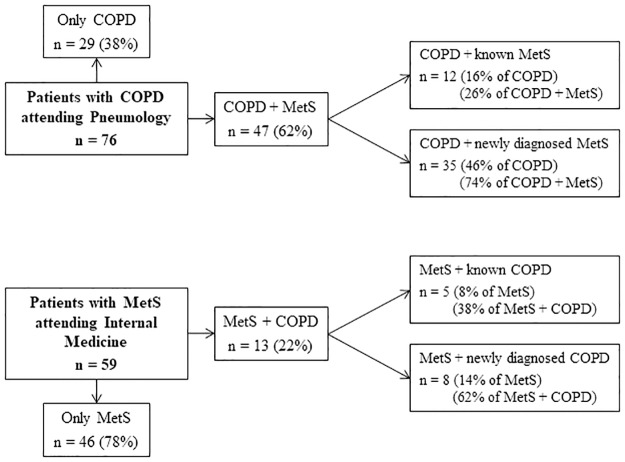
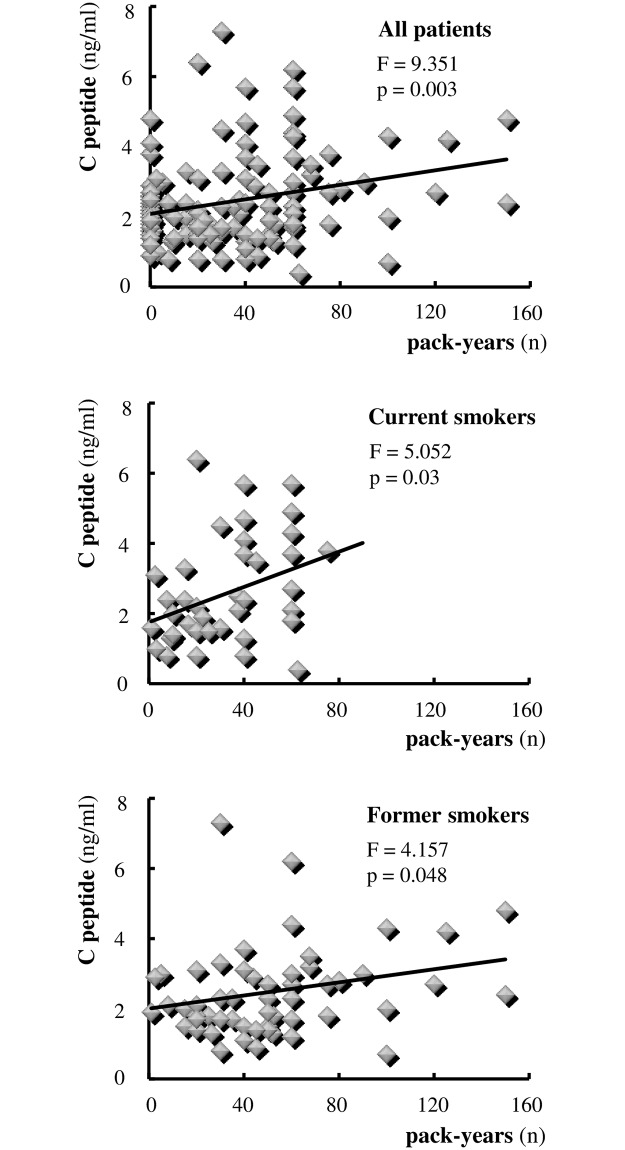
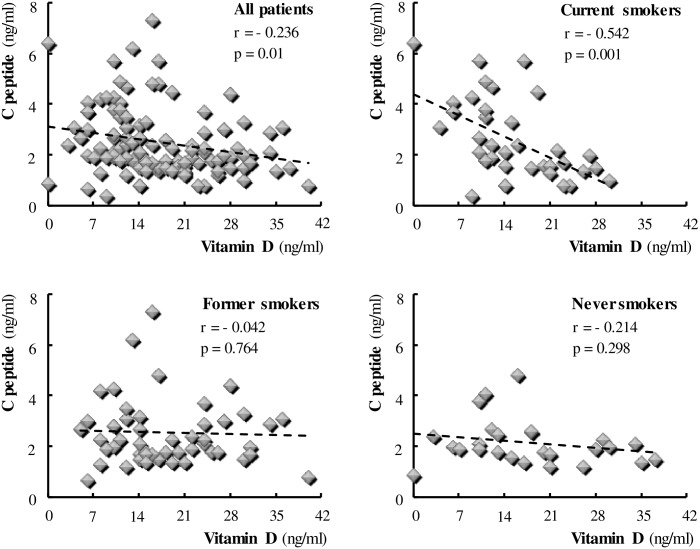
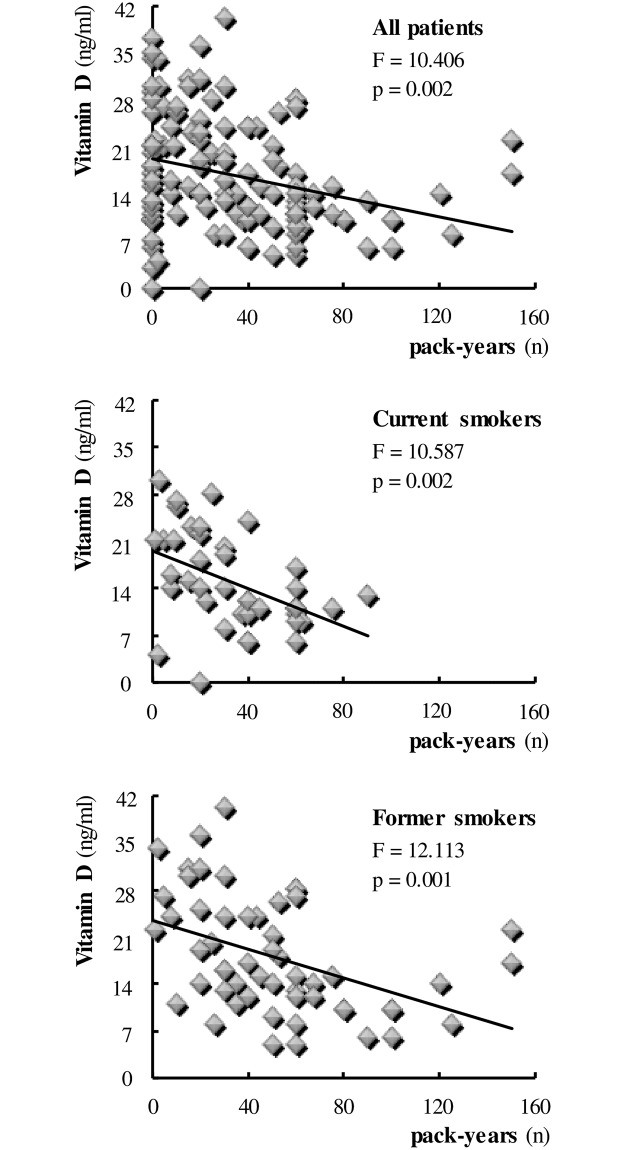
Results: A MetS diagnosis was assigned to 62% of COPD patients recruited in the COPD Outpatients Clinic of the Pneumology Department, while the COPD prevalence in MetS patients enrolled in the Internal Medicine Metabolic Disorders Outpatients Clinic was 22%. More than 60% of subjects enrolled in each Department were unaware that they suffered from an additional disease. MetS+COPD patients exhibited significantly higher C-peptide levels. We also found a positive relation between C-peptide and pack-years in all subjects and a negative correlation between C-peptide and vitamin D only in current smokers. Finally, a negative association emerged between smoking and vitamin D.
Conclusions: We have estimated, for the first time, the COPD prevalence in MetS and suggest a potential role of smoking in inducing insulin resistance. Moreover, a direct effect of smoking on vitamin D levels is proposed as a novel mechanism, which may account for both insulin resistance and COPD development.
Conflict of interest statement
Figures
References
-
- Watz H, Waschki B, Kirsten A, Müller KC, Kretschmar G, Meyer T, et al. The metabolic syndrome in patients with chronic bronchitis and COPD: frequency and associated consequences for systemic inflammation and physical inactivity. Chest 2009; 136(4):1039–1046. doi: 10.1378/chest.09-0393 - DOI - PubMed
-
- Breyer MK, Spruit MA, Hanson CK, Franssen FM, Vanfleteren LE, Groenen MT, et al. Prevalence of Metabolic Syndrome in COPD patients and its consequences. PLoS One 2014; 9(6): e98013 doi: 10.1371/journal.pone.0098013 - DOI - PMC - PubMed
-
- Díez-Manglano J, Barquero-Romero J, Almagro P, Cabrera FJ, López García F, Montero L, et al. ; Working Group on COPD; Spanish Society of Internal Medicine. COPD patients with and without metabolic syndrome: clinical and functional differences. Intern Emerg Med 2014; 9(4): 419–425. doi: 10.1007/s11739-013-0945-7 - DOI - PubMed
-
- Kastorini CM, Panagiotakos DB, Georgousopoulou EN, Laskaris A, Skourlis N, Zana A, et al. ; ATTICA Study Group. Metabolic syndrome and 10-yearcardiovascular disease incidence: The ATTICA study. Nutr Metab Cardiovasc Dis 2016; 26(3): 223–31. doi: 10.1016/j.numecd.2015.12.010 - DOI - PubMed
-
- Grundy SM. Metabolic syndrome pandemic. Arterioscler Thromb Vasc Biol 2008; 28(4): 629–36. doi: 10.1161/ATVBAHA.107.151092 - DOI - PubMed
MeSH terms
Substances
LinkOut - more resources
Full Text Sources
Other Literature Sources
Medical
Research Materials
