


The Role of Nicotine Dependence in E-Cigarettes' Potential for Smoking Reduction
- PMID: 29065204
- PMCID: PMC6121914
- DOI: 10.1093/ntr/ntx160
The Role of Nicotine Dependence in E-Cigarettes' Potential for Smoking Reduction
Abstract
Introduction: E-cigarettes (Electronic Nicotine Delivery Systems, or ENDS) are an increasingly popular tobacco product among youth. Some evidence suggests that e-cigarettes may be effective for harm reduction and smoking cessation, although these claims remain controversial. Little is known about how nicotine dependence may contribute to e-cigarettes' effectiveness in reducing or quitting conventional smoking.
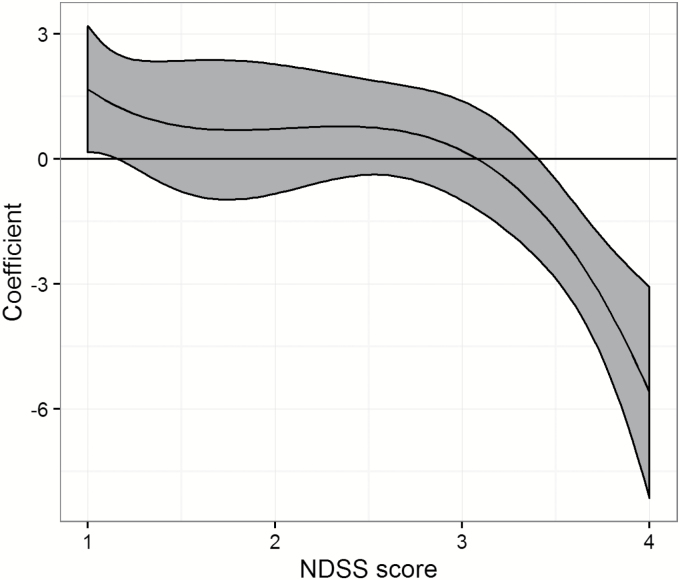
Methods: A cohort of young adults were surveyed over 4 years (approximately ages 19-23). Varying-coefficient models (VCMs) were used to examine the relationship between e-cigarette use and conventional smoking frequency, and how this relationship varies across users with different nicotine dependence levels.
Results: Lifetime, but not recent, e-cigarette use was associated with less frequent concurrent smoking of conventional cigarettes among those with high levels of nicotine dependence. However, nondependent e-cigarette users smoked conventional cigarettes slightly more frequently than those who had never used e-cigarettes. Nearly half of ever e-cigarette users reported using them to quit smoking at the last measurement wave. For those who used e-cigarettes in a cessation attempt, the frequency of e-cigarette use was not associated with reductions in future conventional smoking frequency.
Conclusions: These findings offer possible support that e-cigarettes may act as a smoking reduction method among highly nicotine-dependent young adult cigarette smokers. However, the opposite was found in non-dependent smokers, suggesting that e-cigarette use should be discouraged among novice tobacco users. Additionally, although a substantial proportion of young adults used e-cigarettes to help them quit smoking, these self-initiated quit attempts with e-cigarettes were not associated with future smoking reduction or cessation.
Implications: This study offers potential support for e-cigarettes as a smoking reduction tool among highly nicotine-dependent young adult conventional smokers, although the extent and nature of this remains unclear. The use of e-cigarettes as a quit aid was not associated with reductions in conventional smoking, consistent with most other quit aids in this sample except for nicotine replacement therapy, which was only effective for the most dependent smokers. Notably, these findings highlight the necessity of accounting for smokers' nicotine dependence levels when examining tobacco use patterns.
Figures

References
-
- Johnson LD, O’Malley PM, Miech RA, Bachman JG, Schulenberg JE.. Monitoring the Future National Survey Results on Drug Use, 1975–2015: Overview, Key Findings on Adolescent Drug Use. Ann Arbor: Institute for Social Research, The University of Michigan; 2016.
-
- Schneider S, Diehl K. Vaping as a catalyst for smoking? an initial model on the initiation of electronic cigarette use and the transition to tobacco smoking among adolescents. Nicotine Tob Res. 2016;18(5):647–653. - PubMed
-
- Rennie LJ, Bazillier-Bruneau C, Rouëssé J. Harm reduction or harm introduction? prevalence and correlates of e-cigarette use among french adolescents. J Adolesc Health. 2016;58(4):440–445. - PubMed
Publication types
MeSH terms
Grants and funding
LinkOut - more resources
Full Text Sources
Other Literature Sources
Medical
