


Transabdominal recordings of fetal heart rate in extremely small fetuses
- PMID: 29065802
- PMCID: PMC5949094
- DOI: 10.1080/14767058.2017.1397120
Transabdominal recordings of fetal heart rate in extremely small fetuses
Abstract
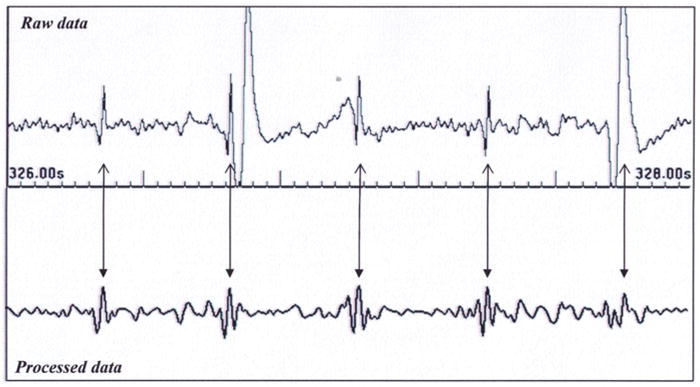
Introduction: As part of the fetal assessment for the Safe Passage Study, we recorded raw data of the fetal ECG via five maternal abdominal wall electrodes from 20 weeks to 23 weeks 6 days' gestation.
Materials: For this study were extracted and analyzed the FHR patterns from the stored raw data in 16 stillbirths where the fetus weighed less than 1000 g and where autopsy was performed.
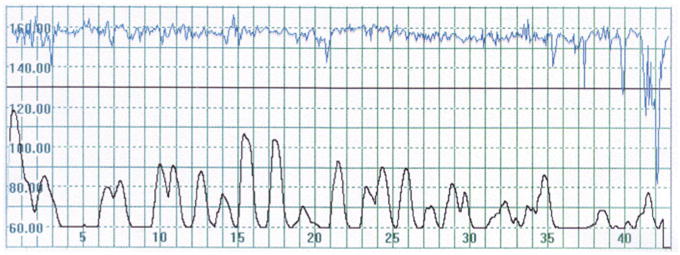
Results: Birth weights ranged from 190 to 970 g. The proportion FHR signal loss ranged from 0.3% to 21.1%. In the smallest fetus the heart weighed 1.3 g, yet the FHR signal loss was only 0.9%.
Keywords: Extremely small fetus; fetal heart rate patterns; stillbirth; transabdominal fECG.
Conflict of interest statement
No potential conflict of interest was reported by the authors.
Figures
References
-
- Crane JM, Magee LA, Lee T, et al. Maternal and perinatal outcomes of pregnancies delivered at 23 weeks’ gestation. J Obstet Gynaecol Can. 2015;37:214–224. - PubMed
-
- Resnik R. Electronic fetal monitoring: the debate goes on … and on … and on. Obstet Gynecol. 2013;121:917–918. - PubMed
-
- Graatsma EM, Jacod BC, Van Egmond LA, et al. Fetal electrocardiography: feasibility of long-term fetal heart rate recordings. BJOG. 2009;116:334–7. discussion 337. - PubMed
MeSH terms
Grants and funding
LinkOut - more resources
Full Text Sources
Other Literature Sources
Research Materials
