


Comparative analysis of microbial sensing molecules in mucosal tissues with aging
- PMID: 29066255
- PMCID: PMC5821569
- DOI: 10.1016/j.imbio.2017.10.034
Comparative analysis of microbial sensing molecules in mucosal tissues with aging
Abstract
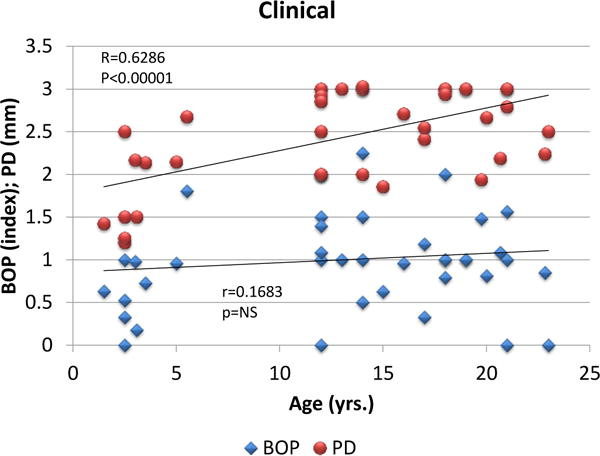
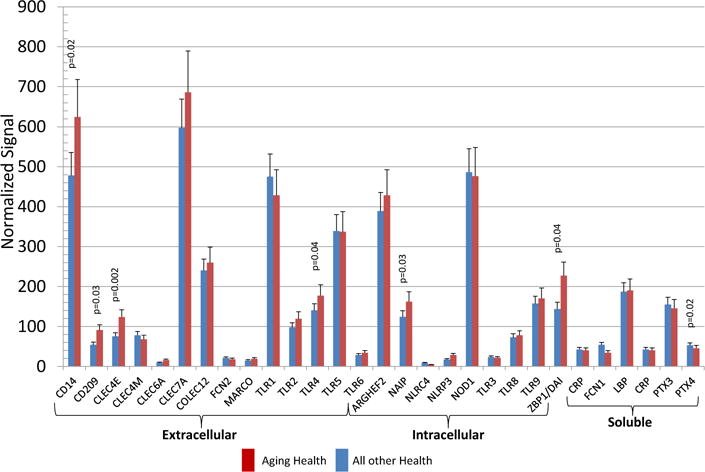
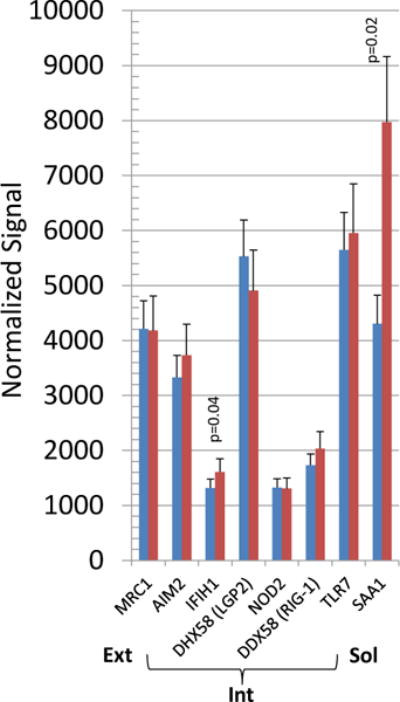
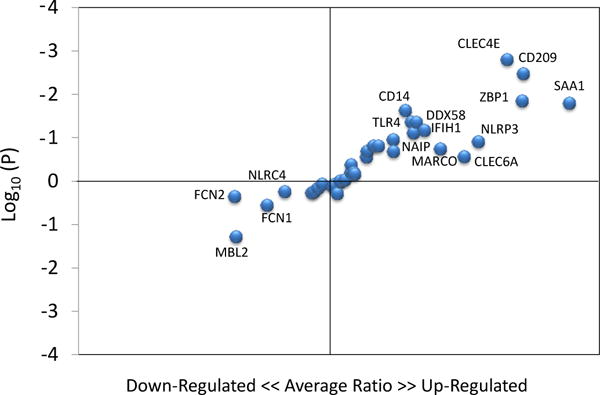
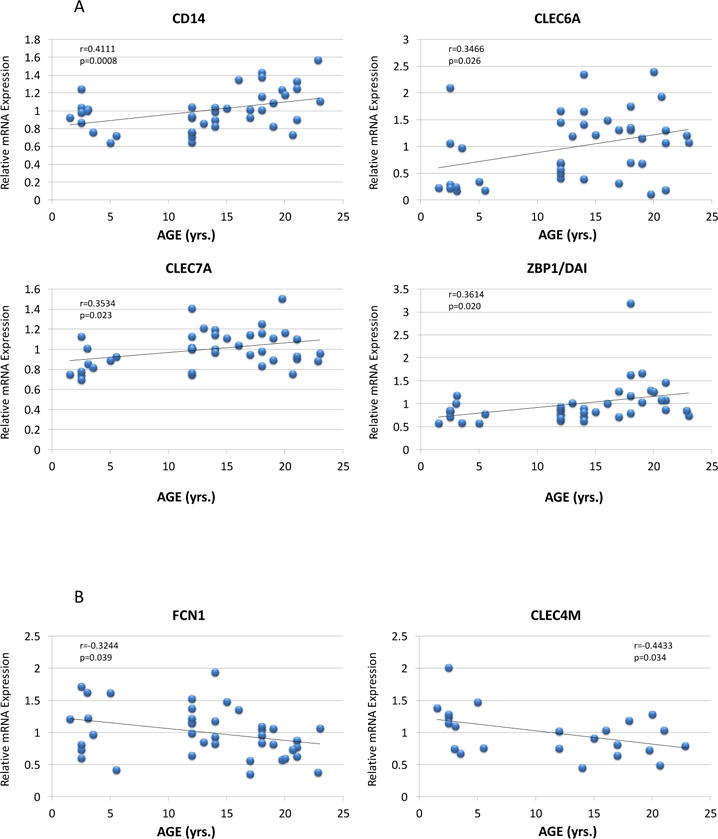
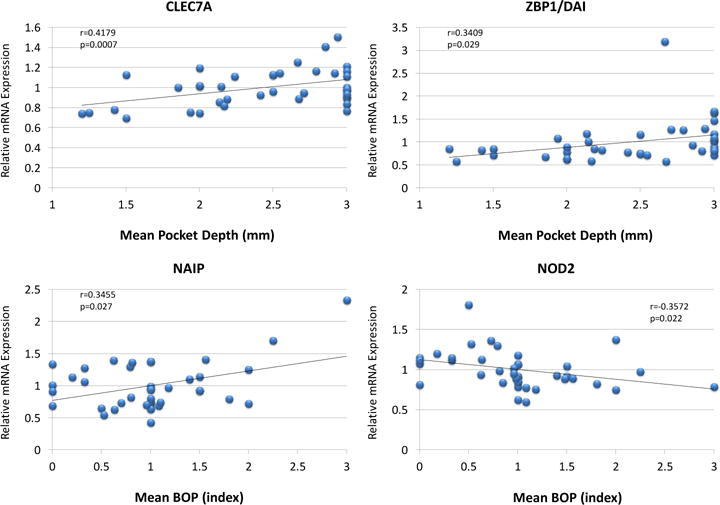
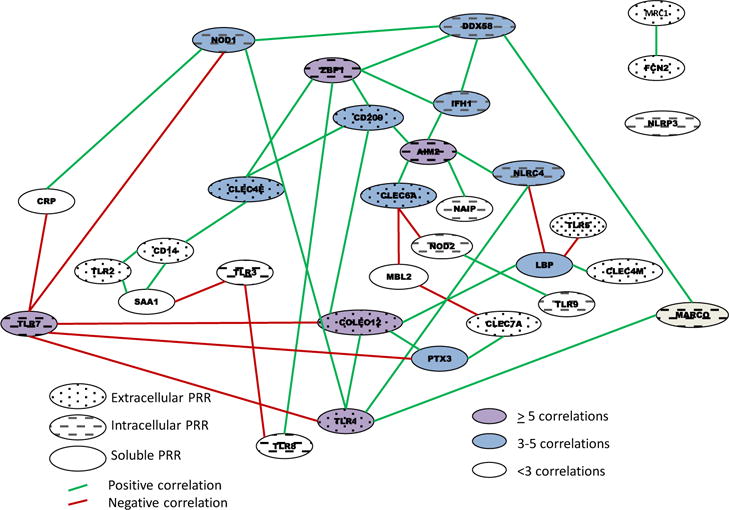
Host-bacterial interactions at mucosal surfaces require recognition of the bacteria by host cells enabling targeted responses to maintain tissue homeostasis. It is now well recognized that an array of host-derived pattern recognition receptors (PRRs), both cell-bound and soluble, are critical to innate immune engagement of microbes via microbial-associated molecular patterns (MAMP). This report describes the use of a nonhuman primate model to evaluate changes in the expression of these sensing molecules related to aging in healthy gingival tissues. Macaca mulatta aged 3-24 years were evaluated clinically and gingival tissues obtained, RNA isolated and microarray analysis conducted for gene expression of the sensing pattern recognition receptors (PRRs). The results demonstrated increased expression of various PRRs in healthy aging gingiva including extracellular (CD14, CD209, CLEC4E, TLR4), intracellular (NAIP, IFIH1, DAI) and soluble (PTX4, SAA1) PRRs. Selected PRRs were also correlated with both bleeding on probing (BOP) and pocket depth (PD) in the animals. These findings suggest that aged animals express altered levels of various PRRs that could affect the ability of the tissues to interact effectively with the juxtaposed microbial ecology, presumably contributing to an enhanced risk of periodontitis even in clinically healthy oral mucosal tissues with aging.
Keywords: Aging; Microbial sensing; Nonhuman primates; Oral mucosa; Pattern recognition receptors; Periodontitis.
Copyright © 2017 Elsevier GmbH. All rights reserved.
Conflict of interest statement
The Authors declare that there is no conflict of interest.
Figures
References
-
- Kopitar AN, Ihan Hren N, Ihan A. Commensal oral bacteria antigens prime human dendritic cells to induce Th1, Th2 or Treg differentiation. Oral Microbiol Immunol. 2006;21:1. - PubMed
-
- Nestle FO, Thompson C, Shimizu Y, Turka LA, Nickoloff BJ. Costimulation of superantigen-activated T lymphocytes by autologous dendritic cells is dependent on B7. Cell Immunol. 1994;156:220. - PubMed
-
- Makino M, Utsunomiya A, Maeda Y, Shimokubo S, Izumo S, Baba M. Association of CD40 ligand expression on HTLV-I-infected T cells and maturation of dendritic cells. Scand J Immunol. 2001;54:574. - PubMed
Publication types
MeSH terms
Substances
Grants and funding
LinkOut - more resources
Full Text Sources
Other Literature Sources
Medical
Research Materials
Miscellaneous
