. 2017 Oct 24;7(1):13952.
doi: 10.1038/s41598-017-14460-3.

Modelling acrylamide acute neurotoxicity in zebrafish larvae

Affiliations

Modelling acrylamide acute neurotoxicity in zebrafish larvae

Eva Prats et al. Sci Rep. .

Abstract

Acrylamide (ACR), a type-2 alkene, may lead to a synaptopathy characterized by ataxia, skeletal muscles weakness and numbness of the extremities in exposed human and laboratory animals. Currently, only the mildly affected patients undergo complete recovery, and identification of new molecules with therapeutic bioactivity against ACR acute neurotoxicity is urgently needed. Here, we have generated a zebrafish model for ACR neurotoxicity by exposing 5 days post-fertilization zebrafish larvae to 1 mM ACR for 3 days. Our results show that zebrafish mimics most of the pathophysiological processes described in humans and mammalian models. Motor function was altered, and specific effects were found on the presynaptic nerve terminals at the neuromuscular junction level, but not on the axonal tracts or myelin sheath integrity. Transcriptional markers of proteins involved in synaptic vesicle cycle were selectively altered, and the proteomic analysis showed that ACR-adducts were formed on cysteine residues of some synaptic proteins. Finally, analysis of neurotransmitters profile showed a significant effect on cholinergic and dopaminergic systems. These data support the suitability of the developed zebrafish model for screening of molecules with therapeutic value against this toxic neuropathy.


Conflict of interest statement

The authors declare that they have no competing interests.

Figures
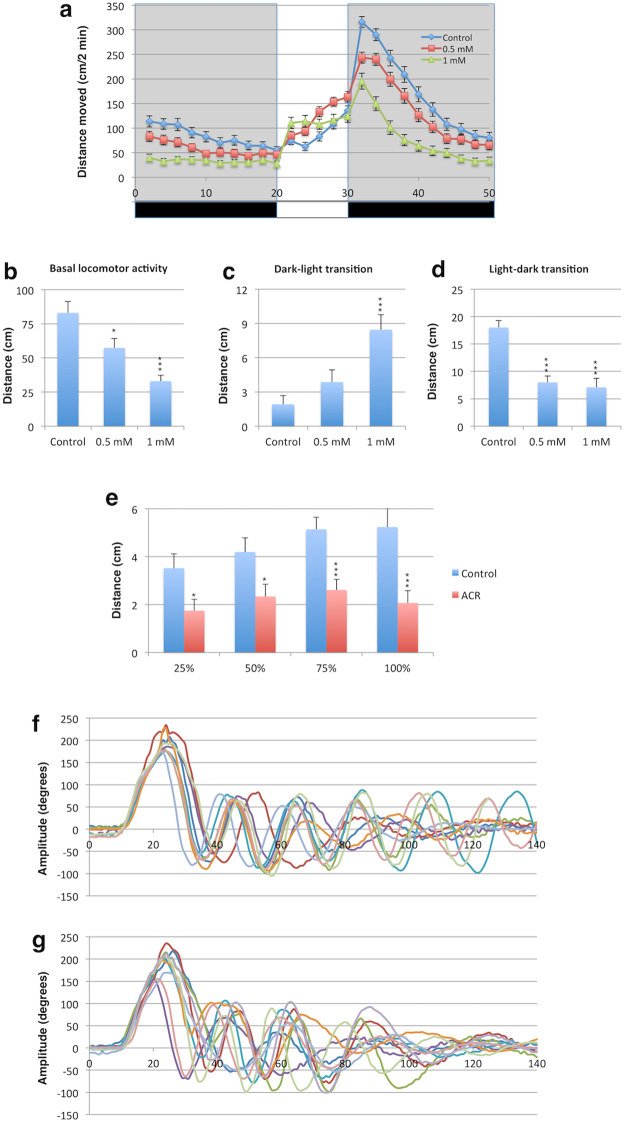
Figure 1
Figure 1
Motor response is strongly impaired by acrylamide (ACR) in zebrafish larvae. (a) Locomotor activity of 8 days post-fertilization zebrafish larvae control (n = 78) and exposed to 0.5 mM ACR (n = 79) and 1 mM ACR (n = 77) during a 20 min dark period followed by a 10 min light period and then a second cycle of 20 min of darkness. Data from 3 independent experiments. (b) Basal locomotor activity (BLA), defined as the distance moved by the larvae during the first period of 20 min in the dark, was significantly reduced by ACR. Statistical analysis performed using one-way ANOVA with Dunnett’s multiple comparison test;; *P < 0.05, ***P < 0.00001; Results represent mean ± sem. (c) 1 mM ACR, but not 0.5 mM ACR, induced a period of hyperactivity in the dark to light transition (the difference in activity between the 2 first min with light and the last 2 min of the first dark period is represented). Statistical analysis performed using one-way ANOVA with Dunnett’s multiple comparison test; ***P < 0.00001; Results represent mean ± sem. (d) Visual motor response (VMR), the hyperactivity period evoked by a sudden reduction in light intensity, is strongly reduced in larvae exposed to 0.5 and 1 mM ACR. Statistical analysis performed using one-way ANOVA with Dunnett’s multiple comparison test; ***P < 0.00001; Results represent mean ± sem. (e) Larvae exhibiting a total abolition of the VMR after 1 mM ACR exposure exhibit a significant reduction in the acoustic/vibrational motor response evoked by a solenoid at four different intensities. Statistical analysis using Student’s t-test, *P < 0.05, ***P < 0.001; Data from 20 control and 22 ACR-treated larva from 5 independent experiments); Results represent mean ± sem. (f,g) Kinematic of the touch-evoked escape response is altered in zebrafish larvae exposed to 1 mM acrylamide. Representative kinematic traces of the touch-evoked escape response of control (f) and ACR-treated (g) larvae. For each condition eight representative traces are shown from the first 140 ms of the escape response. Each trace is from a different larvae. The curvature of the body is represented in degrees, with 0 indicating straight body.
Figure 2
Figure 2
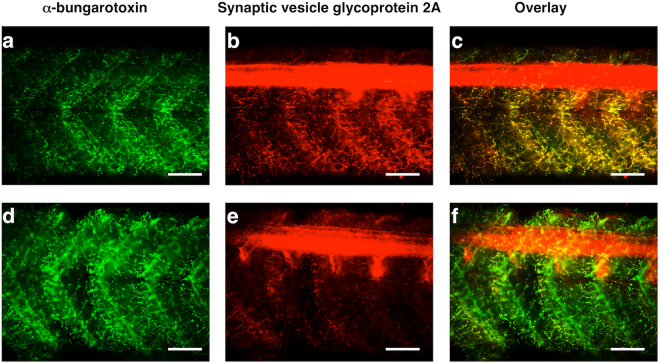
ACR reduces presynaptic nerve terminals in zebrafish larvae. At the neuromuscular junctions (NMJ) of the trunk, ACR-exposed larvae exhibit an strong reduction in the labelling of synaptic vesicle glycoprotein 2a (marker of synaptic terminals of the spinal motor neurons), whereas the α-bungarotoxin labelling (post-synaptic marker at the NMJ) labelling remains unaltered. Detail of the trunk, in lateral view, of control (ac) and ACR-treated (df) larvae after co-labelling with α -bungarotoxin Alexa Fluor 488 conjugate (a,d) and SV2 antibody. The co-localization of the pre-synaptic and post-synaptic markers of NMJ is also showed (c,f). Scale bar: 100 μm.
Figure 3
Figure 3
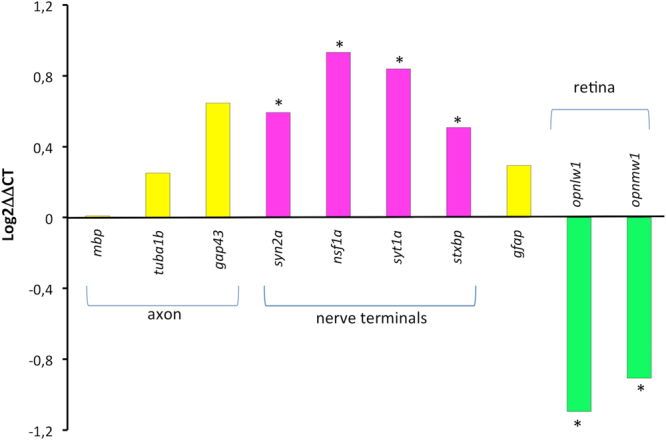
ACR exposure induces a significant change en the expression of transcripts related with the synaptic vesicle cycling and visual function.
Figure 4
Figure 4
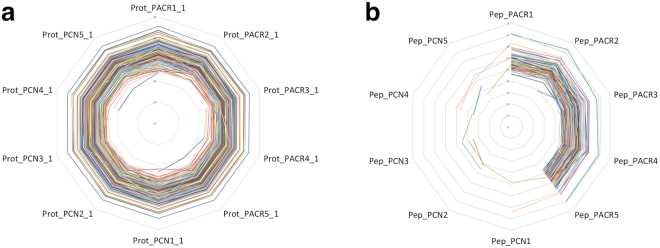
Proteins containing ACR-modified cysteine residues in at least 3 treated samples. (a) Expression levels of the 138 proteins containing ACR-modified cysteine residues; (b) Log-2 intensities of the peptides with ACR –adducts in cysteine residues. PCN: control pool; PACR: pool ACR.
Figure 5
Figure 5
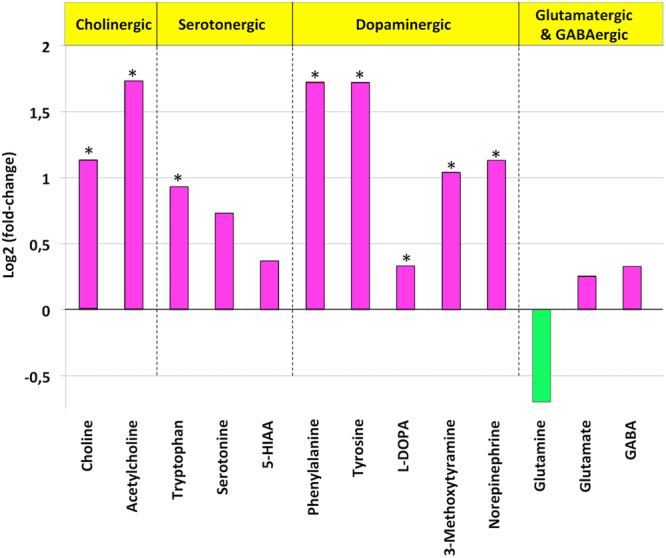
Changes in the profile of 13 neurochemicals (neurotransmitters, precursors, metabolites) in the zebrafish model for ACR acute neurotoxicity. Values are represented as log2 of fold change to control. Statistical analysis performed using Student’s t-test, *P < 0.05. Data from 2 independent experiments.

References

    1. Friedman M. Chemistry, biochemistry, and safety of acrylamide. A review. J Agric Food Chem. 2003;51:4504–4526. doi: 10.1021/jf030204+. - DOI - PubMed
    1. Seale SM, Feng Q, Agarwal AK, El-Alfy AT. Neurobehavioral and transcriptional effects of acrylamide in juvenile rats. Pharmacol Biochem Behav. 2012;101:77–84. doi: 10.1016/j.pbb.2011.12.006. - DOI - PubMed
    1. Elbashir AA, Omar MMA, Ibrahim WAW, Schmitz OJ, Aboul-Enein HY. Acrylamide analysis in food by liquid chromatographic and gas chromatographic methods. Crit Rev Anal Chem. 2014;44:107–141. doi: 10.1080/10408347.2013.829388. - DOI - PubMed
    1. LoPachin RM, Gavin T. Molecular mechanism of acrylamide neurotoxicity: lessons learned from organic chemistry. Environ Health Perspect. 2012;120:1650–1657. - PMC - PubMed
    1. Auld RB, Bedwell SF. Peripheral neuropathy with sympathetic overactivity from industrial contact with acrylamide. Can Med Assoc J. 1967;96:652–654. - PMC - PubMed

Publication types