


Design of the NL-ENIGMA study: Exploring the effect of Souvenaid on cerebral glucose metabolism in early Alzheimer's disease
- PMID: 29067310
- PMCID: PMC5651347
- DOI: 10.1016/j.trci.2016.07.004
Design of the NL-ENIGMA study: Exploring the effect of Souvenaid on cerebral glucose metabolism in early Alzheimer's disease
Abstract
Introduction: Alzheimer's disease is associated with early synaptic loss. Specific nutrients are known to be rate limiting for synapse formation. Studies have shown that administering specific nutrients may improve memory function, possibly by increasing synapse formation. This Dutch study explores the Effect of a specific Nutritional Intervention on cerebral Glucose Metabolism in early Alzheimer's disease (NL-ENIGMA, Dutch Trial Register NTR4718, http://www.trialregister.nl/trialreg/admin/rctview.asp?TC=4718). The NL-ENIGMA study is designed to test whether the specific multinutrient combination Fortasyn Connect present in the medical food Souvenaid influences cerebral glucose metabolism as a marker for improved synapse function.
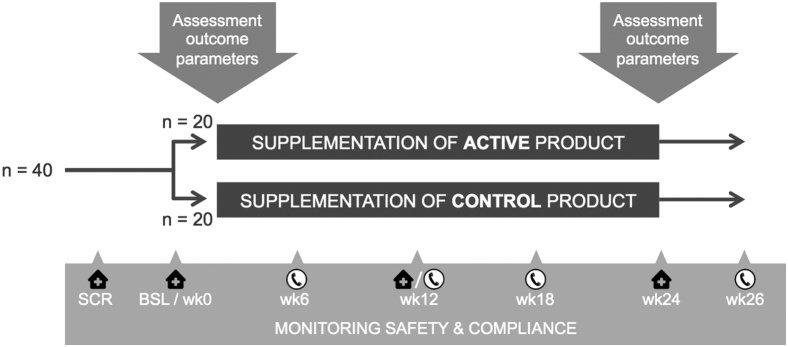
Methods: This study is a double-blind, randomized controlled parallel-group single-center trial. Forty drug-naive patients with mild cognitive impairment or mild dementia with evidence of amyloid deposition are 1:1 randomized to receive either the multinutrient combination or placebo once daily. Main exploratory outcome parameters include absolute quantitative positron emission tomography with 18F-fluorodeoxyglucose (including arterial sampling) and standard uptake value ratios normalized for the cerebellum or pons after 24 weeks.
Discussion: We expect the NL-ENIGMA study to provide further insight in the potential of this multinutrient combination to improve synapse function.
Keywords: Alzheimer's disease; Diet; Nutritional intervention; Randomized clinical trial; Synapse formation; Synaptic activity; [18F]FDG-PET.
References
-
- Selkoe D.J. Alzheimer's disease is a synaptic failure. Science. 2002;298:789–791. - PubMed
-
- Morris M.C., Evans D.A., Bienias J.L., Tangney C.C., Bennett D.A., Wilson R.S. Consumption of fish and n-3 fatty acids and risk of incident Alzheimer disease. Arch Neurol. 2003;60:940–946. - PubMed
-
- Kyle D.J., Schaefer E., Patton G., Beiser A. Low serum docosahexaenoic acid is a significant risk factor for Alzheimer's dementia. Lipids. 1999;34:S245. - PubMed
-
- Kalmijn S., Launer L.J., Ott A., Witteman J.C., Hofman A., Breteler M.M. Dietary fat intake and the risk of incident dementia in the Rotterdam Study. Ann Neurol. 1997;42:776–782. - PubMed
LinkOut - more resources
Full Text Sources
Other Literature Sources
Miscellaneous