


Determination of the Deacetylation Degree of Chitooligosaccharides
- PMID: 29068401
- PMCID: PMC5706022
- DOI: 10.3390/md15110332
Determination of the Deacetylation Degree of Chitooligosaccharides
Abstract
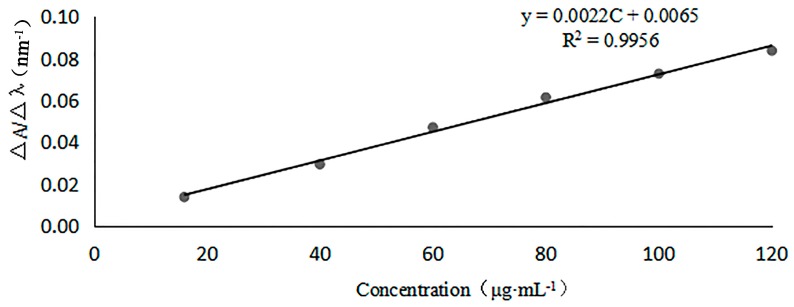
The methods for determination of chitosan content recommended in the Chinese Pharmacopoeia and the European Pharmacopoeia are not applicable for evaluation of the extent of deacetylation (deacetylation degree, DD) in chitooligosaccharides (COS). This study explores two different methods for assessment of DD in COS having relatively high and low molecular weights: an acid-base titration with bromocresol green indicator and a first order derivative UV spectrophotometric method for assessment of DD in COS. The accuracy of both methods as a function of molecular weight was also investigated and compared to results obtained using ¹H NMR spectroscopy. Our study demonstrates two simple, fast, widely adaptable, highly precise, accurate, and inexpensive methods for the effective determination of DD in COS, which have the potential for widespread commercial applications in developing country.
Keywords: 1H NMR; acid-base titration; bromocresol green; chitooligosaccharides; deacetylation; first-order derivative UV spectra.
Conflict of interest statement
The authors declare no conflicts of interest.
Figures
References
-
- Yeul V.S., Rayalu S.S. Unprecedented chitin and chitosan: A chemical overview. J. Polym. Environ. 2012;21:606–614. doi: 10.1007/s10924-012-0458-x. - DOI
-
- Kim S.-K. Chitin, Chitosan, Oligosaccharides and Their Derivatives: Biological Activities and Applications. CRC Press; Boca Raton, FL, USA: 2010. pp. 173–191.
Publication types
MeSH terms
Substances
LinkOut - more resources
Full Text Sources
Other Literature Sources
