


The long-term outcomes of recurrent adhesive small bowel obstruction after colorectal cancer surgery favor surgical management
- PMID: 29069002
- PMCID: PMC5671835
- DOI: 10.1097/MD.0000000000008316
The long-term outcomes of recurrent adhesive small bowel obstruction after colorectal cancer surgery favor surgical management
Abstract
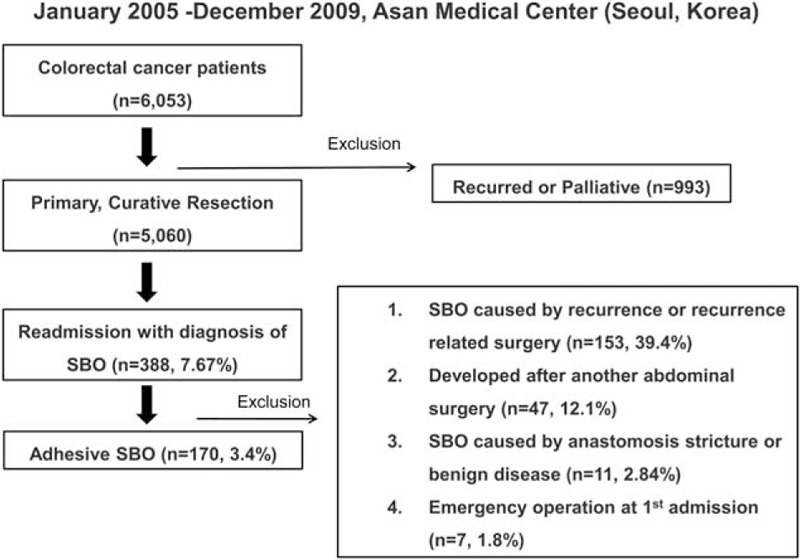
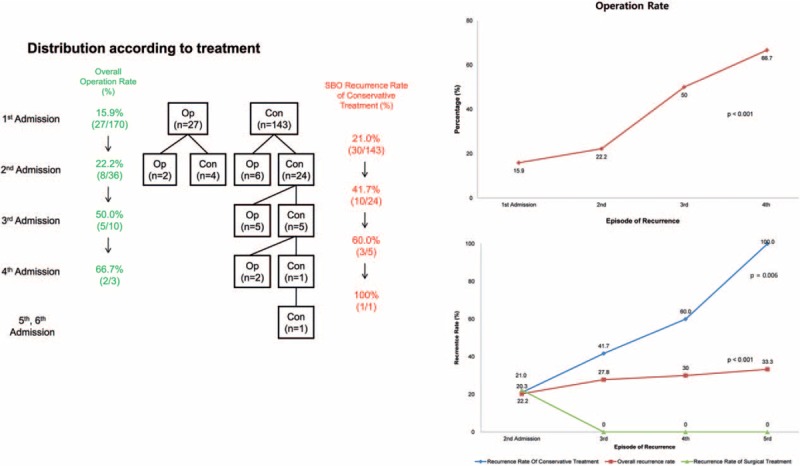
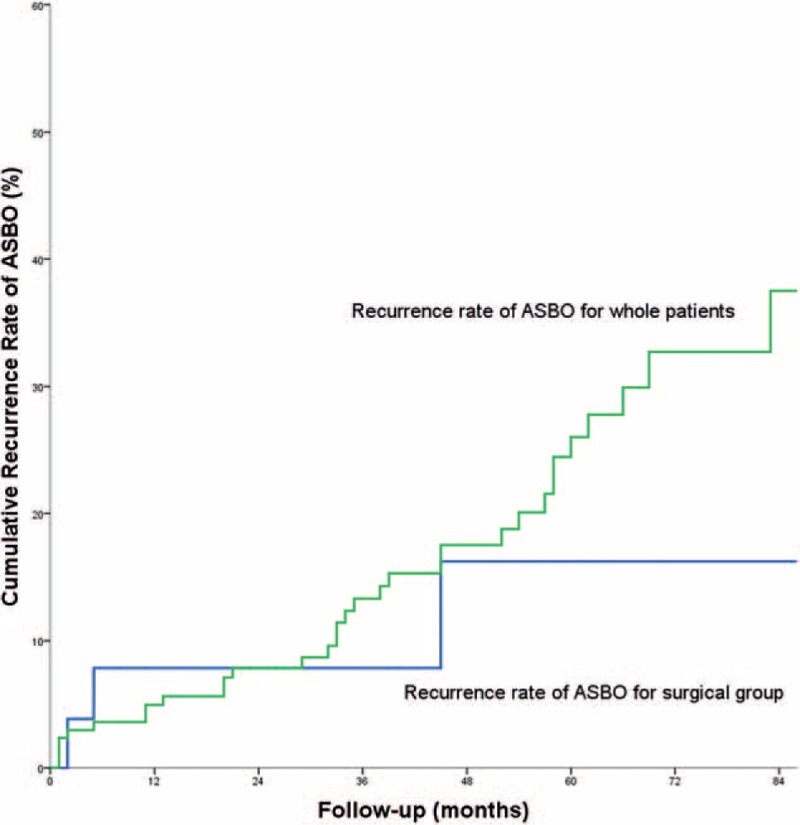
An adhesive small bowel obstruction (ASBO) is generally caused by postoperative adhesions and is more frequently associated with colorectal surgeries than other procedures. We compared the outcomes of operative and conservative management of ASBO after primary colorectal cancer surgery.We retrospectively reviewed 5060 patients who underwent curative surgery for primary colorectal cancer; 388 of these patients (7.7%) were readmitted with a diagnosis of SBO. We analyzed the clinical course of these patients with reference to the cause of their surgery.Of the 388 SBO patients analyzed, 170 were diagnosed with ASBO. Their 3-, 5-, and 7-year recurrence-free survival rates were 86.1%, 72.8%, and 61.5%, respectively. The median follow-up period was 59.2 months. Repeated conservative management for ASBO without surgical management led to higher recurrence rates: 21.0% after the first admission, 41.7% after the second, 60.0% after the third, and 100% after the fourth (P = .006). Surgical management was needed for 19.2%, 22.2%, 50%, and 66.7% of patients admitted with ASBO on the first to fourth hospitalizations, respectively. Repeated hospitalization for obstruction led to a greater possibility of surgical management (P = .001). Of 27 patients with surgical management at the first admission, 6 (17.6%) were readmitted with a diagnosis of SBO, but there were no further episodes of SBO in the surgically managed patients.Patients who undergo operative management for ASBO have a reduced risk of recurrence requiring hospitalization, whereas those with repeated conservative management have an increased risk of recurrence and require operative management. Operative management should be considered for recurrent SBO.
Conflict of interest statement
The authors report no funding and conflicts of interest.
Figures
References
-
- Miller G, Boman J, Shrier I, et al. Natural history of patients with adhesive small bowel obstruction. Br J Surg 2000;87:1240–7. - PubMed
-
- Parker MC, Ellis H, Moran BJ, et al. Postoperative adhesions: ten-year follow-up of 12,584 patients undergoing lower abdominal surgery. Dis Colon Rectum 2001;44:822–9. - PubMed
-
- Ellis H, Moran BJ, Thompson JN, et al. Adhesion-related hospital readmissions after abdominal and pelvic surgery: a retrospective cohort study. Lancet 1999;353:1476–80. - PubMed
-
- Beck DE, Opelka FG, Bailey HR, et al. Incidence of small-bowel obstruction and adhesiolysis after open colorectal and general surgery. Dis Colon Rectum 1999;42:578. - PubMed
-
- Cox MR, Gunn IF, Eastman MC, et al. The operative aetiology and types of adhesions causing small bowel obstruction. Aust N Z J Surg 1993;63:848–52. - PubMed
MeSH terms
LinkOut - more resources
Full Text Sources
Other Literature Sources
Medical
Molecular Biology Databases
