


Effectiveness of a new non-hydrogen peroxide bleaching agent after single use - a double-blind placebo-controlled short-term study
- PMID: 29069156
- PMCID: PMC5804394
- DOI: 10.1590/1678-7757-2016-0463
Effectiveness of a new non-hydrogen peroxide bleaching agent after single use - a double-blind placebo-controlled short-term study
Abstract
Introduction: Tooth whitening represents perhaps the most common aesthetic procedure in dentistry worldwide. The efficacy of bleaching depends on three aspects: bleaching agent, bleaching method, and tooth color.
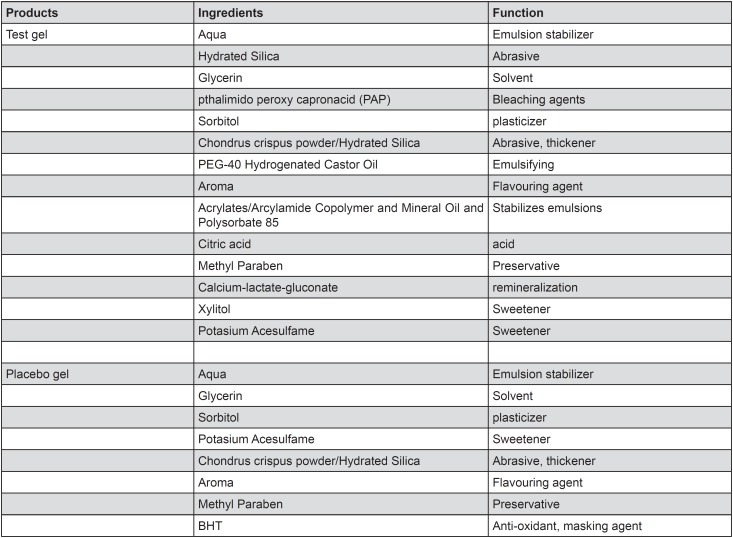
Objective: This in vivo study aimed to examine whitening effects on frontal teeth of the upper and lower jaws using an over-the-counter (OTC) non-hydrogen peroxide bleaching agent in comparison to a placebo after one single use.
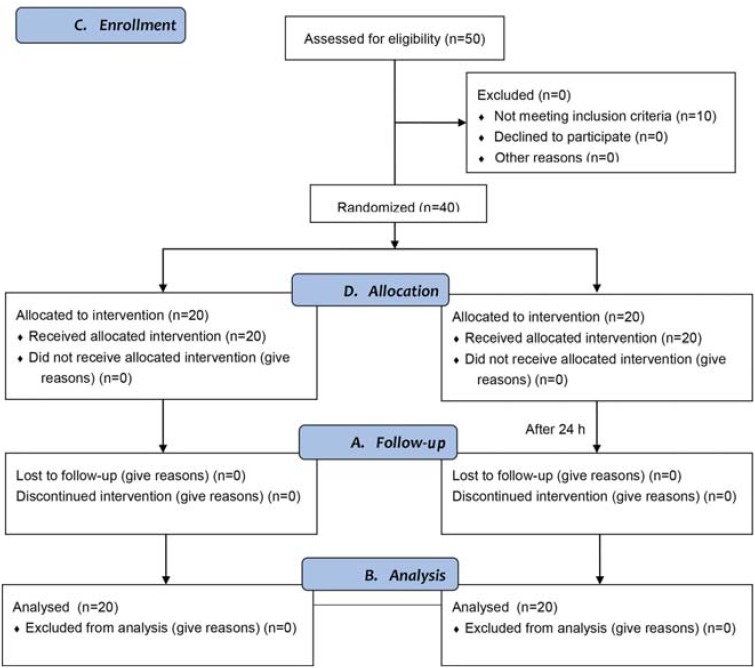
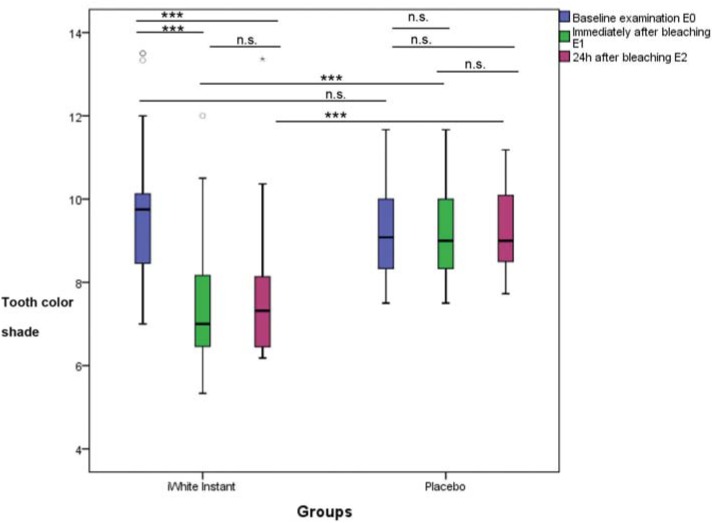
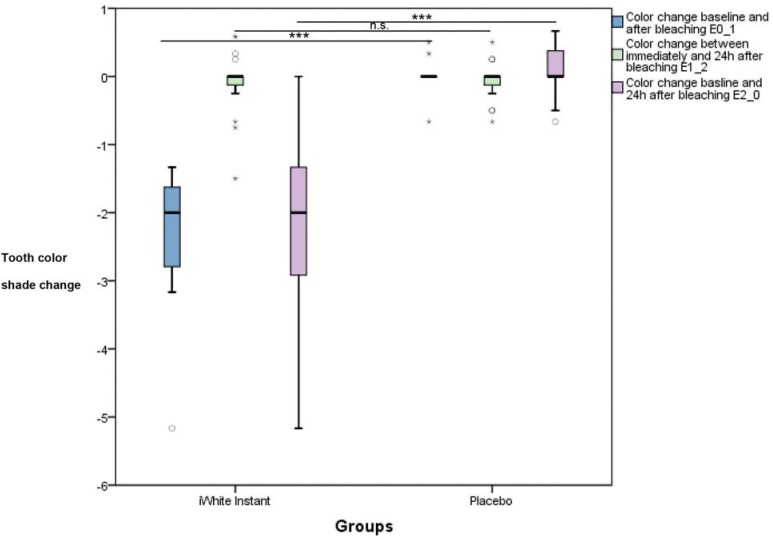
Material and methods: Forty subjects (25 female; 15 male) participated in this double-blind randomized placebo-controlled trial. The subjects were randomly allocated to two groups (n=20). The test group received the OTC product (iWhite Instant) and the placebo group received an identically composed product except for the active agents. Each subject was treated with a prefilled tray containing iWhite Instant or the placebo for 20 minutes. The tooth shade of the front teeth (upper and lower jaws) was assessed before (E_0), immediately after (E_1) and 24 h after treatment (E_2), using a shade guide (VITA classical). Statistical testing was accomplished using the Mann-Whitney U test (p<0.001). The dropout rate was 0%.
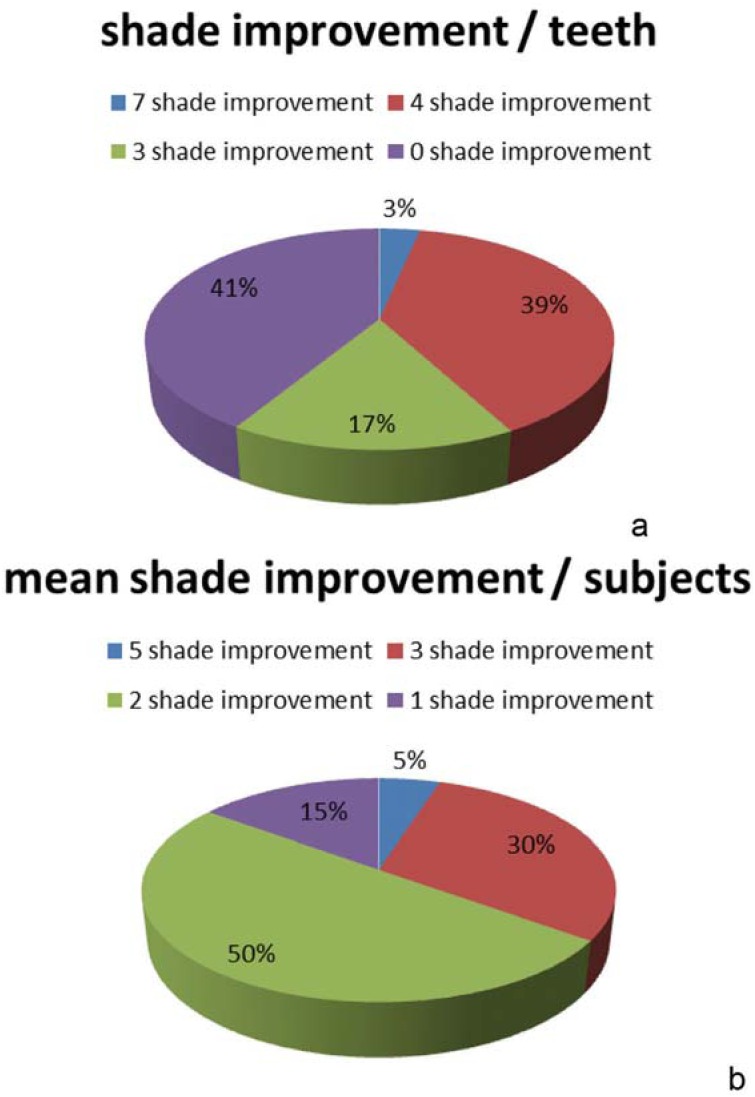
Results: There were no significant differences at E_0 between placebo and test groups regarding the tooth color. Differences in tooth color changes immediately after (ΔE1_0) and 24 h after treatment (ΔE2_0) were calculated for both groups. The mean values (standard deviations) of tooth color changes for ΔE1_0 were 2.26 (0.92) in the test group and 0.01 (0.21) in the placebo group. The color changes for ΔE2_0 showed mean values of 2.15 (1.10) in the test group and 0.07 (0.35) in the placebo group. For ΔE1_0 and ΔE2_0 significant differences were found between the groups.
Conclusion: In this short-term study, the results showed that a non-hydrogen peroxide bleaching agent has significant whitening effects immediately and 24 h after a single-use treatment.
Figures
References
-
- Addy M, Moran J. Extrinsic tooth discoloration by metals and chlorhexidine. II. Clinical staining produced by chlorhexidine, iron and tea. Br Dent J. 1985;159:331–334. - PubMed
-
- Al Shethri S, Matis BA, Cochran MA, Zekonis R, Stropes M. A clinical evaluation of two in-office bleaching products. Oper Dent. 2003;28:488–495. - PubMed
-
- Alkhatib MN, Holt R, Bedi R. Prevalence of self-assessed tooth discolouration in the United Kingdom. J Dent. 2004;32:561–566. - PubMed
-
- American Dental Association Council on Scientific Affairs Tooth whitening/bleaching: treatment considerations for dentists and their patients [internet] 2009. [cited 2016 Nov. 11]. Available from: https://www.ada.Org/~/media/ADA/About%20the%20ADA/Files/ada_house_of_del....
-
- Auschill TM, Hellwig E, Schmidale S, Sculean A, Arweiler NB. Efficacy, side-effects and patients’ acceptance of different bleaching techniques (OTC, in-office, at-home) Oper Dent. 2005;30:156–163. - PubMed
Publication types
MeSH terms
Substances
LinkOut - more resources
Full Text Sources
Other Literature Sources
