


Photosensitive drugs: a review on their photoprotection by liposomes and cyclodextrins
- PMID: 29069944
- PMCID: PMC8812581
- DOI: 10.1080/10717544.2017.1386733
Photosensitive drugs: a review on their photoprotection by liposomes and cyclodextrins
Abstract
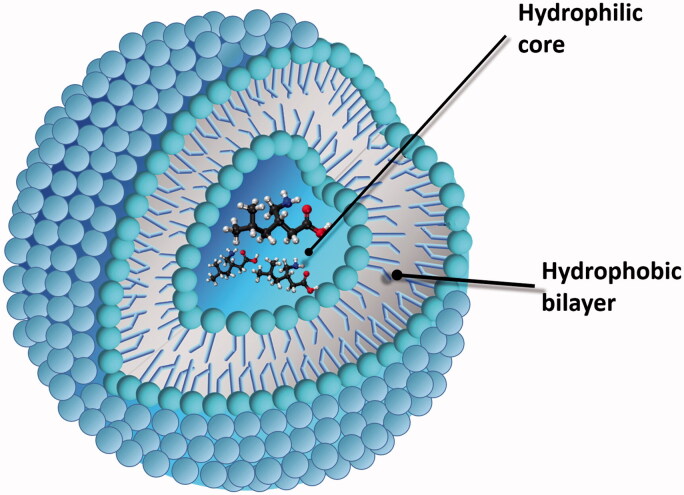
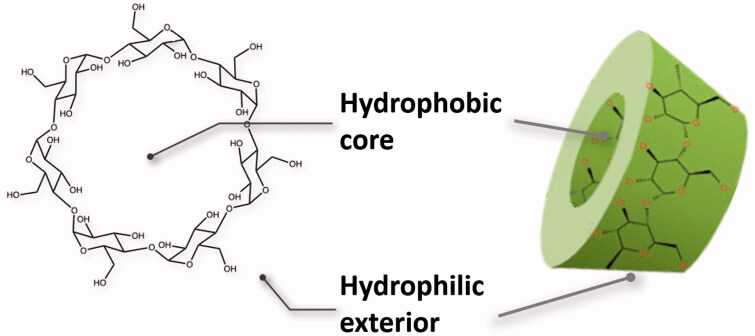
Nowadays, an exciting challenge in the drug chemistry and technology research is represented by the development of methods aimed to protect molecular integrity and therapeutic activity of drugs from effects of light. The photostability characterization is ruled by ICH (The International Council for Harmonization of Technical Requirements for Pharmaceuticals for Human Use), which releases details throughout basic protocols of stability tests to be performed on new medicinal products for human use. The definition of suitable photoprotective systems is fundamental for pharmaceutical manufacturing and for human healthy as well, since light exposure may affect either drugs or drug formulations giving rise even to allergenic or mutagenic by-products. Here, we summarize and discuss the recent studies on the formulation of photosensitive drugs into supramolecular systems, capable of entrapping the molecules in a hollow of their structure by weak noncovalent interactions and protecting them from light. The best known supramolecular matrices belong to the 'auto-assembled' structures, of which liposomes are the most representative, and the 'host-guest' systems, of which cyclodextrins represent the most common 'host' counterpart. A relevant number of papers concerning the use of both liposomes and cyclodextrins as photoprotection systems for drugs has been published over the last 20 years, demonstrating that this topic captures interest in an increasing number of researchers.
Keywords: Photolabile drugs; photoprotection; phototoxicity; stability tests; supramolecular matrices.
Conflict of interest statement
The authors report no conflicts of interest in this work.
Figures
References
-
- Abdelkader H, Wu Z, Al-Kassas R, et al. (2012). Niosomes and discomes for ocular delivery of naltrexone hydrochloride: morphological, rheological, spreading properties and photo-protective effects. Int J Pharm 433:142–8. - PubMed
-
- Ahmed M, Goldberg SN. (2004). Combination radiofrequency thermal ablation and adjuvant IV liposomal doxorubicin increases tissue coagulation and intratumoural drug accumulation. Int J Hyperth 20:781–802. - PubMed
-
- Albini A, Fasani E. (1998). Drugs photochemistry and photostability. Cambridge (UK): The Royal Society of Chemistry.
-
- Al-Jamal KT, Ramaswamy C, Florence AT. (2005). Supramolecular structures from dendrons and dendrimers. Adv Drug Deliv Rev 57:2238–70. - PubMed
-
- Allain L, Baertschi SW, Clapham D, et al. (2016). Implications of in-use photostability: proposed guidance for photostability testing and labeling to support the administration of photosensitive pharmaceutical products, part 3: oral drug products. J Pharm Sci 105:1586–94. - PubMed
Publication types
MeSH terms
Substances
LinkOut - more resources
Full Text Sources
Other Literature Sources
