Review
. 2017 Sep;44(5):337-350.
doi: 10.1159/000479981. Epub 2017 Sep 11.

Recombinant Antibodies to Arm Cytotoxic Lymphocytes in Cancer Immunotherapy

Affiliations
Review

Recombinant Antibodies to Arm Cytotoxic Lymphocytes in Cancer Immunotherapy

Joachim Koch et al. Transfus Med Hemother. 2017 Sep.

Abstract

Immunotherapy has the potential to support and expand the body's own armamentarium of immune effector functions, which have been circumvented during malignant transformation and establishment of cancer and is presently considered to be the most promising treatment option for cancer patients. Recombinant antibody technologies have led to a multitude of novel antibody formats, which are in clinical development and hold great promise for future therapies. Among these formats, bispecific antibodies are extremely versatile due to their high efficacy to recruit and activate anti-tumoral immune effector cells, their excellent safety profile, and the opportunity for use in combination with cellular therapies. This review article summarizes the latest developments in cancer immunotherapy using immuno-engagers for recruiting T cells and NK cells to the tumor site. In addition to antibody formats, malignant cell targets, and immune cell targets, opportunities for combination therapies, including check point inhibitors, cytokines and adoptive transfer of immune cells, will be summarized and discussed.

Keywords: ADCC; Bispecific antibodies; CD16; Cellular therapy; Immuno-engager; Immuno-oncology; Recombinant antibodies; TandAb.


Figures
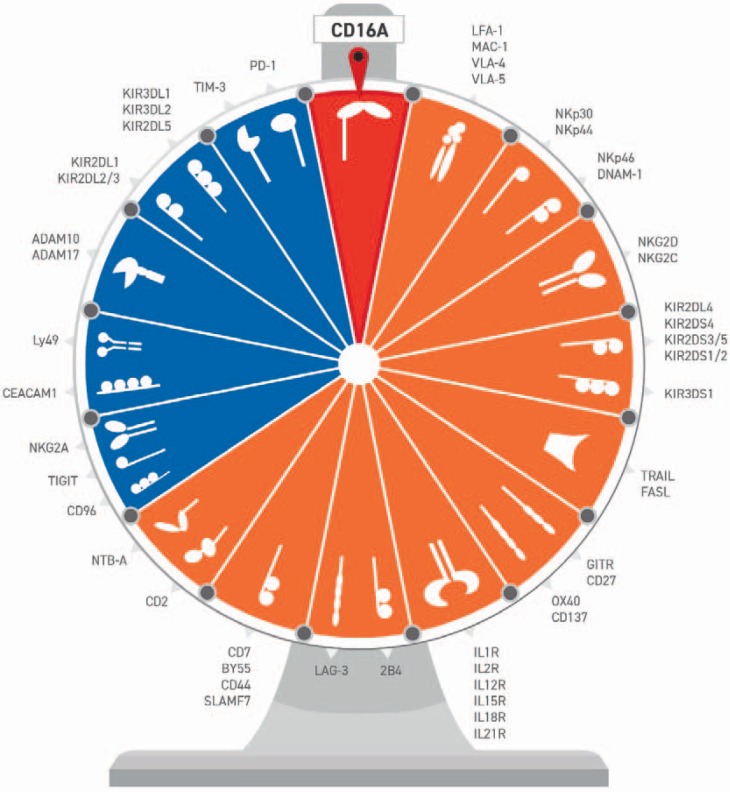
Fig. 1
Fig. 1
Major inhibitory and activating NK cell receptors. Inhibitory receptors (blue) are important for self/non-self-discrimination. The net input of individual or several activating receptors (orange/red) triggers cytotoxicity of NK cells towards target cells. NK cell activation can be initiated by loss of inhibitory signaling, e. g. upon downregulation/loss of HLA molecules on the plasma membrane of target cells (‘missing self’), and/or (over)expression of stress-induced ligands on target cells which trigger signaling of activating NK cell receptors (‘induced self’). CD16A = Fc-gamma RIII-alpha; LFA-1 = complement receptor C3 subunit beta; MAC-1 = macrophage integrin VLA-4 = integrin alpha-4; VLA-5 = integrin alpha-5; NKp30 = natural cytotoxicity triggering receptor 3; NKp44 = natural cytotoxicity triggering receptor 2; NKp46 = natural cytotoxicity triggering receptor 1; DNAM-1 = DNAX accessory molecule 1; NKG2D = killer cell lectin-like receptor subfamily K member 1; NKG2C = killer cell lectin-like receptor subfamily C = member 2; KIR2DL = killer cell immunoglobulin-like receptor, two domains, long cytoplasmic tail; KIR2DS = killer cell immunoglobulin-like receptor, two domains, short cytoplasmic tail; TRAIL = tumor necrosis factor-related apoptosis-inducing ligand; FASL = Fas ligand; GITR = glucocorticoid-induced TNFR-related protein; CD27 = tumor necrosis factor receptor superfamily member 7; OX40 = tumor necrosis factor receptor superfamily member 4; CD137 = tumor necrosis factor receptor superfamily member 9; ILXR = interleukin X receptor (X indicates number of interleukin); 2B4 = NK cell type I receptor protein 2B4; LAG-3 = lymphocyte-activation gene 3; CD7 = T-cell leukemia antigen; BY55 = natural killer cell receptor BY55; CD44 = GP90 lymphocyte homing/adhesion receptor; SLAMF7 = SLAM family member 7; CD2 = T-cell surface antigen CD2; NTB-A = SLAM family member 6; CD96 = T-cell surface protein tactile; TIGIT = T cell immunoreceptor with Ig and ITIM domains; NKG2A = killer cell lectin-like receptor subfamily C member 1; CEACAM1 = carcinoembryonic antigen-related cell adhesion molecule 1; Ly49 = killer cell lectin-like receptor subfamily A = member 1; ADAM = disintegrin and metalloproteinase domain-containing protein; TIM-3 = T-cell immunoglobulin and mucin domain-containing protein 3; PD-1 = programmed cell death protein 1.
Fig. 2
Fig. 2
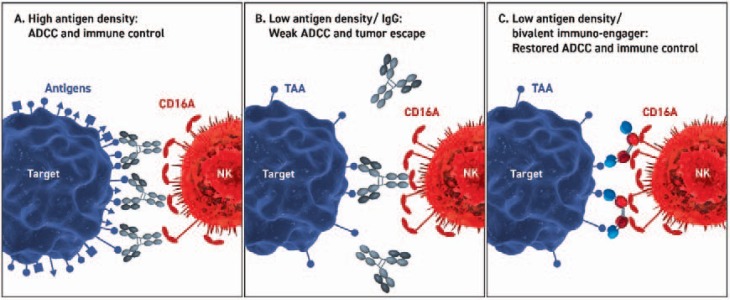
Scenarios of antibody-mediated immune cell and target cell engagement. Engagement is shown at high antigen density (A) and at low antigen density with IgG-based (B) and recombinant bispecific tetravalent immuno-engagers (C). A At high antigen densities on the target cell (e.g. virus infection, blue) a polyclonal antibody response is initiated leading to saturating opsonization of the target cell and robust ADCC upon Fc binding to CD16A on the NK cell (red). B At limiting antigen densities on the target cell (e.g. malignantly transformed cells), an insufficient degree of opsonization of the target cell by IgG molecules leads to a low level of ADCC and thus tumor immune escape due to few low affinity interactions between the Fc domains and CD16A. C At limiting antigen densities on the target cell (see B) bispecific tetravalent immuno-engagers enable robust ADCC and immune control due to multivalent and apparent high affinity binding to CD16A.
Fig. 3
Fig. 3
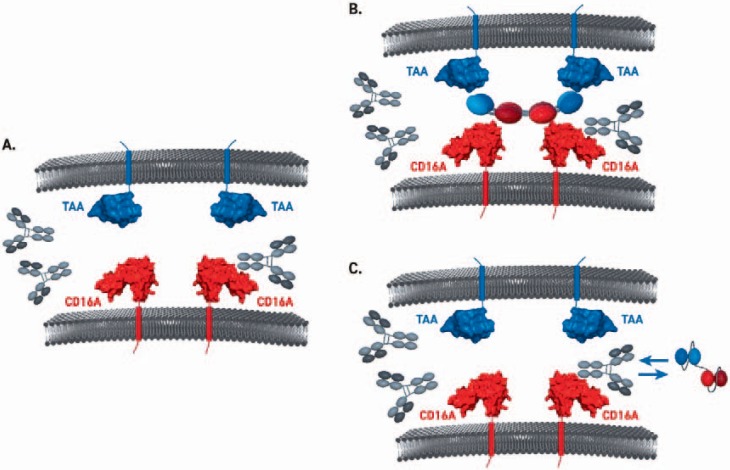
Models for CD16A engagement and IgG competition. A/B In the ground state, CD16A on innate immune cells is occupied by polyclonal plasma IgG. This creates a threshold for Fc-based therapeutic antibodies or immuno-engagers, employing the recognition site on CD16A also bound by the Fc proportion of IgG antibodies, thus limiting therapeutic potential. C Tetravalent bispecific immuno-engagers, which recognize a different epitope on CD16A, are virtually unaffected by plasma IgG. This enables high affinity binding of CD16A and respective tumor antigens leading to strong ADCC and immuno-surveillance.
Fig. 4
Fig. 4
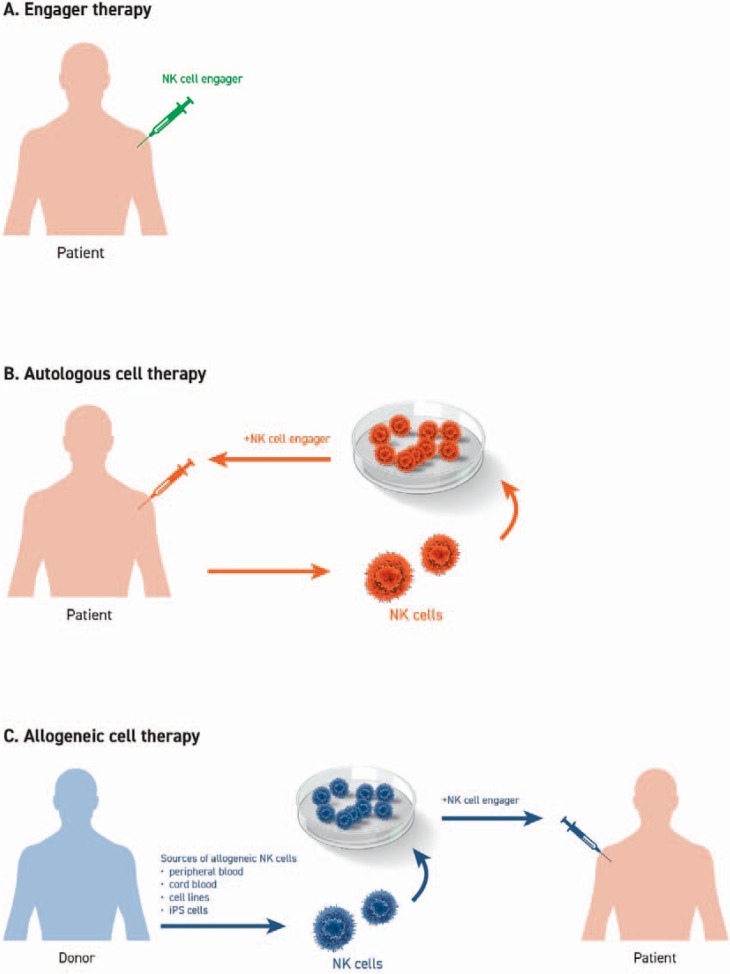
Adoptive NK cells in cancer therapy. A A patient's own NK cells can be stimulated by monotherapy using NK cell engagers to overcome tumor immune evasion and immunosuppression. B Ex vivo expansion and stimulation of autologous NK cells followed by re-infusion in combination with NK cell engagers is a viable therapeutic approach providing increased numbers of activated NK cells. C Alternatively, NK cells can be derived from peripheral blood, cord blood or iPS cells of healthy donors (allogeneic setting) or from immortalized cell lines. After ex vivo stimulation and expansion, NK cells are infused into the patient in combination with NK cell engagers.
Table 2
Table 2
Overview of bi-specific T-cell engagers in clinical development*
Table 3
Table 3
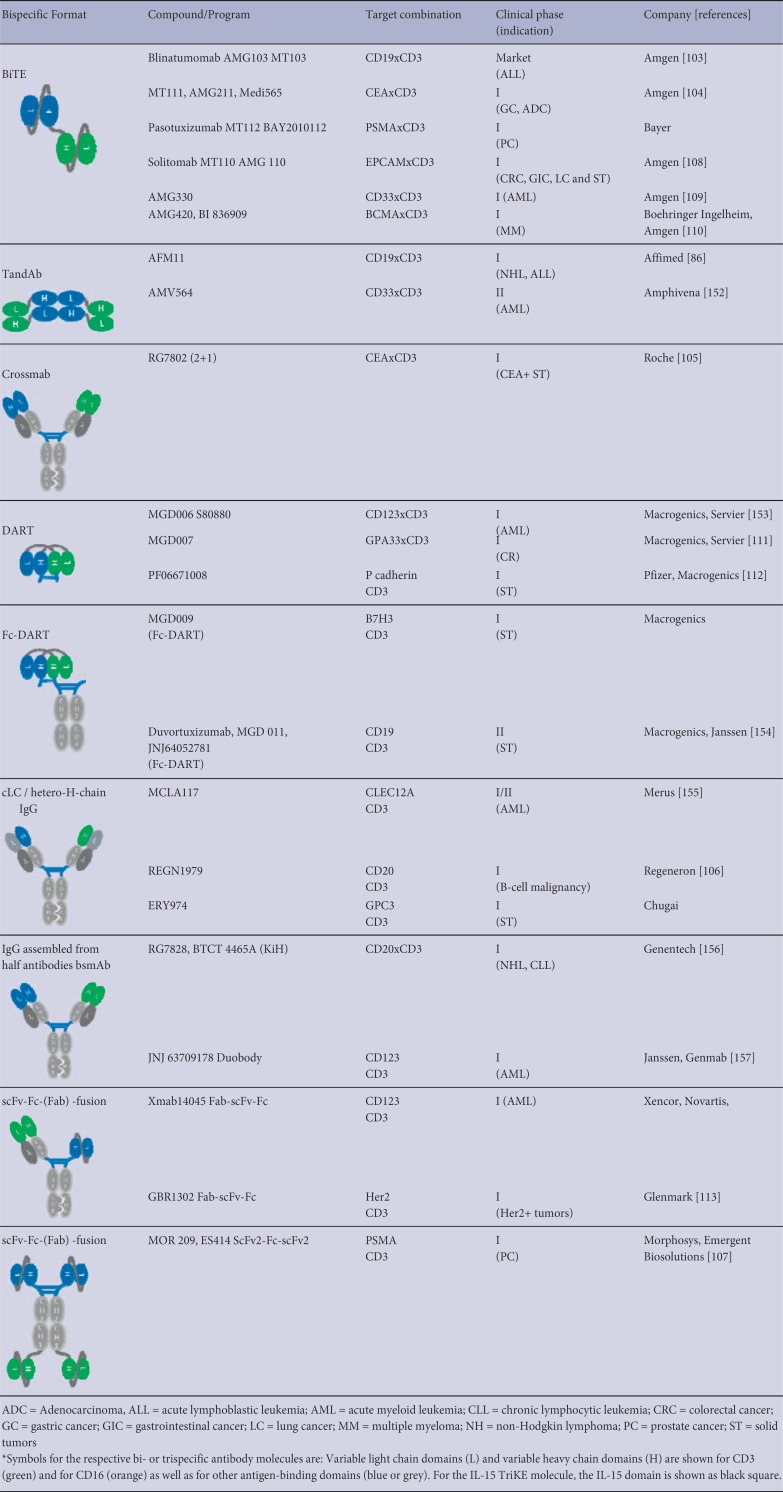
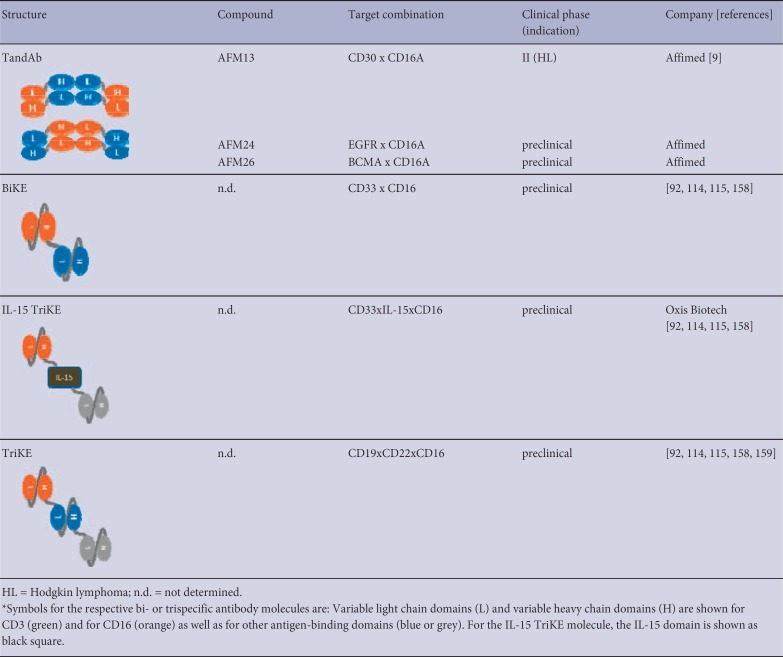
Overview of bi-specific NK-cell engagers in clinical development*

References

    1. Dunn GP, Old LJ, Schreiber RD. The three Es of cancer immunoediting. Annu Rev Immunol. 2004;22:329–360. - PubMed
    1. Vivier E, Tomasello E, Baratin M, Walzer T, Ugolini S. Functions of natural killer cells. Nat Immunol. 2008;9:503–510. - PubMed
    1. Lanier LL. NK cell recognition. Annu Rev Immunol. 2005;23:225–274. - PubMed
    1. Lanier LL. Of snowflakes and natural killer cell subsets. Nat Biotechnol. 2014;32:140–142. - PubMed
    1. Chan A, Hong DL, Atzberger A, Kollnberger S, Filer AD, Buckley CD, McMichael A, Enver T, Bowness P. CD56bright human NK cells differentiate into CD56dim cells: role of contact with peripheral fibroblasts. J Immunol. 2007;179:89–94. - PubMed