


Treatment of scapholunate ligament injury: Current concepts
- PMID: 29071123
- PMCID: PMC5644424
- DOI: 10.1302/2058-5241.2.170016
Treatment of scapholunate ligament injury: Current concepts
Abstract
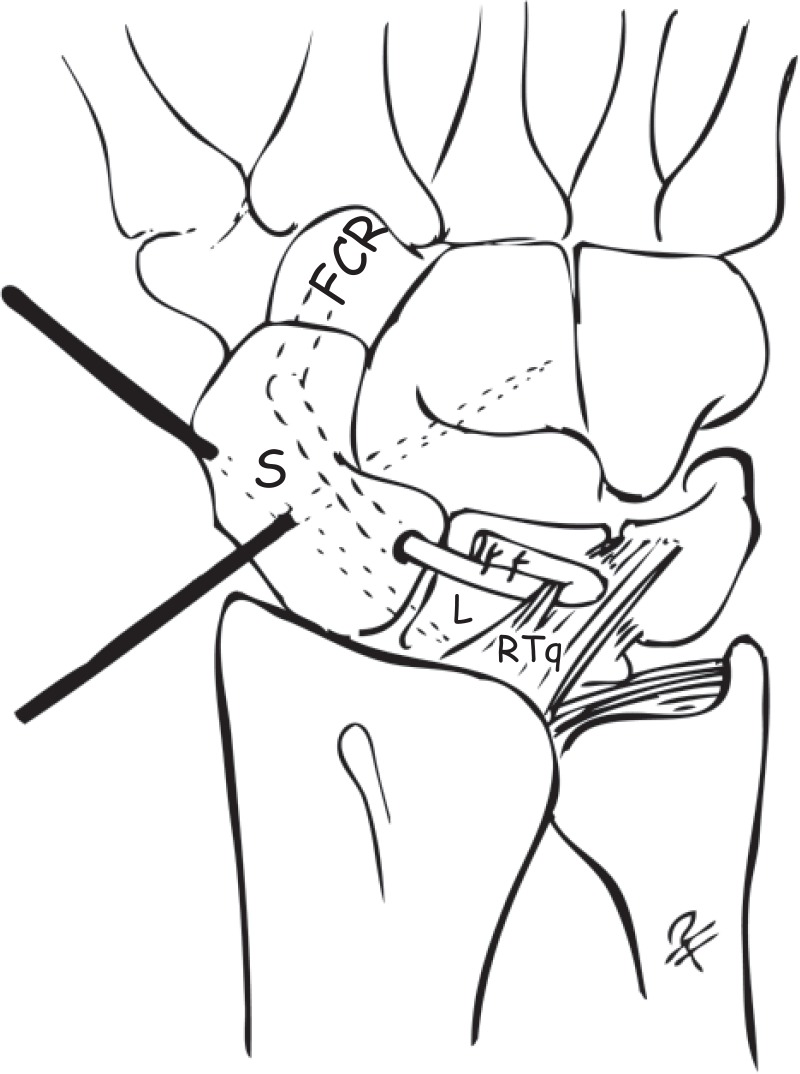
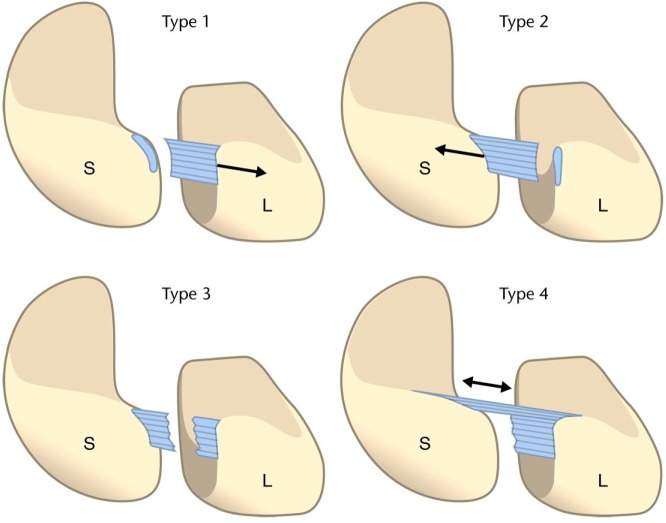
Injuries to the scapholunate joint are the most common cause of carpal instability.An isolated injury to the scapholunate ligament may progress to abnormal joint mechanics and degenerative cartilage changes.Treatment for scapholunate instability is aimed at arresting the degenerative process by restoring ligament continuity and normalising carpal kinematics.Early arthroscopic diagnosis of scapholunate injury is mandatory for establishing the prognosis of the injury, as a proper ligament repair is recommended within four to six weeks after trauma.In this review, anatomy, diagnosis and treatment of scapholunate ligament injury and carpal instability are discussed. Recommendations for treatment based on the stage and classification of injury and the degree of instability and arthritic changes are proposed. Cite this article: EFORT Open Rev 2017;2:382-393. DOI: 10.1302/2058-5241.2.170016.
Keywords: carpal instability; scapholunate ligament; wrist; wrist arthroscopy.
Conflict of interest statement
ICMJE Conflict of interest statement: None declared.
Figures



References
-
- Kuo CE, Wolfe SW. Scapholunate instability: current concepts in diagnosis and management. J Hand Surg Am 2008;33:998-1013. - PubMed
-
- Berger RA. The gross and histologic anatomy of the scapholunate interosseous ligament. J Hand Surg Am 1996;21:170-178. - PubMed
-
- Garcia-Elias M. Carpal instability. In: Wolfe SW, Hotchkiss RN, Pederson WC, Kozin SH, eds. Green’s operative hand surgery. Vol 1 Sixth ed New York: Elsevier Churchill Livingstone, 2011:465-522.
-
- Kitay A, Wolfe SW. Scapholunate instability: current concepts in diagnosis and management. J Hand Surg Am 2012;37:2175-2196. - PubMed
-
- Corella F, Del Cerro M, Larrainzar-Garijo R, Vázquez T. Arthroscopic ligamentoplasty (bone-tendon-tenodesis). A new surgical technique for scapholunate instability: preliminary cadaver study. J Hand Surg Eur 2011;36:682-689. - PubMed
LinkOut - more resources
Full Text Sources
Other Literature Sources
