


Proportional Feedback Control of Energy Intake During Obesity Pharmacotherapy
- PMID: 29071809
- PMCID: PMC5757521
- DOI: 10.1002/oby.21978
Proportional Feedback Control of Energy Intake During Obesity Pharmacotherapy
Abstract
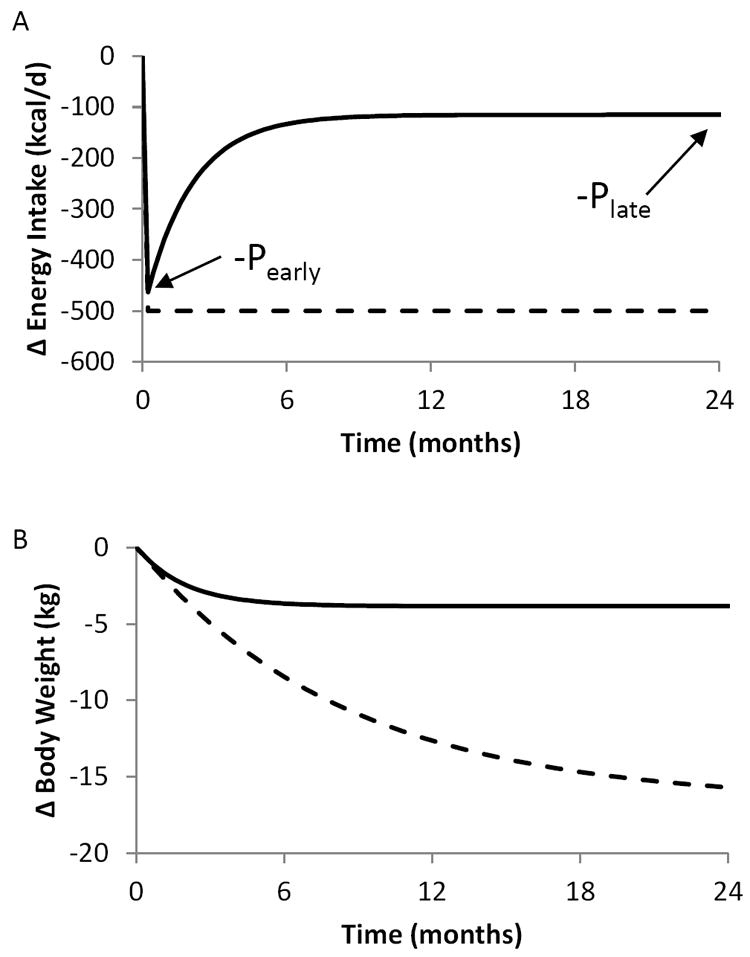
Objective: Obesity pharmacotherapies result in an exponential time course for energy intake whereby large early decreases dissipate over time. This pattern of declining drug efficacy to decrease energy intake results in a weight loss plateau within approximately 1 year. This study aimed to elucidate the physiology underlying the exponential decay of drug effects on energy intake.
Methods: Placebo-subtracted energy intake time courses were examined during long-term obesity pharmacotherapy trials for 14 different drugs or drug combinations within the theoretical framework of a proportional feedback control system regulating human body weight.
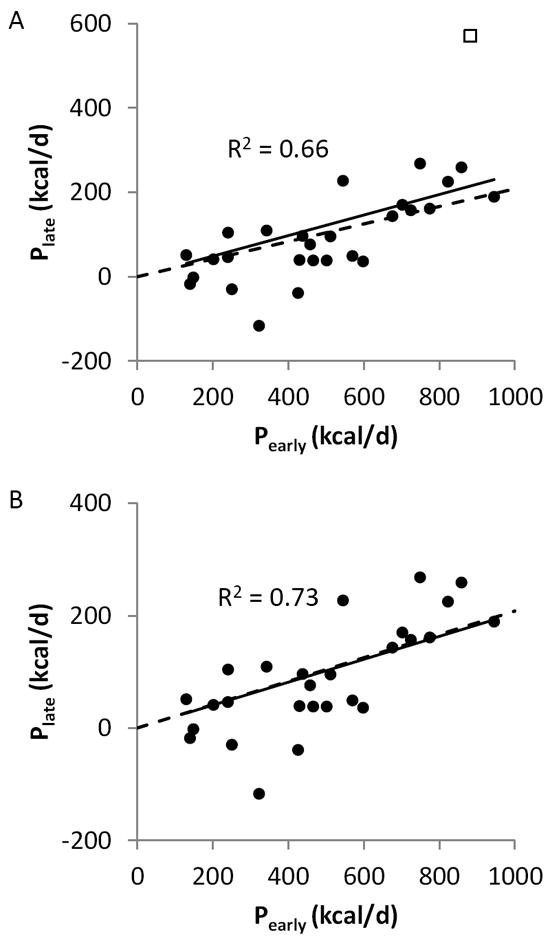
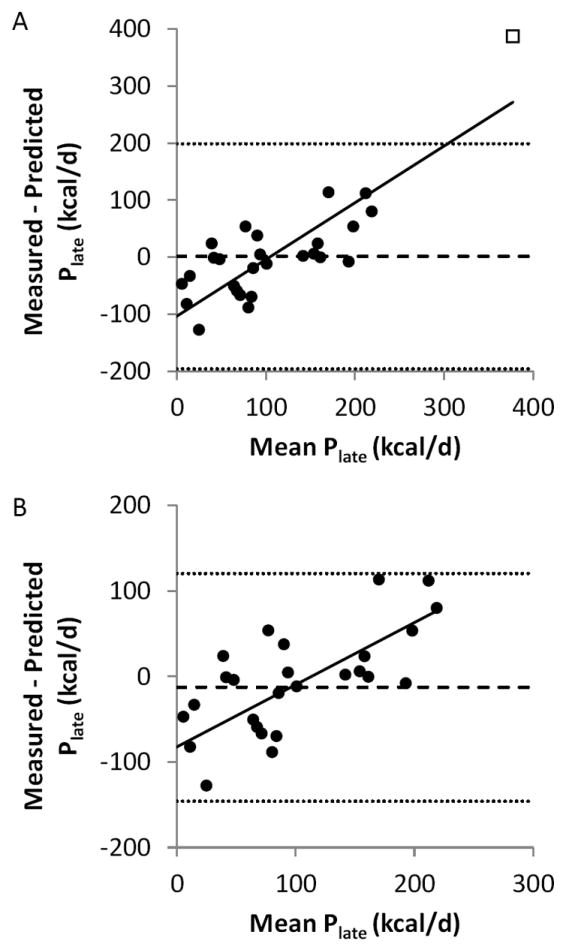
Results: Assuming each obesity drug had a relatively constant effect on average energy intake and did not affect other model parameters, our model correctly predicted that long-term placebo-subtracted energy intake was linearly related to early reductions in energy intake according to a prespecified equation with no free parameters. The simple model explained about 70% of the variance between drug studies with respect to the long-term effects on energy intake, although a significant proportional bias was evident.
Conclusions: The exponential decay over time of obesity pharmacotherapies to suppress energy intake can be interpreted as a relatively constant effect of each drug superimposed on a physiological feedback control system regulating body weight.
© 2017 The Obesity Society.
Figures
Comment in
-
Why is it Difficult to Lose and Maintain Large Amounts of Weight with Lifestyle and Pharmacologic Treatments?Obesity (Silver Spring). 2017 Dec;25(12):2017. doi: 10.1002/oby.22045. Epub 2017 Oct 29. Obesity (Silver Spring). 2017. PMID: 29081067 No abstract available.
References
MeSH terms
Grants and funding
LinkOut - more resources
Full Text Sources
Other Literature Sources
Medical
