The interpersonal theory of suicide: A systematic review and meta-analysis of a decade of cross-national research
- PMID: 29072480
- PMCID: PMC5730496
- DOI: 10.1037/bul0000123
The interpersonal theory of suicide: A systematic review and meta-analysis of a decade of cross-national research
Abstract
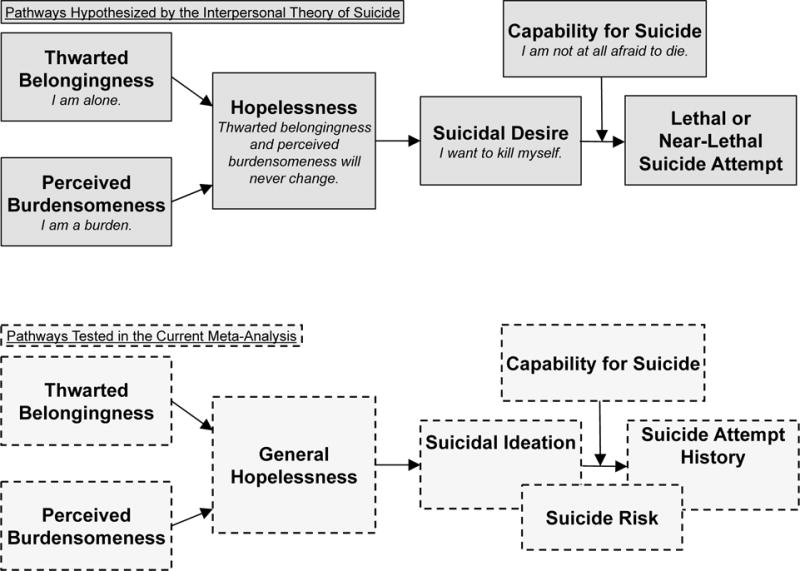
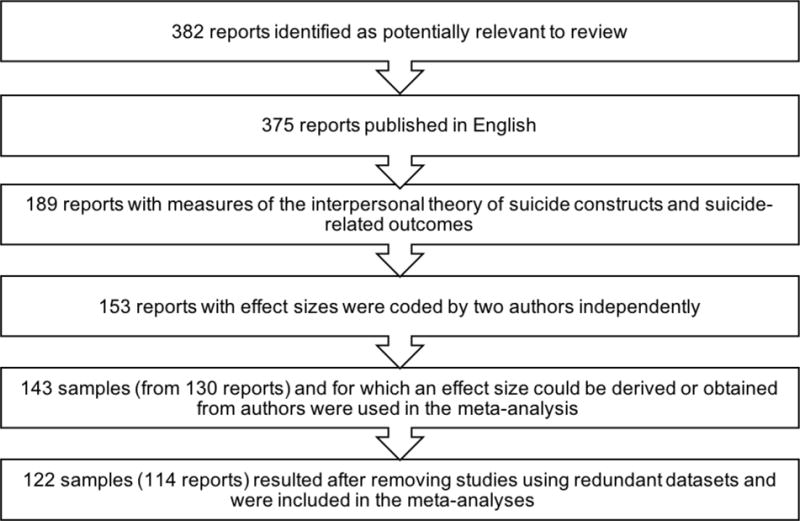
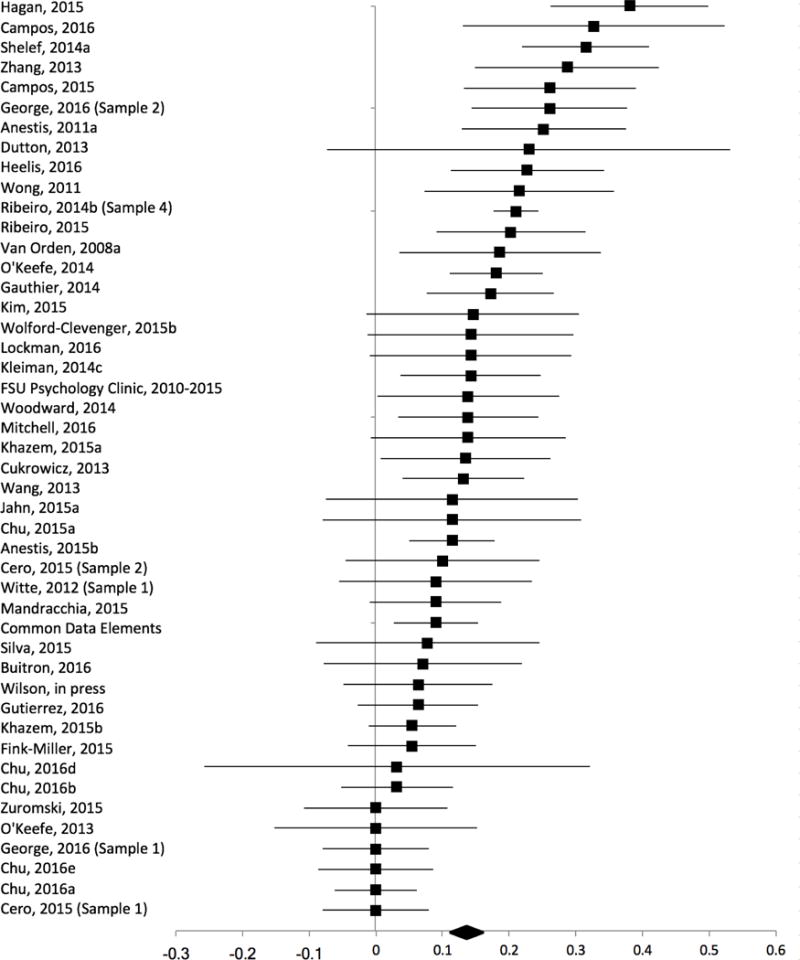
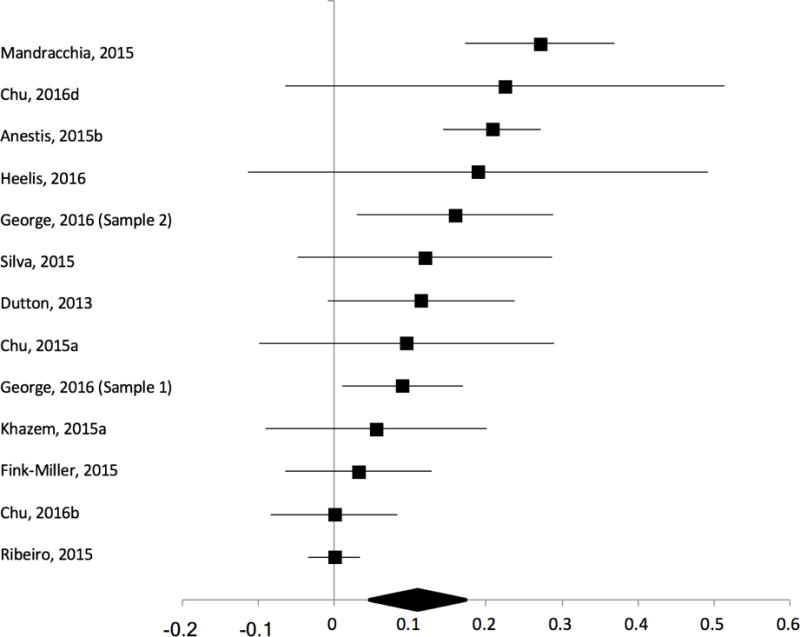
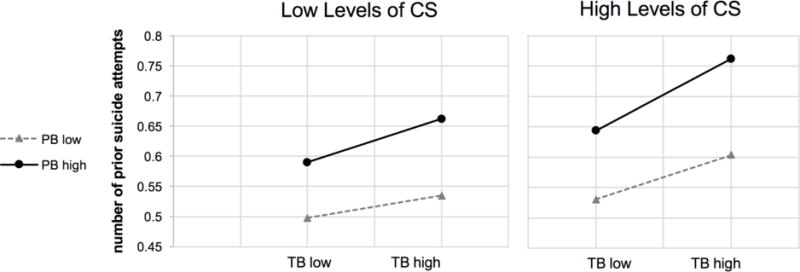
Over the past decade, the interpersonal theory of suicide has contributed to substantial advances in the scientific and clinical understanding of suicide and related conditions. The interpersonal theory of suicide posits that suicidal desire emerges when individuals experience intractable feelings of perceived burdensomeness and thwarted belongingness and near-lethal or lethal suicidal behavior occurs in the presence of suicidal desire and capability for suicide. A growing number of studies have tested these posited pathways in various samples; however, these findings have yet to be evaluated meta-analytically. This paper aimed to (a) conduct a systematic review of the unpublished and published, peer-reviewed literature examining the relationship between interpersonal theory constructs and suicidal thoughts and behaviors, (b) conduct meta-analyses testing the interpersonal theory hypotheses, and (c) evaluate the influence of various moderators on these relationships. Four electronic bibliographic databases were searched through the end of March, 2016: PubMed, Medline, PsycINFO, and Web of Science. Hypothesis-driven meta-analyses using random effects models were conducted using 122 distinct unpublished and published samples. Findings supported the interpersonal theory: the interaction between thwarted belongingness and perceived burdensomeness was significantly associated with suicidal ideation; and the interaction between thwarted belongingness, perceived burdensomeness, and capability for suicide was significantly related to a greater number of prior suicide attempts. However, effect sizes for these interactions were modest. Alternative configurations of theory variables were similarly useful for predicting suicide risk as theory-consistent pathways. We conclude with limitations and recommendations for the interpersonal theory as a framework for understanding the suicidal spectrum. (PsycINFO Database Record
(c) 2017 APA, all rights reserved).
Figures
References
-
- Anestis JC, Anestis MD, Rufino KA, Cramer RJ, Miller H, Khazem LR, Joiner TE. Understanding the relationship between suicidality and psychopathy: An examination of the interpersonal-psychological theory of suicidal behavior. Archives of Suicide Research. 2016:1–20. doi: 10.1080/13811118.2015.1048399. - DOI - PubMed
-
- Anestis MD, Joiner TE. Examining the role of emotion in suicidality: Negative urgency as an amplifier of the relationship between components of the interpersonal–psychological theory of suicidal behavior and lifetime number of suicide attempts. Journal of Affective Disorders. 2011c;129(1):261–269. doi: 10.1016/j.jad.2010.08.006. - DOI - PubMed
Publication types
MeSH terms
Grants and funding
LinkOut - more resources
Full Text Sources
Other Literature Sources
Medical
Miscellaneous