


Transcriptome-wide analysis reveals the progress of Cordyceps militaris subculture degeneration
- PMID: 29073171
- PMCID: PMC5657973
- DOI: 10.1371/journal.pone.0186279
Transcriptome-wide analysis reveals the progress of Cordyceps militaris subculture degeneration
Abstract
Background: The entomopathogenic mushroom Cordyceps militaris is an important medicinal and food resource owing to its various medicinal components and pharmacological effects. However, the high frequency of strain degeneration during subculture seriously restricts the large-scale production of C. militaris, and the mechanism underlying strain degeneration remains unclear. In this study, we artificially cultured C. militaris for six generations and compared changes during fruiting body growth. The transcriptome of six generations of C. militaris strains were sequenced with the Illumine Hiseq4000.
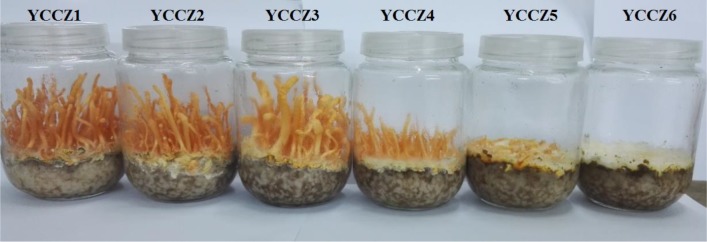
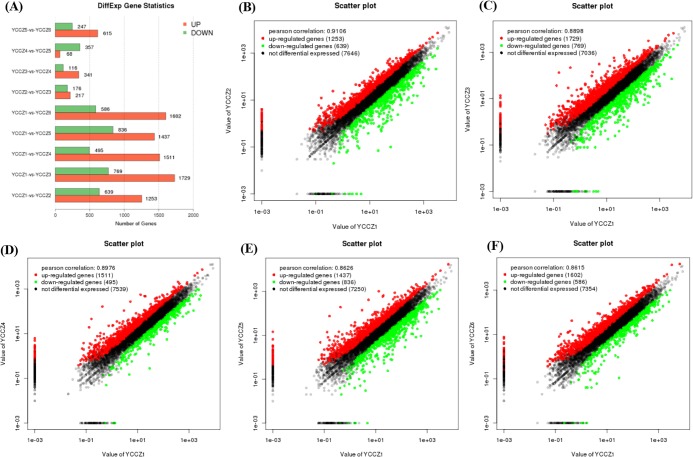
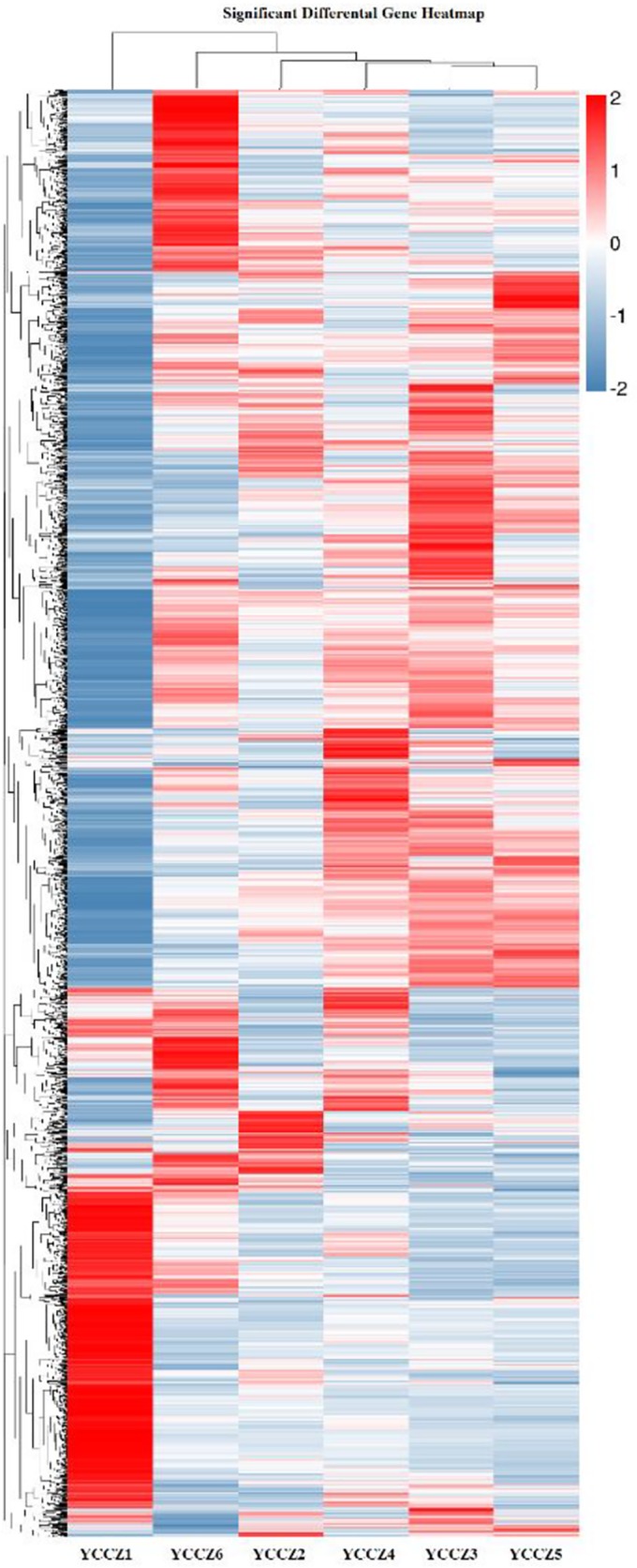
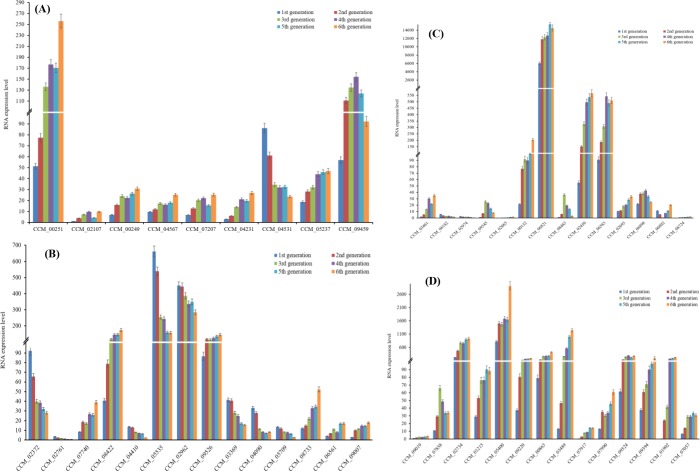
Results: The subcultured C. militaris strains degenerated beginning at the third generation, with incomplete fruiting body growth beginning at the fourth generation. Over 9,015 unigenes and 731 new genes were identified. In addition, 35,323 alternative splicing (AS) events were detected in all samples, and more AS events occurred in the second, fourth and sixth generations. Compared with the first generation, the third generation (degenerated strain) included 2,498 differentially expressed genes (DEGs) including 1,729 up-regulated and 769 down-regulated genes. This number was higher than the number of DEGs in the second (1,892 DEGs), fourth (2,006 DEGs), fifth (2,273 DEGs) and sixth (2,188 DEGs) generations. Validation of RNA-seq by qRT-PCR showed that the expression patterns of 51 DEGs were in accordance with the transcriptome data.
Conclusion: Our results suggest that the mechanism of C. militaris strain degeneration is associated with gene involved in toxin biosynthesis, energy metabolism, and DNA methylation and chromosome remodeling.
Conflict of interest statement
Figures
References
-
- Wu F, Yan H, Ma X, Jia J, Zhang G, Guo X, et al. Comparison of the structural characterization and biological activity of acidic polysaccharides from Cordyceps militaris cultured with different media. World J Microbiol Biotech. 2012; 28(5): 2029–2038. doi: 10.1007/s11274-012-1005-6 - DOI - PubMed
-
- Leung PH, Zhao S, Ho KP, Wu JY. Chemical properties and antioxidant activity of exopolysaccharides from mycelial culture of Cordyceps sinensis fungus Cs-HK1. Food Chem. 2009;114(4): 1251–1256. doi: 10.1016/j.food -chem.2008.10.081 - DOI
-
- Kuo YC, Tsai WJ, Wang JY, Chang SC, Lin CY, Shiao MS. Regulation of bronchoalveolar lavage fluids cell function by the immunomodulatory agents from Cordyceps sinensis. Life Sci. 2001;68(9): 1067–1082. doi: 10.1016/ S0024-3205(00)01011-0 - DOI - PubMed
-
- Yu R, Yang W, Song L, Yan C, Zhang Z, Zhao Y. Structural characterization and antioxidant activity of a polysaccharide from the fruiting bodies of cultured Cordyceps militaris. Carbohydr Polym. 2007;70(4): 430–436. doi: 10.1016/ j.carbpol.2007.05.005 - DOI
-
- Lin YW, Chiang BH. Anti-tumor activity of the fermentation broth of Cordyceps militaris cultured in the medium of Radix astragali. Process Biochem. 2008; 43(3): 244–250. doi: 10.1016/j.procbio.2007.11.020 - DOI
Publication types
MeSH terms
LinkOut - more resources
Full Text Sources
Other Literature Sources
Research Materials
