


Transdifferentiation of adult rat stem Leydig cells into prostatic and uterine epithelium, but not epidermis
- PMID: 29073338
- PMCID: PMC5677516
- DOI: 10.1111/andr.12415
Transdifferentiation of adult rat stem Leydig cells into prostatic and uterine epithelium, but not epidermis
Abstract
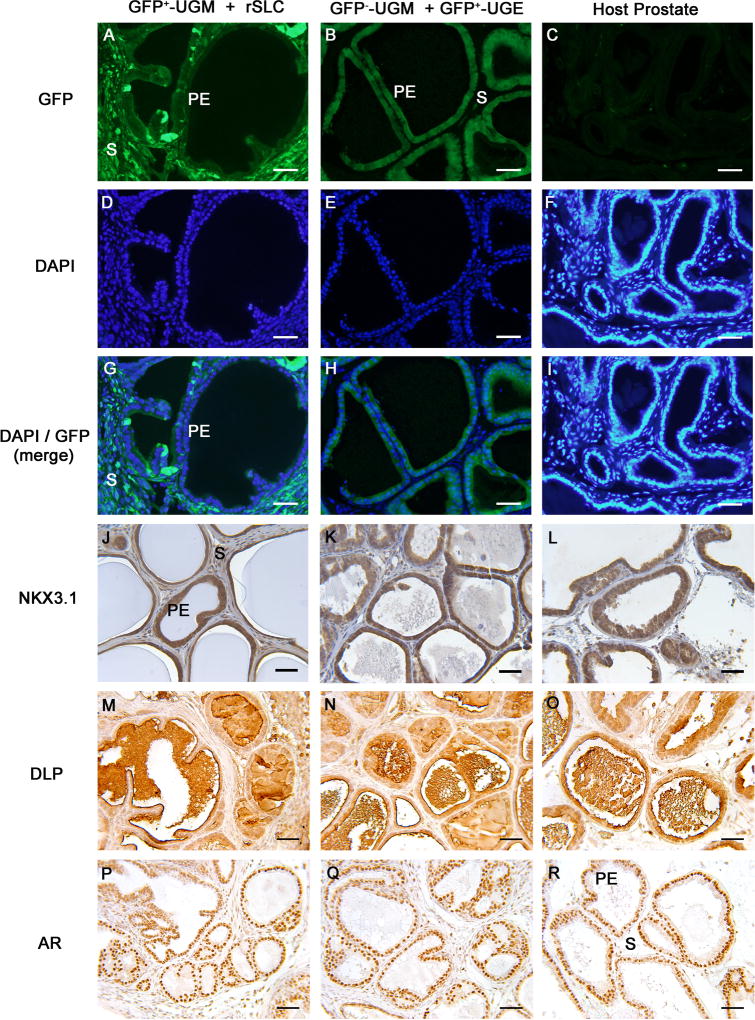
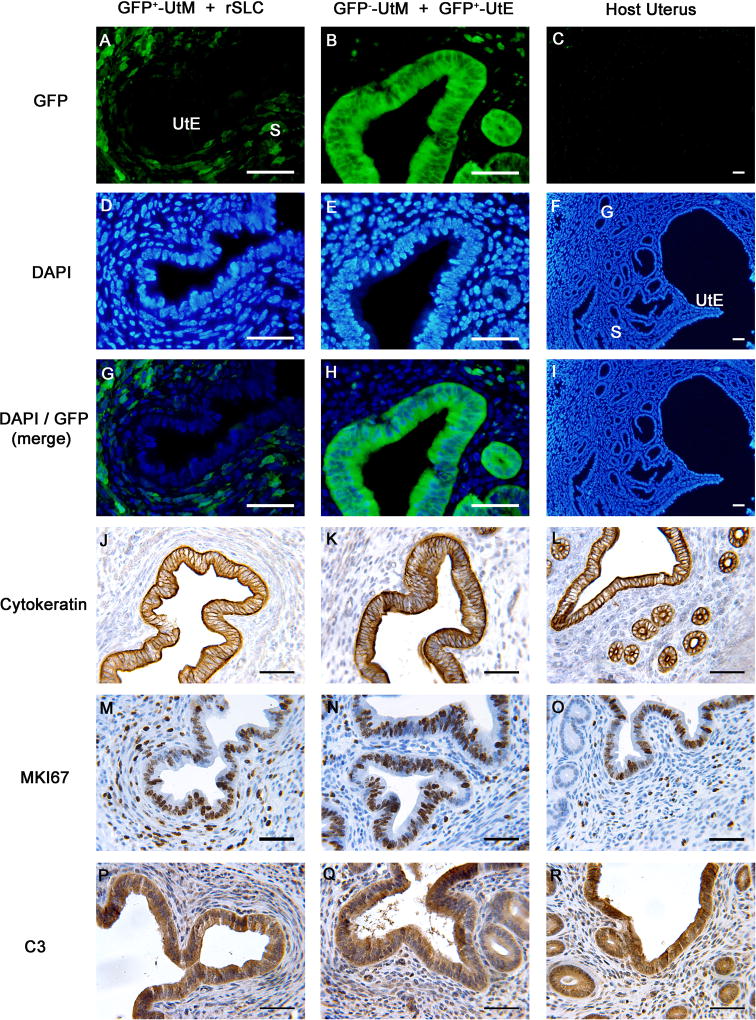
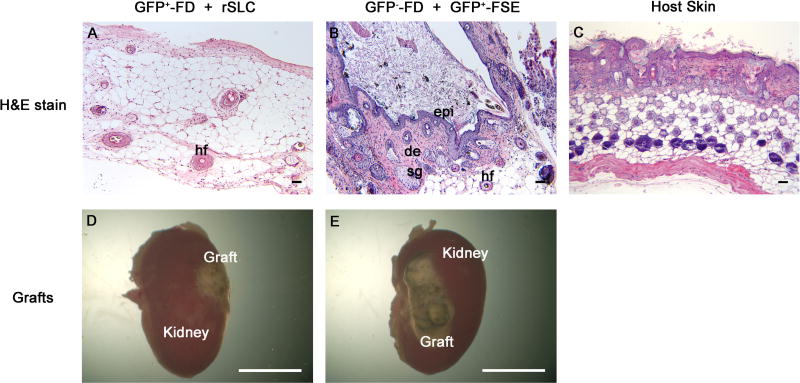
Stem Leydig cells (SLCs), precursors of testicular Leydig cells that secrete testosterone required for male sexual differentiation, spermatogenesis, and fertility, were recently identified in rat testes. Various types of stem cells have shown the ability to differentiate into other tissues, but there is no information on the plasticity of adult rat SLCs (rSLCs). This study investigated the ability of rSLCs to transdifferentiate into cell types from all three germ layers-prostatic epithelium (endoderm), uterine epithelium (mesoderm), and epidermis (ectoderm)-under the influence of inductive mesenchyme from fetal and neonatal tissues. To differentiate rSLCs into cells of other lineages, mesenchyme from green fluorescent protein (GFP)-expressing mice was used. Tissue recombinants of urogenital sinus mesenchyme (a potent prostate inducer) and rSLCs grafted into adult male hosts formed ductal structures resembling prostate after 5 weeks. Prostate epithelium was of rSLC origin as determined by absence of GFP expression, and expressed characteristic markers of prostatic epithelium. Similarly, uterine mesenchyme + rSLCs tissue recombinants contained a simple columnar epithelium that was histologically similar to normal uterine epithelium and expressed typical uterine epithelial markers, but was of rSLC origin. In contrast, epidermal tissue was absent in fetal dermis + rSLCs recombinants, suggesting rSLCs did not form skin epithelium. Thus, rSLCs can transdifferentiate into uterine and prostatic epithelium, mesodermal, and endodermal derivatives, respectively, but they may have a limited transdifferentiation potential, as shown by their inability to form epidermis, an ectodermal derivative.
Keywords: cell plasticity; ectoderm; endoderm; mesoderm; pluripotent; tissue recombination.
© 2017 American Society of Andrology and European Academy of Andrology.
Figures
References
-
- Aboseif S, El-Sakka A, Young P, Cunha G. Mesenchymal reprogramming of adult human epithelial differentiation. Differentiation. 1999;65:113–118. - PubMed
-
- Benton L, Shan LX, Hardy MP. Differentiation of adult Leydig cells. J Steroid Biochem Mol Biol. 1995;53:61–68. - PubMed
-
- Boutin EL, Battle E, Cunha GR. The response of female urogenital tract epithelia to mesenchymal inductors is restricted by the germ layer origin of the epithelium: prostatic inductions. Differentiation. 1991;48:99–105. - PubMed
MeSH terms
Grants and funding
LinkOut - more resources
Full Text Sources
Other Literature Sources
