


Luciferase Activity of Insect Fatty Acyl-CoA Synthetases with Synthetic Luciferins
- PMID: 29073357
- PMCID: PMC5836727
- DOI: 10.1021/acschembio.7b00813
Luciferase Activity of Insect Fatty Acyl-CoA Synthetases with Synthetic Luciferins
Abstract
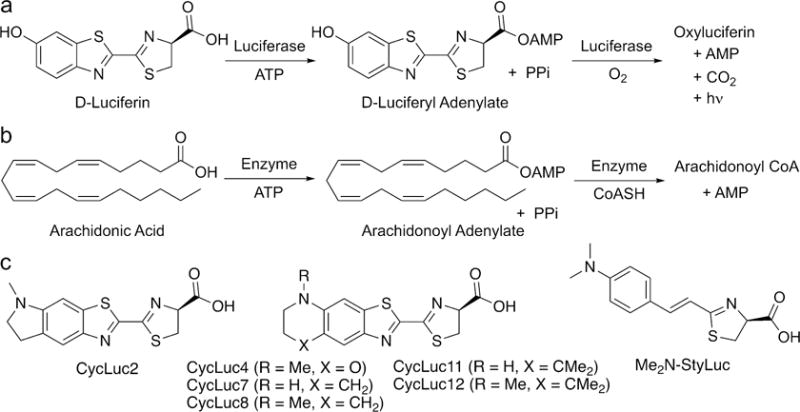
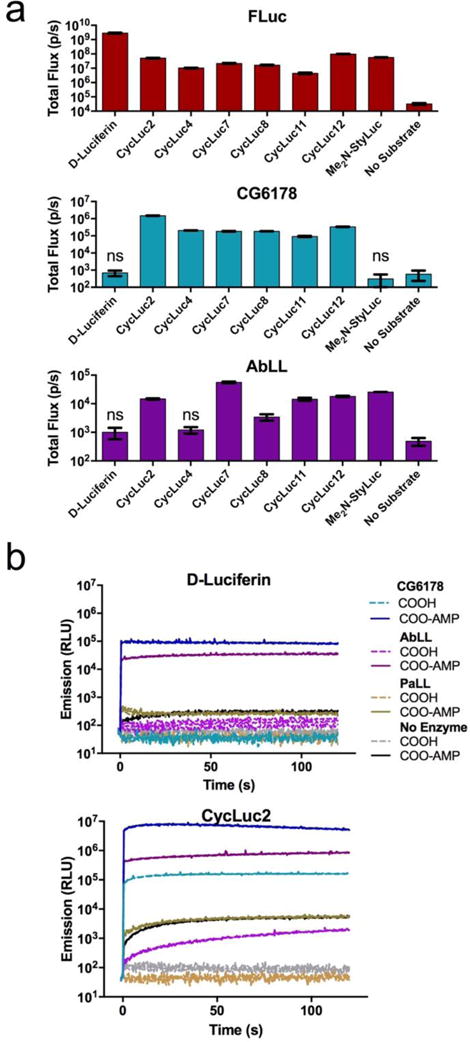
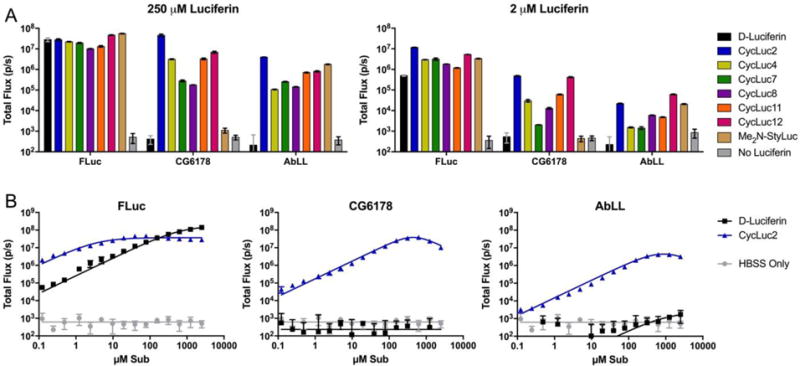
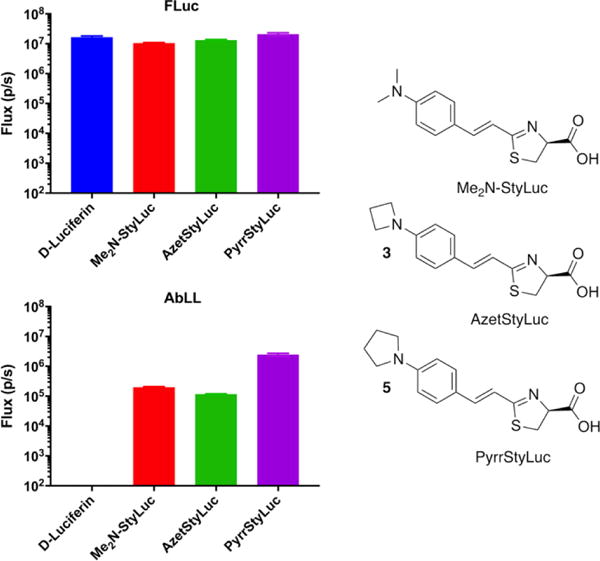
Long-chain fatty acyl-CoA synthetases (ACSLs) are homologues of firefly luciferase but are incapable of emitting light with firefly luciferin. Recently, we found that an ACSL from the fruit fly Drosophila melanogaster is a latent luciferase that will emit light with the synthetic luciferin CycLuc2. Here, we have profiled a panel of three insect ACSLs with a palette of >20 luciferin analogues. An ACSL from the nonluminescent beetle Agrypnus binodulus (AbLL) was found to be a second latent luciferase with distinct substrate specificity. Several rigid luciferins emit light with both ACSLs, but styryl luciferin analogues are light-emitting substrates only for AbLL. On the other hand, an ACSL from the luminescent beetle Pyrophorus angustus lacks luciferase activity with all tested analogues, despite its higher homology to beetle luciferases. Further study of ACSLs is expected to shed light on the features necessary for bioluminescence and substrate selectivity.
Figures
References
-
- Takakura H, Kojima R, Kamiya M, Kobayashi E, Komatsu T, Ueno T, Terai T, Hanaoka K, Nagano T, Urano Y. New class of bioluminogenic probe based on bioluminescent enzyme-induced electron transfer: BioLeT. J Am Chem Soc. 2015;137:4010–4013. - PubMed
Publication types
MeSH terms
Substances
Grants and funding
LinkOut - more resources
Full Text Sources
Other Literature Sources
Molecular Biology Databases
