Review
. 2017 Oct 25;5(4):319-331.
doi: 10.1016/j.cels.2017.07.004.

Mammalian Transcription Factor Networks: Recent Advances in Interrogating Biological Complexity

Affiliations
Review

Mammalian Transcription Factor Networks: Recent Advances in Interrogating Biological Complexity

Adam C Wilkinson et al. Cell Syst. .

Abstract

Transcription factor (TF) networks are a key determinant of cell fate decisions in mammalian development and adult tissue homeostasis and are frequently corrupted in disease. However, our inability to experimentally resolve and interrogate the complexity of mammalian TF networks has hampered the progress in this field. Recent technological advances, in particular large-scale genome-wide approaches, single-cell methodologies, live-cell imaging, and genome editing, are emerging as important technologies in TF network biology. Several recent studies even suggest a need to re-evaluate established models of mammalian TF networks. Here, we provide a brief overview of current and emerging methods to define mammalian TF networks. We also discuss how these emerging technologies facilitate new ways to interrogate complex TF networks, consider the current open questions in the field, and comment on potential future directions and biomedical applications.

Keywords: cancer; gene regulatory network; mammalian biology; stem cell biology; transcription factor; transcription factor regulatory network; transcriptional regulation.


Figures

Figure 1
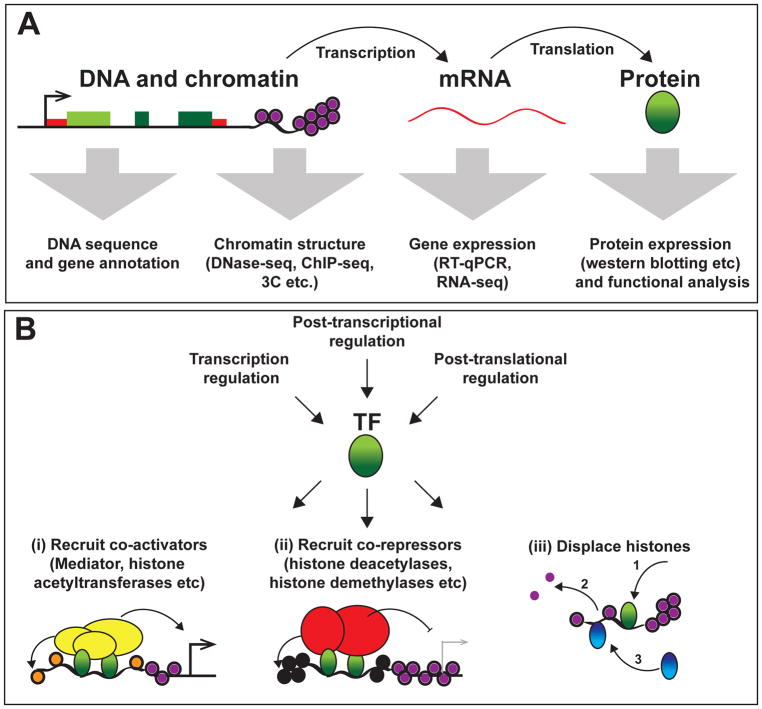
Figure 1. Central dogma of molecular biology and functions of transcription factors
(A) Gene expression is the process of gene transcription into messenger (m)RNA followed by translation into protein. Genes are encoded within genomic DNA and packaged within the nucleus as chromatin. Genomic sequencing has allowed protein-coding genes to be identified and annotated. A range of techniques have been developed to investigate chromatin structure, including DNase I hypersensitivity assays (such as DNase-seq), chromatin immunoprecipitation (such as ChIP-seq for histone modifications and TF enrichment) and chromatin conformation capture (3C) methods. Gene products can be measured at both RNA and protein levels by a range of techniques. (B) Regulation of TF expression, activity and function. TFs are regulated at transcriptional, post-transcriptional and post-translational levels. TFs (green) can function by multiple mechanisms including: (i) recruitment of co-activators (yellow) that may add activating histone modifications (H3K4me or H3K27Ac; denoted as orange histones) or recruit RNA pol II to promote gene transcription; (ii) recruitment of co-repressors (red) that apply repressive histone modifications (such as H3K29me; denoted by black histones) to promote histone compaction and gene silencing; or (iii) DNA binding that results in histone displacement, which allows other TFs (blue) to bind;. TFs usually bind cooperatively and regulation of TF expression levels (and post-translational modifications) may influence TF function and activities.
Figure 2
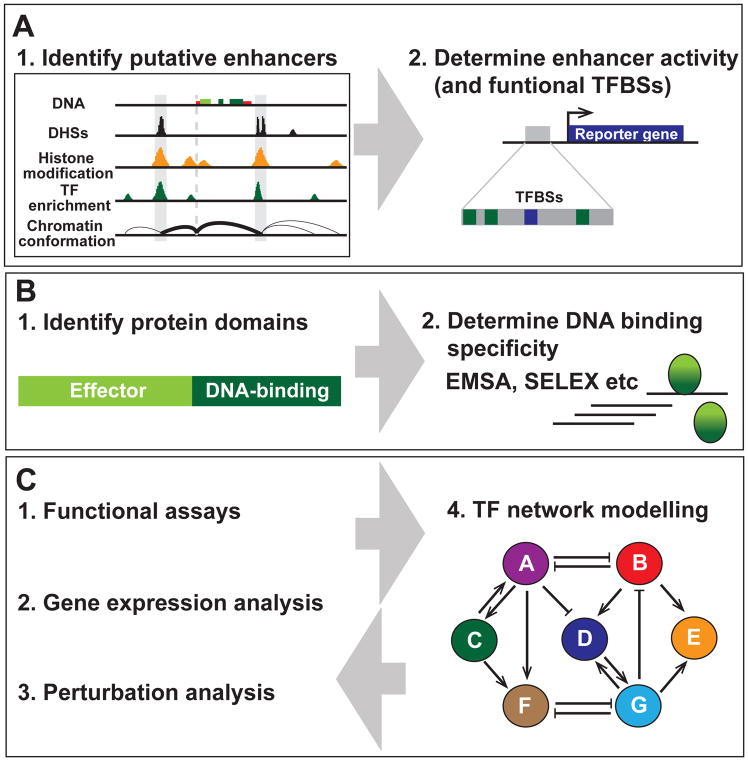
Figure 2. Approaches to build TF regulatory network models
(A) Enhancers. Putative enhancers can be identified by a number features including DNase I hypersensitivity sites (DHSs), histone modifications (such as H3K4me), TF enrichment and DNA looping (measured by chromatin conformation capture methods such as Hi-C). Enhancer activity can be assessed using in vivo or in vitro enhancer assays, and the function of the TFBSs (DNA motifs) identified within such enhancers can assessed by mutational analysis. (B) Transcription factors. TFs can be identified by their DNA binding domains. TFs also contain effector domains, which are responsible for protein-protein interactions. A range of methods including electrophoretic mobility shift assays (EMSAs) and systematic evolution of ligands by exponential enrichment (SELEX) have been used to determine individual and cooperative TF DNA binding specificities. (C) Building TF network models. Methods in (A) and (B) can be combined with functional assays (such as enhancer mutagenesis), gene expression analysis and/or TF pertubation analysis to build and train TF regulatory network models that can be “executed” in silico. These models provide important insights into the biological logic underpinning mammalian cell fate decisions, which feedback into experimental research.
Figure 3
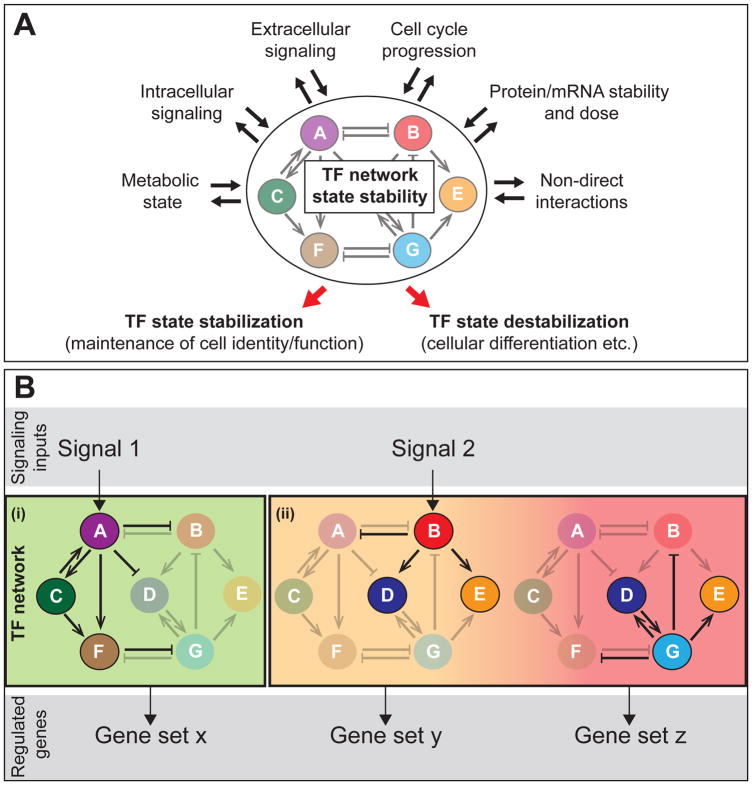
Figure 3. Mechanism of TF network regulation
(A) A summary of mechanisms that influence TF network state stability. Numerous extrinsic and intrinsic mechanisms regulate TF network stability. These mechanisms are also often influenced by TF network state). TF network stabilization results in maintenance of a cell identity/function, such as stem cell self-renewal, while TF network destabilization induces TF network state transitions can lead to changing cellular identity/function and cellular differentiation. (B) A schematic of how different signalling pathways activate certain sub-networks or states of a TF network. Depending on the logic of TF interactions and signalling inputs, states may be (i) stabilized or (ii) destabilized (resulting in state transitions). The set of TFs expressed determines the selection of genes regulated/expressed, which influences cellular identity and function. This review focuses on the TF networks, rather than upstream signaling inputs or downstream regulated genes/patterns of expression. For simplicity, the TF protein, its enhancer(s) and gene are represented as a single circle (A-G). As described in the main text, TF proteins regulate the activity of enhancers of other TFs, to activate or repress gene transcription (and may also be involved in auto-feedback regulation).
Figure 4
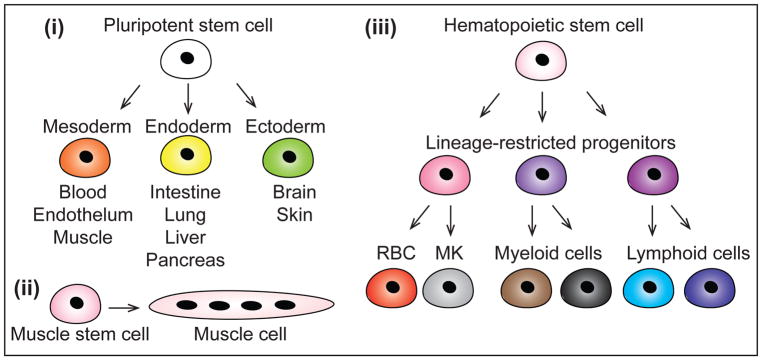
Figure 4. Commonly used mammalian systems to study TF networks
Mammalian TF networks have been commonly investigated in the context of pluripotency, muscle formation and hematopoiesis. (i) Pluripotent stem cells (embryonic stem cells or induced pluripotent stem cells) can self-renew or differentiate into any embryonic cell type through commitment to mesoderm, endoderm or ectoderm germ layers. (ii) Muscle stem cells (or satellite cells) can self-renew or differentiate into muscle cells. (iii) Hematopoietic stem cells (HSCs) have the ability to self-renew or differentiate into any mature blood cell type, through increasingly lineage-restricted haematopoietic progenitor cells. Red blood cells (RBCs), megakaryocytes (MKs), myeloid cells and lymphoid cells can be specified from HSCs.

References

    1. Alon U. Network motifs: theory and experimental approaches. Nat Rev Genet. 2007;8(6):450–61. - PubMed
    1. Arnold CD, Gerlach D, Stelzer C, Boryñ Ł, Rath M, Stark A. Genome-wide quantitative enhancer activity maps identified by STARR-seq. Science. 2013;339(6123):1074–7. - PubMed
    1. Bendall SC, Simonds EF, Qiu P, Amir e-A, Krutzik PO, Finck R, Bruggner RV, Melamed R, Trejo A, Ornatsky OI, Balderas RS, Plevritis SK, Sachs K, Pe’er D, Tanner SD, Nolan GP. Single-cell mass cytometry of differential immune and drug responses across a human hematopoietic continuum. Science. 2011;332(6030):687–96. - PMC - PubMed
    1. Bertoli C, Skotheim JM, de Bruin RA. Control of cell cycle transcription during G1 and S phases. Nat Rev Mol Cell Biol. 2013;14(8):518–28. - PMC - PubMed
    1. Blais A, Dynlacht BD. Constructing transcriptional regulatory networks. Genes Dev. 2005;19(13):1499–511. - PubMed

Publication types

Substances

LinkOut - more resources