


doi: 10.1016/j.pvr.2016.08.001.
Epub 2016 Aug 31.
Novel canine papillomavirus type 18 found in pigmented plaques
Affiliations
- PMID: 29074175
- PMCID: PMC5886900
- DOI: 10.1016/j.pvr.2016.08.001
Item in Clipboard
Novel canine papillomavirus type 18 found in pigmented plaques
Papillomavirus Res.
2016 Dec.
No abstract available
Figures
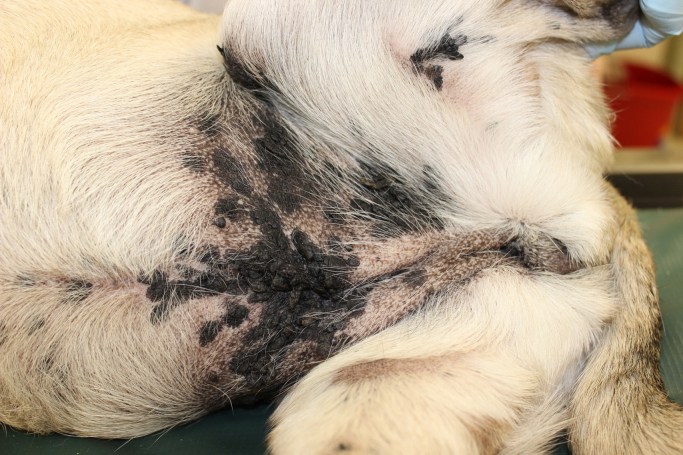
Three year old female pug with numerous coalescing pigmented plaques and exophytic nodules (from 0.5 cm to 3 cm) on the medioventral abdomen and inner thighs.
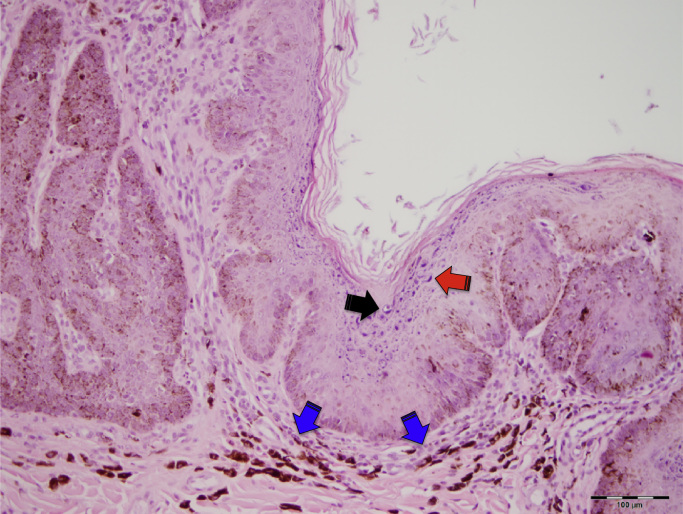
Histologic section of one of the pigmented plaques. Epidermal hyperplasia, with melanosis, large keratohyalin granules (red arrow), as well as a few single scattered clear cells reminiscent of koilocytes (black arrow). The superficial dermis presented a mild inflammatory infiltrate and pigmentary incontinence (blue arrows).
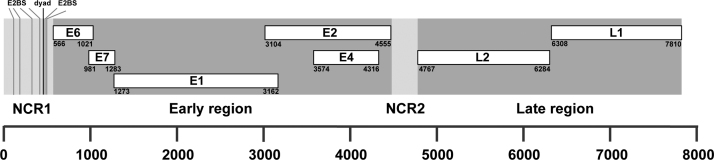
Schematic representation of the linearized genome of CPV18 indicating the genome size and the organization of the open reading frames. Position 1 defined by the first base after the L1 stop codon.
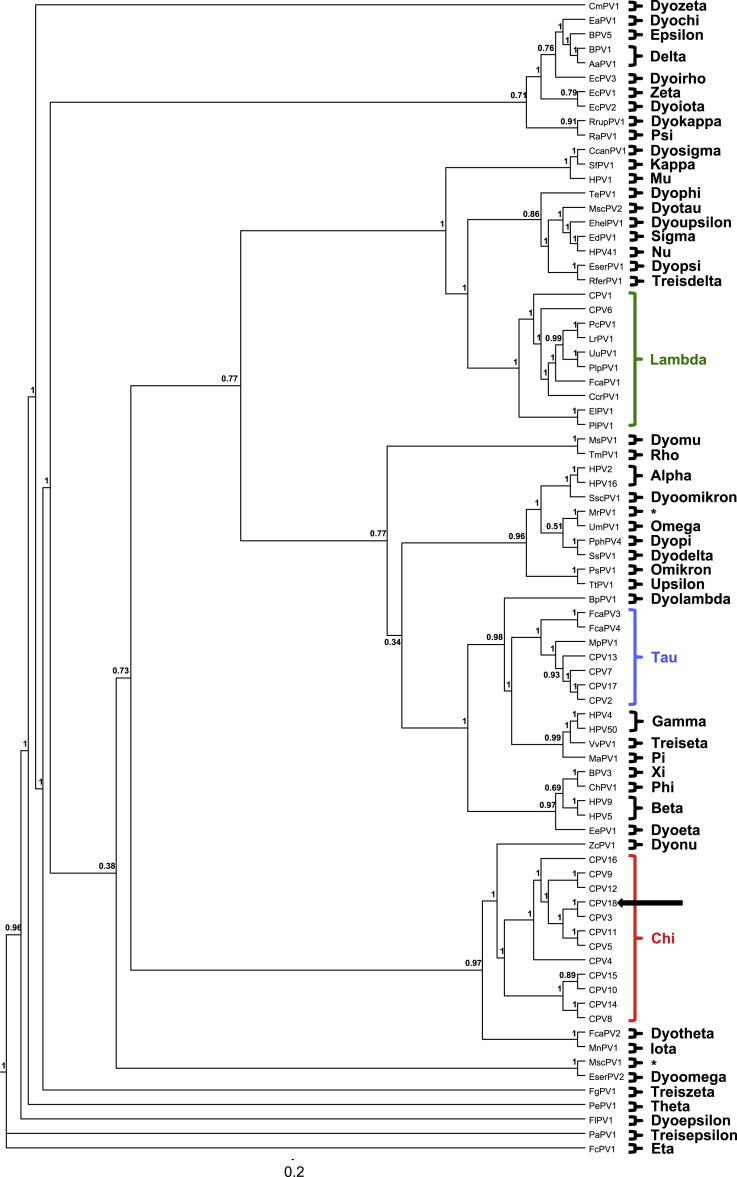
Phylogenetic tree of 80 papillomaviruses including all currently assigned genera and carnivore infecting virus types. Tree based on the sequence information of E1, E1, L2 and L1. Genera containing canine papillomaviruses are highlighted in red (Chi), blue (Tau) and green (Lambda). Unclassified viruses are marked with an asterisk.
References
-
- Castresana J. Selection of conserved blocks from multiple alignments for their use in phylogenetic analysis. Mol. Biol. Evol. 2000;17:540–552. - PubMed
-
- Delius H., Van Ranst M., Jenson A., zur Hausen H., Sundberg J. Canine oral papillomavirus genomic sequence: a unique 1.5-kb intervening sequence between the E2 and L2 open reading frames. Virology. 1994;204:447–452. - PubMed
Publication types
MeSH terms
Substances
LinkOut - more resources
Full Text Sources
Other Literature Sources
