


Reliability and Validity of the Telephone-Based eHealth Literacy Scale Among Older Adults: Cross-Sectional Survey
- PMID: 29074471
- PMCID: PMC5680514
- DOI: 10.2196/jmir.8481
Reliability and Validity of the Telephone-Based eHealth Literacy Scale Among Older Adults: Cross-Sectional Survey
Abstract
Background: Only a handful of studies have examined reliability and validity evidence of scores produced by the 8-item eHealth literacy Scale (eHEALS) among older adults. Older adults are generally more comfortable responding to survey items when asked by a real person rather than by completing self-administered paper-and-pencil or online questionnaires. However, no studies have explored the psychometrics of this scale when administered to older adults over the telephone.
Objective: The objective of our study was to examine the reliability and internal structure of eHEALS data collected from older adults aged 50 years or older responding to items over the telephone.
Methods: Respondents (N=283) completed eHEALS as part of a cross-sectional landline telephone survey. Exploratory structural equation modeling (E-SEM) analyses examined model fit of eHEALS scores with 1-, 2-, and 3-factor structures. Subsequent analyses based on the partial credit model explored the internal structure of eHEALS data.
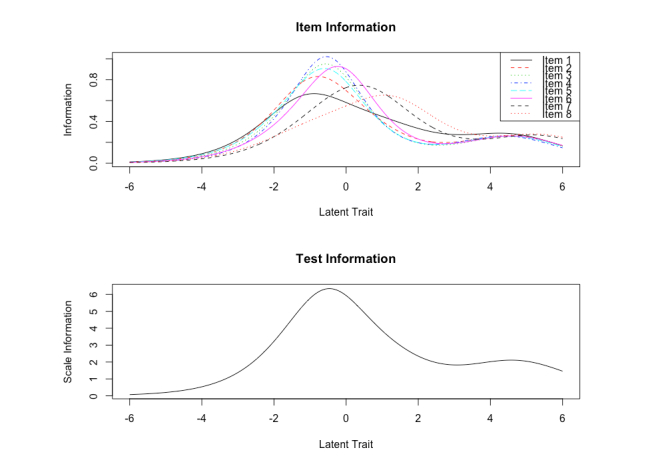
Results: Compared with 1- and 2-factor models, the 3-factor eHEALS structure showed the best global E-SEM model fit indices (root mean square error of approximation=.07; comparative fit index=1.0; Tucker-Lewis index=1.0). Nonetheless, the 3 factors were highly correlated (r range .36 to .65). Item analyses revealed that eHEALS items 2 through 5 were overfit to a minor degree (mean square infit/outfit values <1.0; t statistics less than -2.0), but the internal structure of Likert scale response options functioned as expected. Overfitting eHEALS items (2-5) displayed a similar degree of information for respondents at similar points on the latent continuum. Test information curves suggested that eHEALS may capture more information about older adults at the higher end of the latent continuum (ie, those with high eHealth literacy) than at the lower end of the continuum (ie, those with low eHealth literacy). Item reliability (value=.92) and item separation (value=11.31) estimates indicated that eHEALS responses were reliable and stable.
Conclusions: Results support administering eHEALS over the telephone when surveying older adults regarding their use of the Internet for health information. eHEALS scores best captured 3 factors (or subscales) to measure eHealth literacy in older adults; however, statistically significant correlations between these 3 factors suggest an overarching unidimensional structure with 3 underlying dimensions. As older adults continue to use the Internet more frequently to find and evaluate health information, it will be important to consider modifying the original eHEALS to adequately measure societal shifts in online health information seeking among aging populations.
Keywords: Internet; Web 2.0; aging; health literacy; social media.
©Michael Stellefson, Samantha R Paige, Bethany Tennant, Julia M Alber, Beth H Chaney, Don Chaney, Suzanne Grossman. Originally published in the Journal of Medical Internet Research (http://www.jmir.org), 26.10.2017.
Conflict of interest statement
Conflicts of Interest: None declared.
Figures
References
-
- Jha A, Pandey J. An empirical note on health information digital divide: a study of Indian patients. Int J Asian Bus Inf Manage. 2017;8(2):15–34. doi: 10.4018/IJABIM.2017040102. - DOI
-
- van Deursen AJAM, van Dijk JAGM. Internet skills performance tests: are people ready for eHealth? J Med Internet Res. 2011 Apr;13(2):e35. doi: 10.2196/jmir.1581. http://www.jmir.org/2011/2/e35/ - DOI - PMC - PubMed
-
- Fox S, Duggan M. Health online 2013. Washington, DC: Pew Internet & American Life Project; 2013. Jan 15, [2017-07-06]. http://www.pewinternet.org/files/old-media//Files/Reports/PIP_HealthOnli... 6rlJi3hZG.
-
- Zickuhr K. Generations 2010. Washington, DC: Pew Internet & American Life Project; 2010. Dec 16, [2017-07-06]. http://www.pewinternet.org/files/old-media//Files/Reports/2010/PIP_Gener... 6rlK06ZPY.
-
- Benigeri M, Pluye P. Shortcomings of health information on the Internet. Health Promot Int. 2003 Dec;18(4):381–6. - PubMed
MeSH terms
LinkOut - more resources
Full Text Sources
Other Literature Sources
Medical
Research Materials
