


Food-Related Impulsivity in Obesity and Binge Eating Disorder-A Systematic Update of the Evidence
- PMID: 29077027
- PMCID: PMC5707642
- DOI: 10.3390/nu9111170
Food-Related Impulsivity in Obesity and Binge Eating Disorder-A Systematic Update of the Evidence
Abstract
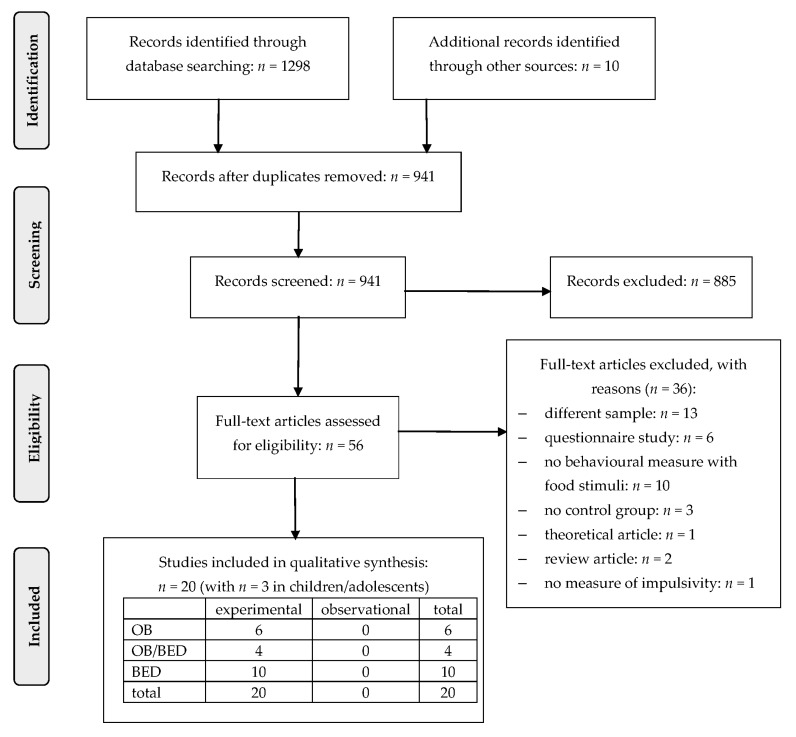
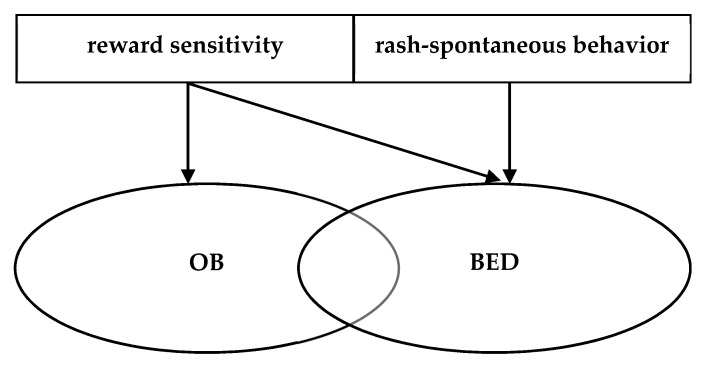
The specific eating pattern of Binge Eating Disorder (BED) patients has provoked the assumption that BED might represent a phenotype within the obesity spectrum that is characterized by increased impulsivity. Following the guidelines of the PRISMA statement (preferred reporting items for systematic reviews and meta-analyses), we here provide a systematic update on the evidence on food-related impulsivity in obese individuals, with and without BED, as well as normal-weight individuals. We separately analyzed potential group differences in the impulsivity components of reward sensitivity and rash-spontaneous behavior. Our search resulted in twenty experimental studies with high methodological quality. The synthesis of the latest evidence consolidates conclusions drawn in our initial systematic review that BED represents a distinct phenotype within the obesity spectrum that is characterized by increased impulsivity. Rash-spontaneous behavior in general, and specifically towards food, is increased in BED, while food-specific reward sensitivity is also increased in obese individuals without BED, but potentially to a lesser degree. A major next step for research entails the investigation of sub-domains and temporal components of inhibitory control in BED and obesity. Based on the evidence of impaired inhibitory control in BED, affected patients might profit from interventions that address impulsive behavior.
Keywords: binge eating disorder; eating disorders; food; impulsivity; inhibition; obesity; reward.
Conflict of interest statement
The authors declare no conflict of interest.
Figures
References
-
- American Psychiatric Association . Diagnostic and Statistical Manual of Mental Disorders: DSM-5. American Psychiatric Association; Washington, DC, USA: 2013.
-
- Kessler R.C., Berglund P.A., Chiu W.T., Deitz A.C., Hudson J.I., Shahly V., Aguilar-Gaxiola S., Alonso J., Angermeyer M.C., Benjet C., et al. The prevalence and correlates of binge eating disorder in the world health organization world mental health surveys. Biol. Psychiatry. 2013;73:904–914. doi: 10.1016/j.biopsych.2012.11.020. - DOI - PMC - PubMed
Publication types
MeSH terms
LinkOut - more resources
Full Text Sources
Other Literature Sources
Medical
