


The Compounds Responsible for the Sensory Profile in Monovarietal Virgin Olive Oils
- PMID: 29077048
- PMCID: PMC6150176
- DOI: 10.3390/molecules22111833
The Compounds Responsible for the Sensory Profile in Monovarietal Virgin Olive Oils
Abstract
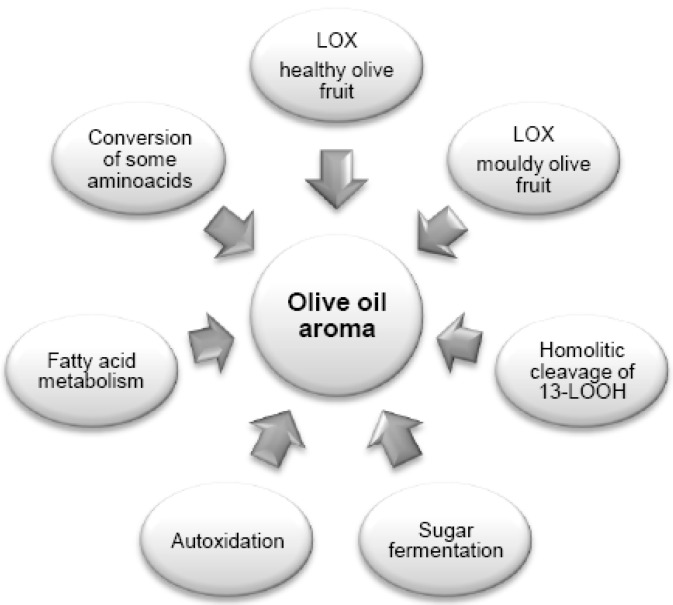
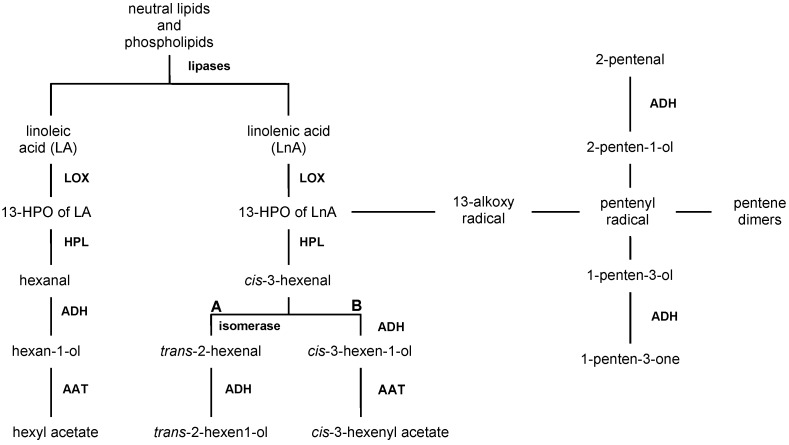
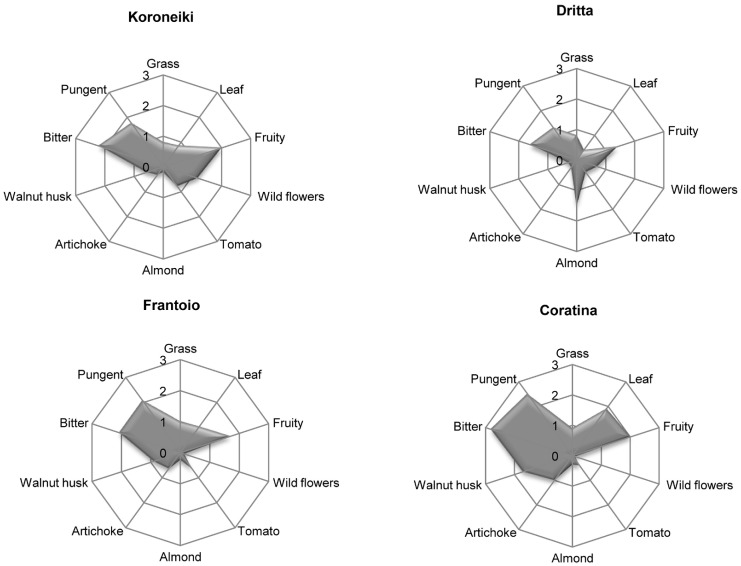
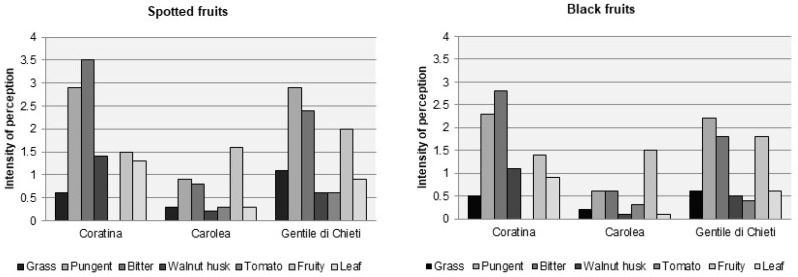
Monovarietal virgin olive oils (VOOs) are very effective to study relationships among sensory attributes, the compounds responsible for flavour, and factors affecting them. The stimulation of the human sensory receptors by volatile and non-volatile compounds present in monovarietal virgin olive oils gives rise to the sensory attributes that describe their peculiar delicate and fragrant flavours. The formation of these compounds is briefly illustrated and the influence of the agronomic and technological factors that affect their concentrations in the oil is examined. The relationships between compounds responsible for the olive oil flavour and sensory attributes are discussed. Several approaches for the varietal differentiation of monovarietal virgin olive oils are also overviewed.
Keywords: agronomic and technological factors; cultivar; phenolic compounds; sensory characteristics; virgin olive oil; volatiles.
Conflict of interest statement
The authors declare no conflict of interest.
Figures
References
-
- Angerosa F., Campestre C., Giansante L. Analysis and authentication. In: Dimitrios B., editor. Olive Oil: Chemistry and Technology. 2nd ed. AOCS Press; Champaign, IL, USA: 2006. pp. 113–172.
-
- Angerosa F., Campestre C. Sensory Quality: Methodologies and Applications. In: Aparicio R., Harwood J., editors. Handbook of Olive Oil-Analysis and Properties. Springer; New York, NY, USA: 2013. pp. 523–560. - DOI
-
- Angerosa F. Sensory quality of olive oils. In: Harwood J., Aparicio R., editors. Handbook of Olive Oil. Analysis and Properties. Aspen Publishers Inc.; Gaithersburg, MD, USA: 2000. pp. 355–392. - DOI
-
- Baldioli M., Servili M., Perretti G., Montedoro G.F. Antioxidant activity of tocopherols and phenolic compounds of virgin olive oil. J. Am. Oil Chem. Soc. 1996;73:1589–1593. doi: 10.1007/BF02523530. - DOI
-
- Boskou D., Tsimidou M., Blekas G. Polar phenolic compounds. In: Dimitrios B., editor. Olive Oil: Chemistry and Technology. 2nd ed. AOCS Press; Champaign, IL, USA: 2006. pp. 73–92. - DOI
Publication types
MeSH terms
Substances
LinkOut - more resources
Full Text Sources
Other Literature Sources
