


An unusual osteomyelitis caused by Moraxella osloensis: A case report
- PMID: 29078156
- PMCID: PMC5742016
- DOI: 10.1016/j.ijscr.2017.10.022
An unusual osteomyelitis caused by Moraxella osloensis: A case report
Abstract
Introduction: Moraxella osloensis is a gram-negative coccobacillus, that is saprophytic on skin and mucosa, and rarely causing human infections. Reported cases of human infections usually occur in immunocompromised patients.
Presentation of case: We report the second case of M. osloensis-caused-osteomyelitis in literature, occurring in a young healthy man. The organism was identified by sequencing analysis of the 16S ribosomal RNA gene. Our patient was treated successfully with surgical debridement and intravenous third-generation cephalosporins.
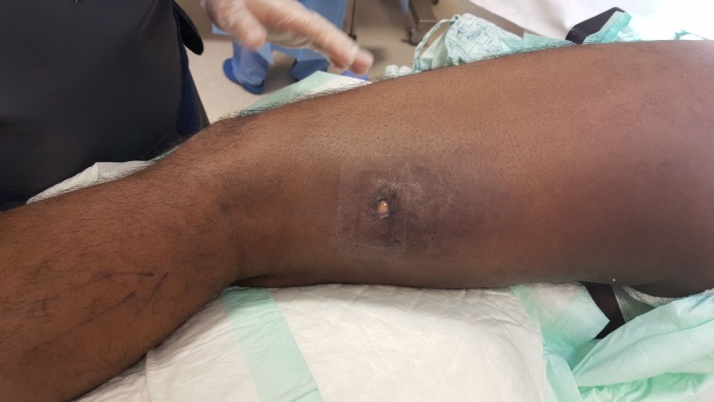
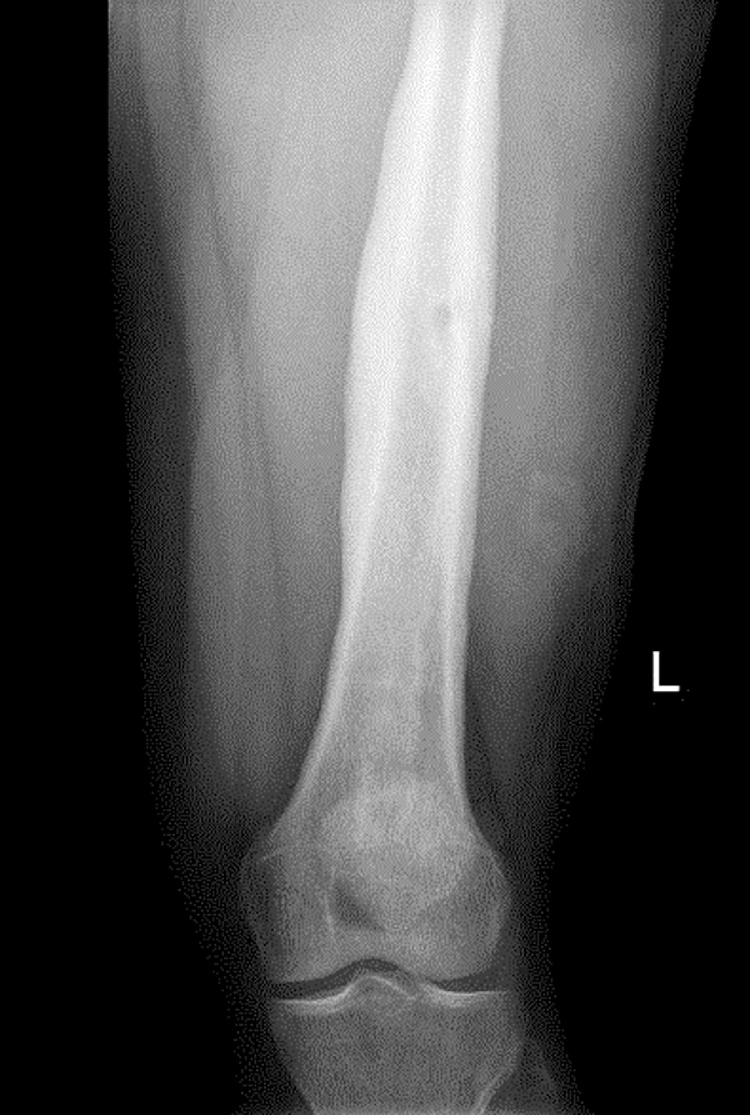
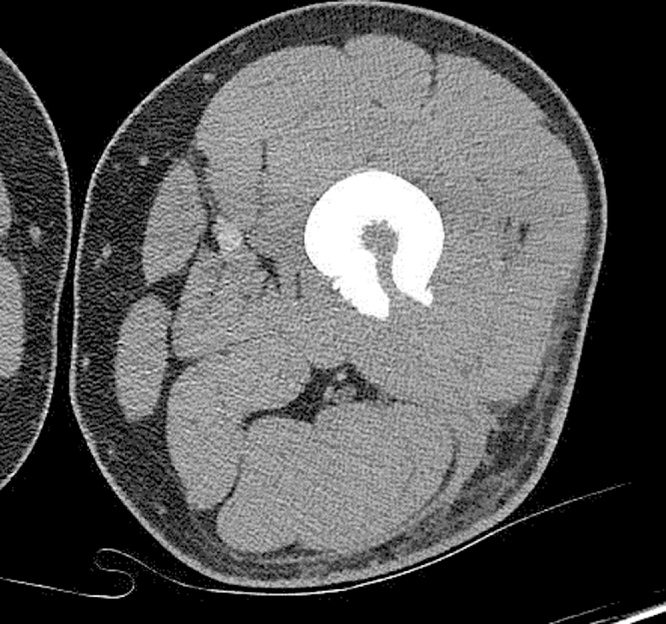
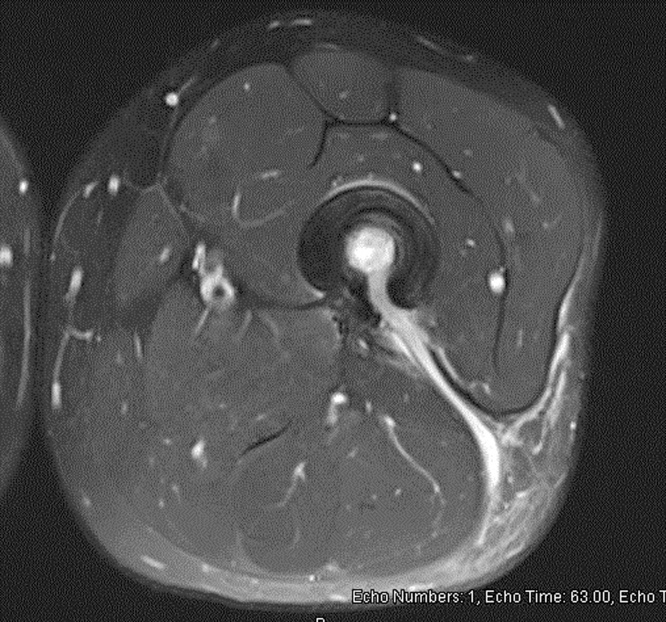
Discussion: M. osloensis has been rarely reported to cause local or invasive infections. Our case report is the second case in literature and it is different from the previously reported case in that our patient has no chronic medical problems, no history of trauma, with unique presentation and features on the MRI and intraoperative finding.
Conclusion: Proper diagnosis is essential for appropriate treatment of osteomyelitis. RNA gene sequence analysis is the primary method of M. osloensis diagnosis. M. osloensis is usually susceptible to simple antibiotics.
Keywords: Case report; Moraxella osloensis; Osteomyelitis.
Copyright © 2017 The Authors. Published by Elsevier Ltd.. All rights reserved.
Figures
References
-
- Schreckenberger P.C., Daneshvar M.I., Weyant R.S., Hollis D.G. Acinetobacter, Achromobacter, Chryseobacterium, Moraxella, and other nonfermentative gram-negative rods. In: Murray P.R., Baron E.J., Jorgensen J.H., Pfaller M.A., editors. Manual of Clinical Microbiology. American Society for Microbiology; Washington: 2003. pp. 754–757.
-
- Weyant R.S., Moss C.W., Weaver R.E., Hollis D.G., Jordan J.G., Cook E.C., Daneshvar M.I. Williams & Wilkins; Baltimore: 1995. Identification of Unusual Pathogenic Gram-Negative Aerobic and Facultatively Anaerobic Bacteria; pp. 390–405.
-
- Buchman A.L., Pickett M.J., Mann L., Ament M.E. Central venous catheter infection caused by Moraxella osloensis in a patient receiving home parenteral nutrition. Diagn. Microbiol. Infect. Dis. 1993;17:163–166. - PubMed
-
- Vuori-Holopainen E., Salo E., Saxen H., Vaara M., Tarkka E., Peltola H. Clinical “pneumococcal pneumonia” due to Moraxella osloensis: case report and a review. Scand. J. Infect. Dis. 2001;33:625–627. - PubMed
-
- Shah S.S., Ruth A., Coffin S.E. Infection due to Moraxella osloensis: case report and review of the literature. Clin. Infect. Dis. 2000;30:179–181. - PubMed
LinkOut - more resources
Full Text Sources
Other Literature Sources
Research Materials
