


Permissive hypotensive resuscitation in adult patients with traumatic haemorrhagic shock: a systematic review
- PMID: 29079917
- PMCID: PMC5884894
- DOI: 10.1007/s00068-017-0862-y
Permissive hypotensive resuscitation in adult patients with traumatic haemorrhagic shock: a systematic review
Abstract
Background: Permissive hypotensive resuscitation (PHR) is an advancing concept aiming towards deliberative balanced resuscitation whilst treating severely injured patients, and its effectiveness on the survival rate remains unexplored. This detailed systematic review aims to critically evaluate the available literature that investigates the effects of PHR on survival rate.
Methods: A systematic review design searched for comparative and non-comparative studies using EMBASE, MEDLINE, PubMed, Web-of-Science and CENTRAL. Full-text articles on adult trauma patients with low blood pressure were considered for inclusion. The risk of bias and a critical appraisal of the identified articles were performed to assess the quality of the selected studies. Included studies were sorted into comparative and non-comparative studies to ease the process of analysis. Mortality rates of PHR were calculated for both groups of studies.
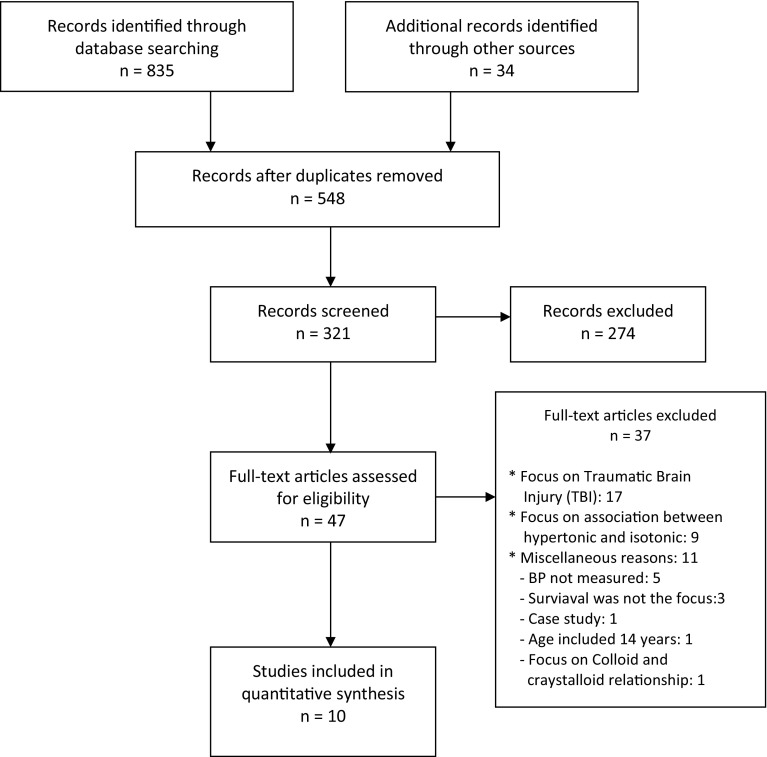
Results: From the 869 articles that were initially identified, ten studies were selected for review, including randomised control trials (RCTs) and cohort studies. By applying the risk of bias assessment and critique tools, the methodologies of the selected articles ranged from moderate to high quality. The mortality rates among patients resuscitated with low volume and large volume in the selected RCTs were 21.5% (123/570) and 28.6% (168/587) respectively, whilst the total mortality rate of the patients enrolled in three non-comparative studies was 9.97% (279/2797).
Conclusions: The death rate amongst post-trauma patients managed with conservative resuscitation was lower than standard aggressive resuscitation, which indicates that PHR can create better survival rate among traumatised patients. Therefore, PHR is a feasible and safely practiced fluid resuscitative strategy to manage haemorrhagic shock in pre-hospital and in-hospital settings. Further trials on PHR are required to assess its effectiveness on the survival rate.
Level of evidence: Systematic review, level III.
Keywords: Hypovolemic shock; Permissive hypotensive resuscitation; Survival; Trauma.
Conflict of interest statement
Funding
There was no funding source for this review.
Conflict of interest
None declared.
Figures
References
-
- Kauvar DS, Lefering R, Wade CE. Impact of hemorrhage on trauma outcome: an overview of epidemiology, clinical presentations, and therapeutic considerations. J Trauma Acute Care Surg. 2006;60(6):S3. - PubMed
-
- Agabegi SS, Agabegi SS. Step-up to medicine. Philadelphia: Lippincott Williams & Wilkins; 2012.
Publication types
MeSH terms
LinkOut - more resources
Full Text Sources
Other Literature Sources
Research Materials
