


Project nGage: Results of a Randomized Controlled Trial of a Dyadic Network Support Intervention to Retain Young Black Men Who Have Sex With Men in HIV Care
- PMID: 29079949
- PMCID: PMC5705428
- DOI: 10.1007/s10461-017-1954-8
Project nGage: Results of a Randomized Controlled Trial of a Dyadic Network Support Intervention to Retain Young Black Men Who Have Sex With Men in HIV Care
Abstract
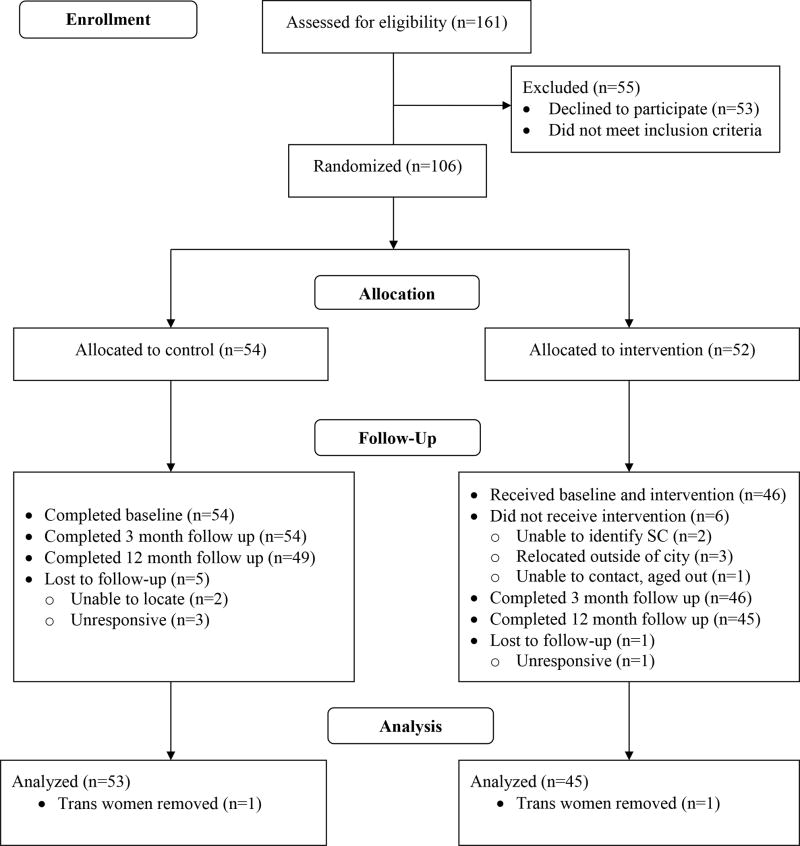
HIV-positive young black MSM (YBMSM) experience poor outcomes along the HIV care continuum, yet few interventions have been developed expressly for YBMSM retention in care. Project nGage was a randomized controlled trial conducted across five Chicago clinics with 98 HIV-positive YBMSM aged 16-29 between 2012 and 2015. The intervention used a social network elicitation approach with index YBMSM (n = 45) to identify and recruit a support confidant (SC) to the study. Each index-SC dyad met with a social worker to improve HIV-care knowledge, activate dyadic social support, and develop a retention in care plan. Each index and SC also received four mini-booster sessions. Control participants (n = 53) received treatment as usual. Surveys and medical records at baseline, 3-, and 12-months post-intervention assessed visit history (3 or more visits over 12 months; primary outcome), and sociodemographic, network, social-psychological, and behavioral factors. At baseline, there were no differences in age (M = 23.8 years), time since diagnosis (M ≤ 2 years), clinic visits in the previous 12 months (M = 4.1), and medication adherence (68.6 ≥ 90% adherence). In multivariate logistic regression analysis, intervention participants were 3.01 times more likely to have had at least 3 provider visits (95% CI 1.0-7.3) than were control participants over 12 months. Project nGage demonstrates preliminary efficacy in improving retention in care among YBMSM. Results suggest that engaging supportive network members may improve key HIV care continuum outcomes.
Keywords: Randomized controlled trial; Retention in HIV care; Social networks; Social support; Young black men who have sex with men.
Conflict of interest statement
References
-
- Hull MW, Wu Z, Montaner JS. Optimizing the engagement of care cascade: a critical step to maximize the impact of HIV treatment as prevention. Current Opinion in HIV and AIDS. 2012;7(6):579–86. - PubMed
-
- Campsmith ML, Rhodes PH, Hall HI, TA G. Undiagnosed HIV prevalence among adults and adolescents in the United States at the end of 2006. J Acquir Immune Defic Syndr. 2010;53:619–24. - PubMed
Publication types
MeSH terms
Grants and funding
LinkOut - more resources
Full Text Sources
Other Literature Sources
Medical
Miscellaneous
