


Food cravings in food addiction: exploring a potential cut-off value of the Food Cravings Questionnaire-Trait-reduced
- PMID: 29080949
- PMCID: PMC5807499
- DOI: 10.1007/s40519-017-0452-3
Food cravings in food addiction: exploring a potential cut-off value of the Food Cravings Questionnaire-Trait-reduced
Abstract
Purpose: The Food Cravings Questionnaires are among the most often used measures for assessing the frequency and intensity of food craving experiences. However, there is a lack of studies that have examined specific cut-off scores that may indicate pathologically elevated levels of food cravings.
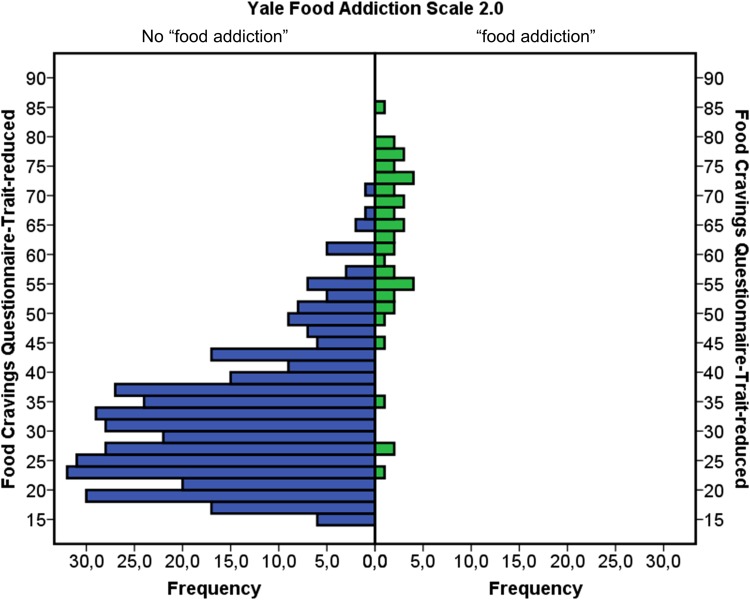
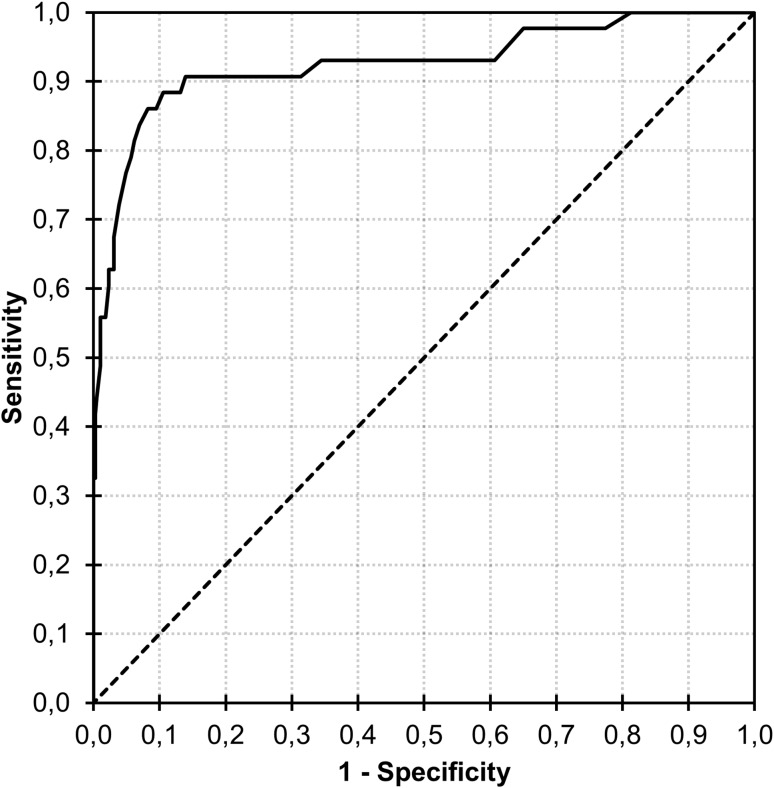
Methods: Receiver-Operating-Characteristic analysis was used to determine sensitivity and specificity of scores on the Food Cravings Questionnaire-Trait-reduced (FCQ-T-r) for discriminating between individuals with (n = 43) and without (n = 389) "food addiction" as assessed with the Yale Food Addiction Scale 2.0.
Results: A cut-off score of 50 on the FCQ-T-r discriminated between individuals with and without "food addiction" with high sensitivity (85%) and specificity (93%).
Conclusions: FCQ-T-r scores of 50 and higher may indicate clinically relevant levels of trait food craving.
Level of evidence: Level V, descriptive study.
Keywords: Food Cravings Questionnaire-Trait; Food addiction; Food craving; Yale Food Addiction Scale.
Conflict of interest statement
Conflict of interest
The author declares that he has no conflict of interest.
Ethical approval
All procedures performed in studies involving human participants were in accordance with the ethical standards of the institutional and/or national research committee and with the 1964 Helsinki declaration and its later amendments or comparable ethical standards.
Informed consent
Informed consent was obtained from all individual participants included in the study.
Figures
References
MeSH terms
LinkOut - more resources
Full Text Sources
Other Literature Sources
Research Materials
