


Is mitochondrial DNA quantitation in blastocyst trophectoderm cells predictive of developmental competence and outcome in clinical IVF?
- PMID: 29080967
- PMCID: PMC5714830
- DOI: 10.1007/s10815-017-1072-6
Is mitochondrial DNA quantitation in blastocyst trophectoderm cells predictive of developmental competence and outcome in clinical IVF?
Abstract
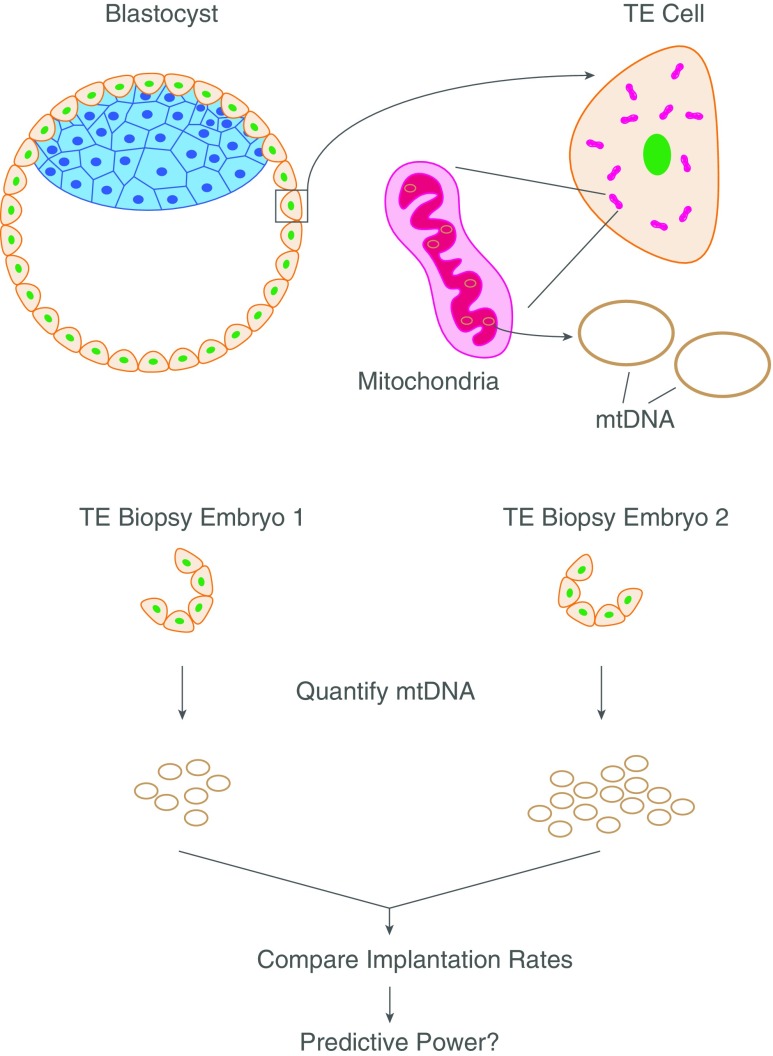
Behind every successful IVF embryo transfer, there is a great game of chance. Methods seeking to tilt the balance and increase the likelihood of implantation have been proposed and implemented with varying results, including embryo morphology, FISH-PGS, comprehensive chromosomal screening (CCS), morphokinetics, endometrial receptivity testing. It has been suggested that mitochondrial DNA (mtDNA) copy number could serve as a biomarker for embryo viability, but this concept was recently challenged. The world of IVF is left with unanswered questions: Why are there discrepancies in the reports? Should mtDNA copy number be considered to rank embryos for transfer? And in a broader sense, how well must a technique be validated before its implementation in the IVF clinic? Here, we explore these questions attempting to piece together the published data and suggest future directions to help unravel the subject matter.
Keywords: IVF embryo selection; Mitochondria; Mitochondrial DNA; mtDNA.
Figures
References
-
- Fragouli E, Spath K, Alfarawati S, Kaper F, Craig A, Michel CE, et al. Altered levels of mitochondrial DNA are associated with female age, aneuploidy, and provide an independent measure of embryonic implantation potential. PLoS Genet. 2015;11(6):e1005241. doi: 10.1371/journal.pgen.1005241. - DOI - PMC - PubMed
Publication types
MeSH terms
Substances
LinkOut - more resources
Full Text Sources
Other Literature Sources
