


Different methods and settings for glucose monitoring for gestational diabetes during pregnancy
- PMID: 29081069
- PMCID: PMC6485695
- DOI: 10.1002/14651858.CD011069.pub2
Different methods and settings for glucose monitoring for gestational diabetes during pregnancy
Abstract
Background: Incidence of gestational diabetes mellitus (GDM) is increasing worldwide. Blood glucose monitoring plays a crucial part in maintaining glycaemic control in women with GDM and is generally recommended by healthcare professionals. There are several different methods for monitoring blood glucose which can be carried out in different settings (e.g. at home versus in hospital).
Objectives: The objective of this review is to compare the effects of different methods and settings for glucose monitoring for women with GDM on maternal and fetal, neonatal, child and adult outcomes, and use and costs of health care.
Search methods: We searched the Cochrane Pregnancy and Childbirth Group Trials Register (30 September 2016) and reference lists of retrieved studies.
Selection criteria: Randomised controlled trials (RCTs) or quasi-randomised controlled trials (qRCTs) comparing different methods (such as timings and frequencies) or settings, or both, for blood glucose monitoring for women with GDM.
Data collection and analysis: Two authors independently assessed study eligibility, risk of bias, and extracted data. Data were checked for accuracy.We assessed the quality of the evidence for the main comparisons using GRADE, for:- primary outcomes for mothers: that is, hypertensive disorders of pregnancy; caesarean section; type 2 diabetes; and- primary outcomes for children: that is, large-for-gestational age; perinatal mortality; death or serious morbidity composite; childhood/adulthood neurosensory disability;- secondary outcomes for mothers: that is, induction of labour; perineal trauma; postnatal depression; postnatal weight retention or return to pre-pregnancy weight; and- secondary outcomes for children: that is, neonatal hypoglycaemia; childhood/adulthood adiposity; childhood/adulthood type 2 diabetes.
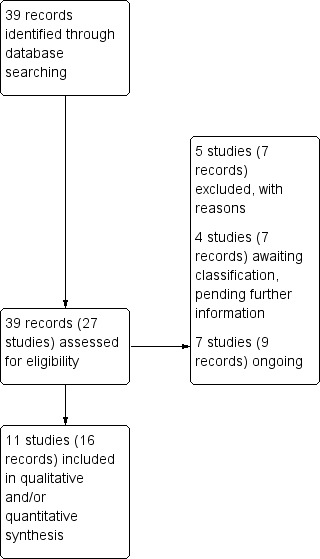
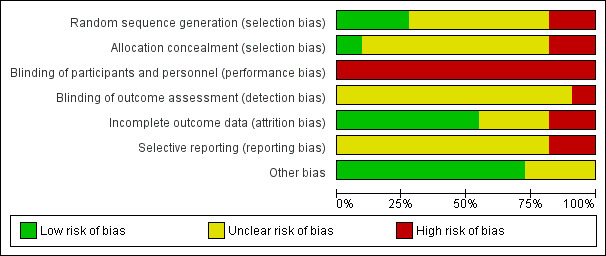
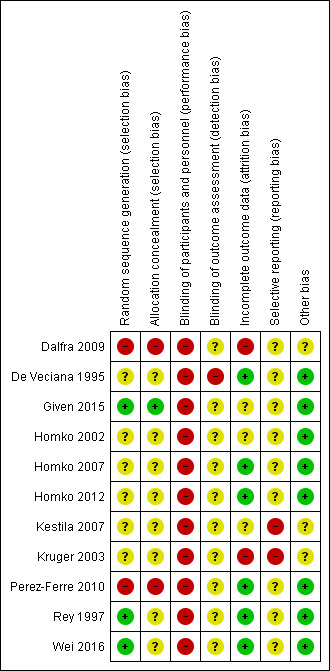
Main results: We included 11 RCTs (10 RCTs; one qRCT) that randomised 1272 women with GDM in upper-middle or high-income countries; we considered these to be at a moderate to high risk of bias. We assessed the RCTs under five comparisons. For outcomes assessed using GRADE, we downgraded for study design limitations, imprecision and inconsistency. Three trials received some support from commercial partners who provided glucose meters or financial support, or both. Main comparisons Telemedicine versus standard care for glucose monitoring (five RCTs): we observed no clear differences between the telemedicine and standard care groups for the mother, for:- pre-eclampsia or pregnancy-induced hypertension (risk ratio (RR) 1.49, 95% confidence interval (CI) 0.69 to 3.20; 275 participants; four RCTs; very low quality evidence);- caesarean section (average RR 1.05, 95% CI 0.72 to 1.53; 478 participants; 5 RCTs; very low quality evidence); and- induction of labour (RR 1.06, 95% CI 0.63 to 1.77; 47 participants; 1 RCT; very low quality evidence);or for the child, for:- large-for-gestational age (RR 1.41, 95% CI 0.76 to 2.64; 228 participants; 3 RCTs; very low quality evidence);- death or serious morbidity composite (RR 1.06, 95% CI 0.68 to 1.66; 57 participants; 1 RCT; very low quality evidence); and- neonatal hypoglycaemia (RR 1.14, 95% CI 0.48 to 2.72; 198 participants; 3 RCTs; very low quality evidence).There were no perinatal deaths in two RCTs (131 participants; very low quality evidence). Self-monitoring versus periodic glucose monitoring (two RCTs): we observed no clear differences between the self-monitoring and periodic glucose monitoring groups for the mother, for:- pre-eclampsia (RR 0.17, 95% CI 0.01 to 3.49; 58 participants; 1 RCT; very low quality evidence); and- caesarean section (average RR 1.18, 95% CI 0.61 to 2.27; 400 participants; 2 RCTs; low quality evidence);or for the child, for:- perinatal mortality (RR 1.54, 95% CI 0.21 to 11.24; 400 participants; 2 RCTs; very low quality evidence);- large-for-gestational age (RR 0.82, 95% CI 0.50 to 1.37; 400 participants; 2 RCTs; low quality evidence); and- neonatal hypoglycaemia (RR 0.64, 95% CI 0.39 to 1.06; 391 participants; 2 RCTs; low quality evidence). Continuous glucose monitoring system (CGMS) versus self-monitoring of glucose (two RCTs): we observed no clear differences between the CGMS and self-monitoring groups for the mother, for:- caesarean section (RR 0.91, 95% CI 0.68 to 1.20; 179 participants; 2 RCTs; very low quality evidence);or for the child, for:- large-for-gestational age (RR 0.67, 95% CI 0.43 to 1.05; 106 participants; 1 RCT; very low quality evidence) and- neonatal hypoglycaemia (RR 0.79, 95% CI 0.35 to 1.78; 179 participants; 2 RCTs; very low quality evidence).There were no perinatal deaths in the two RCTs (179 participants; very low quality evidence). Other comparisons Modem versus telephone transmission for glucose monitoring (one RCT): none of the review's primary outcomes were reported in this trial Postprandial versus preprandial glucose monitoring (one RCT): we observed no clear differences between the postprandial and preprandial glucose monitoring groups for the mother, for:- pre-eclampsia (RR 1.00, 95% CI 0.15 to 6.68; 66 participants; 1 RCT);- caesarean section (RR 0.62, 95% CI 0.29 to 1.29; 66 participants; 1 RCT); and- perineal trauma (RR 0.38, 95% CI 0.11 to 1.29; 66 participants; 1 RCT);or for the child, for:- neonatal hypoglycaemia (RR 0.14, 95% CI 0.02 to 1.10; 66 participants; 1 RCT).There were fewer large-for-gestational-age infants born to mothers in the postprandial compared with the preprandial glucose monitoring group (RR 0.29, 95% CI 0.11 to 0.78; 66 participants; 1 RCT).
Authors' conclusions: Evidence from 11 RCTs assessing different methods or settings for glucose monitoring for GDM suggests no clear differences for the primary outcomes or other secondary outcomes assessed in this review.However, current evidence is limited by the small number of RCTs for the comparisons assessed, small sample sizes, and the variable methodological quality of the RCTs. More evidence is needed to assess the effects of different methods and settings for glucose monitoring for GDM on outcomes for mothers and their children, including use and costs of health care. Future RCTs may consider collecting and reporting on the standard outcomes suggested in this review.
Conflict of interest statement
Caroline Crowther ‐ none known.
Therese Dowswell is employed to on an NIHR Cochrane Programme Grant to work on a suite of Cochrane Reviews. In the last 36 months she has also been employed on a WHO project to work on other Cochrane Reviews. The funders have no influence on the content or conclusions of the reviews.
Philippa Middleton ‐ none known.
Puvaneswary Raman ‐ none known.
Emily Shepherd ‐ none known.
Figures
Update of
References
References to studies included in this review
Dalfra 2009 {published data only}
-
- Dalfra MG, Nicolucci A, Lapolla A, TISG. The effect of telemedicine on outcome and quality of life in pregnant women with diabetes. Journal of Telemedicine & Telecare 2009;15(5):238‐42. - PubMed
De Veciana 1995 {published data only}
-
- Veciana M, Major CA, Morgan MA, Asrat T, Toohey JS, Lien JM, et al. Postprandial vs preprandial blood glucose monitoring in women with gestational diabetes mellitus requiring insulin therapy. New England Journal of Medicine 1995;333:1237‐41. - PubMed
-
- Veciana M, Major CA, Morgan MA, Asrat T, Evans AT. Randomized trial comparing post‐prandial vs pre‐prandial glucose monitoring in class A2 gestational diabetics. American Journal of Obstetrics and Gynecology 1995;172:282.
Given 2015 {published data only}
-
- Given JE, Bunting BP, O'Kane MJ, Dunne F, Coates VE. Tele‐Mum: a feasibility study for a randomized controlled trial exploring the potential for telemedicine in the diabetes care of those with gestational diabetes. Diabetes Technology & Therapeutics 2015;17(12):880‐8. - PubMed
-
- Given JE, O'Kane M, Bunting BP, Dunne F, Moles K, King L, et al. Tele‐Mum: a feasibility study for a randomised controlled trial to explore the potential of using telemedicine for the diabetes care of those with gestational diabetes. Diabetic Medicine 2014;31(Suppl 1):146‐7.
-
- NCT01630759. Remote monitoring of diabetes in pregnancy: a feasibility study for a randomised controlled trial (Tele‐Mum). clinicaltrials.gov/ct2/show/NCT01630759 (first received 22 June 2012).
Homko 2002 {published data only}
-
- Homko CJ, Sivan E, Reece EA. The impact of self‐monitoring of blood glucose on self‐efficacy and pregnancy outcomes in women with diet‐controlled gestational diabetes. Diabetes Educator 2002;28(3):435‐43. - PubMed
Homko 2007 {published data only}
-
- Homko CJ, Santamore WP, Whiteman V, Bower M, Berger P, Geifman‐Holtzman O, et al. Use of an internet‐based telemedicine system to manage underserved women with gestational diabetes mellitus. Diabetes Technology & Therapeutics 2007;9(3):297‐306. - PubMed
Homko 2012 {published data only}
Kestila 2007 {published data only}
-
- Kestila KK, Ekblad UU, Ronnemaa T. Continuous glucose monitoring versus self‐monitoring of blood glucose in the treatment of gestational diabetes mellitus. Diabetes Research and Clinical Practice 2007;77(2):174‐9. - PubMed
Kruger 2003 {published data only}
-
- Kruger DF, White K, Galpern A, Mann K, Massirio A, McLellan M, et al. Effect of modem transmission of blood glucose data on telephone consultation time, clinic work flow, and patient satisfaction for patients with gestational diabetes mellitus. Journal of the American Academy of Nurse Practitioners 2003;15:371‐5. - PubMed
Perez‐Ferre 2010 {published data only}
-
- Perez‐Ferre N, Galindo M, Fernandez MD, Velasco V, Cruz MJ, Martin P, et al. A telemedicine system based on Internet and short message service as a new approach in the follow‐up of patients with gestational diabetes. Diabetes Research and Clinical Practice 2010;87(2):e15‐e17. - PubMed
Rey 1997 {published data only}
-
- Rey E. Usefulness of a breakfast test in the management of women with gestational diabetes. Obstetrics & Gynecology 1997;89:981‐8. - PubMed
Wei 2016 {published data only}
-
- Wei Q, Wang S, Yang Y, Sun Z. Earlier management with continuous monitoring blood glucose decrease gestational weight gain in gestational diabetes mellitus: a randomised clinical trial. Diabetologia 2013; Vol. 56:S73.
References to studies excluded from this review
Bancroft 2000 {published data only}
-
- Bancroft K, Tuffnell DJ, Mason GC, Rogerson LJ, Mansfield M. A randomised controlled pilot study of the management of gestational impaired glucose tolerance. BJOG: an international journal of obstetrics and gynaecology 2000;107(8):959‐63. - PubMed
Bartholomew 2015 {published data only}
-
- Bartholomew ML, Church K, Graham G, Burlingame J, Zalud I, Sauvage L, et al. Managing diabetes in pregnancy using cell phone/internet technology. American Journal of Obstetrics and Gynecology 2011;204(1 Suppl):S113‐4.
-
- NCT01907516. Managing diabetes in pregnancy using cell phone/internet technology. clinicaltrials.gov/ct2/show/NCT01907516. NCT01907516 (first received 22 July 2013).
Clarke 2005 {published data only}
-
- Clarke P, Coleman MA, Holt RI. Alternative site self blood glucose testing is preferred by women with gestational diabetes.. Diabetes Technology & Therapeutics 2005;7(4):604‐8. - PubMed
Elnour 2008 {published data only}
-
- Elnour AA, Mugammar IT, Jaber T, Revel T, McElnay JC. Pharmaceutical care of patients with gestational diabetes mellitus. Journal of Evaluation in Clinical Practice 2008;14(1):131‐40. - PubMed
Fung 1996 {published data only}
-
- Fung HY, Wong SP, Rogers M. The influence of glucose tolerance tests on subsequent carbohydrate metabolism in pregnancy. Acta Obstetricia et Gynecologica Scandinavica 1996;75(4):347‐51. - PubMed
References to studies awaiting assessment
Ding 2012 {published data only}
-
- Ding G, Liang P, Peng Y, Pang Y, Zheng Y. Evaluation of continuous glucose monitoring (CGM) on gestational diabetes mellitus in China. Diabetes 2012;61 Suppl 1:A588.
Paramasivam 2014 {published data only}
-
- NCT02204657. The effect of professional continuous glucose monitoring on diabetes management, hypoglycemia and glycemic control in insulin‐requiring gestational diabetes mellitus. clinicaltrials.gov/ct2/show/NCT02204657 (first recieved 28 July 2014).
-
- Paramasivam SS, Tan AT, Chan SP, Chinna K, Ratnasingam J, Ibrahim L, et al. The effect of professional continuous glucose monitoring on glycaemic control and hypoglycaemia in insulin‐requiring gestational diabetes mellitus. Diabetologia 2015;58(Suppl 1):S74‐5.
-
- Paramasivam SS, Tan AT, Chan SP, Tan PC, Omar SZ, Ratnasingam J, et al. The effect of professional continuous glucose monitoring on glycaemic control and hypoglycaemia in insulin‐requiring gestational diabetes mellitus. Diabetologia 2014; Vol. 57, issue 1 Suppl 1:S449.
Puricel 2014 {published data only}
-
- Puricel S, Bromuri S, Krampf J, Diolosa L, Puder J, Montreuil C, et al. Telemedical outpatient monitoring and management of gestational diabetes mellitus by the G‐demande system: a randomized controlled feasibility study (TELE‐GDM). Diabetes Technology & Therapeutics 2014;16:A120.
Rigla 2015 {published data only}
-
- NCT01850199. Intelligent and educational system for gestational diabetes management. clinicaltrials.gov/ct2/show/NCT01850199 (first received 3 May 2013).
-
- Rigla M, Garcia‐Saez G, Villaplana M, Caballero‐Ruiz E, Pons B, Mendez A, et al. Successful replacement of weekly face‐to‐face visits by unsupervised smart home telecare in diet‐treated gestational diabetes (GD). Diabetes 2015;64:A372.
References to ongoing studies
Evers 2016 {published data only}
Hanafusa 2015 {published data only}
-
- UMIN0000172362015. Evaluation of the efficacy of self monitoring blood glucose for gestational diabetes mellitus with one point abnormality. upload.umin.ac.jp/cgi‐open‐bin/ctr_e/ctr_view.cgi?recptno=R000017870. UMIN000017236 (first received 22 April 2015).
Kim 2014 {published data only}
-
- Kim JH. Self‐blood glucose monitoring and real‐time continuous glucose monitoring in patients with gestational diabetes mellitus. Clinical Research Information Service ‐ Republic of Korea (cris.nih.go.kr/cris/en) (accessed 1 November 2015). KCT0001507 2014.
Mackillop 2016 {published data only}
-
- NCT01916694. Trial of remote evaluation and treatment of gestational diabetes mellitus (TREAT‐GDM). clinicaltrials.gov/ct2/show/NCT01916694. NCT01916694 (first received 4 July 2013).
Mendez‐Figueroa 2013 {published data only}
-
- NCT01818557. Frequency of blood glucose monitoring in patients with gestational diabetes (GLIMPSE). clinicaltrials.gov/ct2/show/NCT01818557. NCT01818557 (first received 21 March 2013).
Rasekaba 2015a {published data only}
-
- ACTRN12614000934640. Effectiveness of telemedicine plus usual care for insulin treated women with gestational diabetes mellitus (TeleGDM): an exploratory pilot randomised controlled trial. anzctr.org.au/Trial/Registration/TrialReview.aspx?id=366740&isReview... (first received 1 September 2014).
Rudge 2013 {published data only}
-
- NCT01441518. Home versus hospital care in glucose monitoring of gestational diabetes and mild gestational hyperglycemia. clinicaltrials.gov/ct2/show/NCT01441518 (first received 31 May 2011).
Additional references
ACOG 2013
-
- American College of Obstetricians and Gynecologists (ACOG). ACOG Practice Bulletin no. 137: Clinical Management Guidelines for Obstetrician‐Gynecologists. Gestational diabetes. Obstetrics and Gynecology 2013;122(2 Pt 1):406‐16.
ADA 2004
-
- American Diabetes Association (ADA). Gestational diabetes mellitus. Diabetes Care 2004;Suppl 1:S88‐S90. - PubMed
ADA 2012
-
- American Diabetes Association (ADA). Standards of medical care in diabetes ‐ 2012. Diabetes Care 2012;35(1):511‐63.
Alwan 2009
Ben‐Haroush 2004
-
- Ben‐Haroush A, Yogev Y, Chen R, Rosenn B, Hod M, Langer O. The postprandial glucose profile in the diabetic pregnancy. American Journal of Obstetrics & Gynecology 2004;191(2):576‐81. - PubMed
Benhalima 2013
-
- Benhalima K, Hanssens M, Devlieger R, Verhaeghe J, Mathieu C. Analysis of pregnancy outcomes using the new IADPSG recommendation compared with the Carpenter and Coustan criteria in an area with a low prevalence of gestational diabetes. International Journal of Endocrinology 2013;2013:Article ID 248121. - PMC - PubMed
Bodmer‐Roy 2012
-
- Bodmer‐Roy S, Morin L, Cousineau J, Rey E. Pregnancy outcomes in women with and without gestational diabetes mellitus according to the International Association of the Diabetes and Pregnancy Study Groups criteria. Obstetrics and Gynecology 2012;120(4):746‐52. - PubMed
Brown 2016
Brown 2016b
Brown 2017
Brown 2017b
Buchanan 2003
-
- Buchanan TA, Kjos S. Counterpoint: glucose monitoring in gestational diabetes: lots of heat, not much light. Diabetes Care 2003;26:948‐9. - PubMed
Carpenter 1982
-
- Carpenter MW, Coustan DR. Criteria for screening tests for gestational diabetes. American Journal of Obstetrics and Gynecology 1982;144(7):768‐773. - PubMed
Ceysens 2016
Coustan 2010
-
- Coustan DR, Lowe LP, Metzger BE, Dyer AR, International Association of Diabetes and Pregnancy Study Groups. The hyperglycemia and adverse pregnancy outcome (HAPO) study: paving the way for new diagnostic criteria for gestational diabetes mellitus. American Journal of Obstetrics and Gynecology 2010;202(6):e1‐e6. - PMC - PubMed
Crowther 2005
-
- Crowther C, Hiller J, Moss J, McPhee A, Jeffries W, Robinson J, et al. Effect of treatment of gestational diabetes mellitus on pregnancy outcomes. New England Journal of Medicine 2005;352:2477‐86. - PubMed
Dabelea 2005
-
- Dabelea D, Snell‐Bergeon JK, Hartsfield CL, Bischoff KJ, Hamman RF, McDuffie RS. Increasing prevalence of gestational diabetes mellitus (GDM) over time and by birth cohort: Kaiser Permanente of Colorado GDM screening program. Diabetes Care 2005;28(3):579‐84. - PubMed
Dodd 2007
-
- Dodd JM, Crowther CA, Antoniou G, Baghurst P, Robinson JS. Screening for gestational diabetes: the effect of varying blood glucose definitions in the prediction of adverse maternal and infant health outcomes. Australian and New Zealand Journal of Obstetrics and Gynaecology 2007;47(4):307‐12. - PubMed
Espersen 1985
-
- Espersen T, Klebe JG. Self‐monitoring of blood glucose in pregnant diabetics. Acta Obstetricia et Gynecologica Scandinavica 1985;64:11‐4. - PubMed
Farrar 2015
Feig 2008
Gabbe 2004
-
- Gabbe SG, Gregory RP, Power ML, Williams SB, Schulkin J. Management of diabetes mellitus by obstetrician‐gynecologists. Obstetrics and Gynecology 2004;103(6):1229‐34. - PubMed
Gates 2004
-
- Gates S, Brocklehurst P. How should trials recruiting women with multiple pregnancies be analysed?. British Journal of Obstetrics and Gynaecology 2004;111:213‐9. - PubMed
Getahun 2008
-
- Getahun D, Nath C, Ananth CV, Chavez MR, Smulian JC. Gestational diabetes in the United States: temporal trends 1989 through 2004. American Journal of Obstetrics and Gynecology 2008;198:e1–e5. - PubMed
Given 2013
-
- Given JE, O'Kane MJ, Bunting BP, Coates VE. Comparing patient‐generated blood glucose diary records with meter memory in diabetes: a systematic review. Diabetic Medicine 2013;30(8):901‐13. - PubMed
Goldberg 1986
-
- Goldberg JD, Franklin B, Lasser D, Jornsay DL, Hausknecht RU, Ginsberg‐Fellner F, et al. Gestational diabetes: impact of home glucose monitoring on neonatal birthweight. American Journal of Obstetrics and Gynecology 1986;154:546‐60. - PubMed
GRADEpro 2014 [Computer program]
-
- McMaster University (developed by Evidence Prime). GRADEpro GDT. Hamilton (ON): McMaster University (developed by Evidence Prime), 2015.
HAPO 2008
-
- The HAPO Study Cooperative Research Group. Hyperglycemia and adverse pregnancy outcomes. New England Journal of Medicine 2008;358(19):1991‐2002. - PubMed
Higgins 2011
-
- Higgins JP, Green S, editor(s). Cochrane Handbook for Systematic Reviews of Interventions Version 5.1.0 (updated March 2011). The Cochrane Collaboration, 2011. Available from handbook.cochrane.org.
Hirst 2015
Hoffman 1998
-
- Hoffman L, Nolan C, Wilison J, Oats J, Simmons D. Gestational diabetes mellitus: management guidelines. Australasian Diabetes in Pregnancy Society. Medical Journal of Australia 1998;169(2):93‐7. - PubMed
IADPSG Consensus Panel 2010
Jiwani 2012
-
- Jiwani A, Marseille E, Lohse N, Damm P, Hod M, Kahn JG. Gestational diabetes mellitus: results from a survey of country prevalence and practices. Journal of Maternal Fetal and Neonatal Medicine 2012;25(6):600‐10. - PubMed
Jovanovic 2003
-
- Jovanovic L. Point: yes, it is necessary to rely entirely on glycemic values for the insulin treatment of all gestational diabetes women review. Diabetes Care 2003;26:946‐7. - PubMed
Kim 2002
-
- Kim C, Newton KM, Knopp RH. Gestational diabetes and the incidence of type 2 diabetes: a systematic review. Diabetes Care 2002;25:1862‐8. - PubMed
Kim 2010
Kuhl 1998
-
- Kuhl C. Etiology and pathogenesis of gestational diabetes. Diabetes Care 1998;21(Suppl 2):B19‐B26. - PubMed
Landon 2009
Langer 1994
-
- Langer O, Rodriguez DA, Xenakis EM, McFarland MB, Berkus MD, Arrendondo F. Intensified versus conventional management of gestational diabetes. American Journal of Obstetrics and Gynecology 1994;170:1036‐47. - PubMed
Lapolla 2011
-
- Lapolla A, Dalfrà MG, Ragazzi E, Cata AP, Fedele D. New International Association of the Diabetes and Pregnancy Study Groups (IADPSG) recommendations for diagnosing gestational diabetes compared with former criteria: a retrospective study on pregnancy outcome. Diabetic Medicine 2011;28(9):1074‐7. - PubMed
Lawrence 2008
-
- Lawrence JM, Contreras R, Chen W, Sacks DA. Trends in the prevalence of preexisting diabetes and gestational diabetes mellitus among a racially/ethnically diverse population of pregnant women 1999–2005. Diabetes Care 2008;31:899‐904. - PubMed
Mackillop 2014
Martis 2016
Metzger 1998
-
- Metzger BE, Coustan DR. Summary and recommendations of the fourth international workshop‐conference on gestational diabetes mellitus. Diabetes Care 1998;21(Suppl 2):B161‐B167. - PubMed
Ming 2016
Morikawa 2010
-
- Morikawa M, Yamada T, Yamada T, Akaishi R, Nishida R, Cho K, et al. Change in the number of patients after the adoption of IADPSG criteria for hyperglycemia during pregnancy in Japanese women. Diabetes Research and Clinical Practice 2010;90(3):339‐42. - PubMed
Moy 2014
Murphy 2008
Nankervis 2013
-
- Nankervis A, Conn J. Gestational diabetes mellitus: negotiating the confusion. Australian Family Physician 2013;42(8):528‐31. - PubMed
NICE 2008
-
- National Collaborating Centre for Women’s and Children’s Health, National Institute for Health and Clinical Excellence (NICE). Diabetes in Pregnancy: Management of Diabetes and its Complications from Pre‐conception to the Postnatal Period. NICE, 2008.
O'Sullivan 1964
-
- O'Sullivan JB, Mahan CM. Criteria for the oral glucose tolerance test in pregnancy. Diabetes 1964;13:278‐285. - PubMed
O'Sullivan 1991
-
- O’Sullivan J. Diabetes mellitus after GDM. Diabetes 1991;29:131–5. - PubMed
O'Sullivan 2011
-
- O'Sullivan EP, Avalos G, O'Reilly M, Dennedy MC, Gaffney G, Dunne F, et al. Atlantic diabetes in pregnancy (DIP): the prevalence and outcomes of gestational diabetes mellitus using new diagnostic criteria. Diabetologia 2011;54(7):1670‐5. - PubMed
Pettitt 1985
-
- Pettitt DJ, Bennett PH, Knowler WC, Baird HR, Aleck KA. Gestational diabetes mellitus and impaired glucose tolerance during pregnancy: long‐term effects on obesity and glucose tolerance in the offspring. Diabetes 1985;34(Suppl 2):119‐22. - PubMed
Rasekaba 2015b
-
- Rasekaba TM, Furler J, Blackberry I, Tacey M, Gray K, Lim K. Telemedicine interventions for gestational diabetes mellitus: a systematic review and meta‐analysis. Diabetes Research and Clinical Practice 2015;110(1):1‐9. - PubMed
Reece 2010
-
- Reece EA. The fetal and maternal consequences of gestational diabetes mellitus. Journal of Maternal‐Fetal and Neonatal Medicine 2010;23(3):199‐203. - PubMed
Review Manager 2014 [Computer program]
-
- The Nordic Cochrane Centre, The Cochrane Collaboration. Review Manager 5 (RevMan 5). Version 5.3. Copenhagen: The Nordic Cochrane Centre, The Cochrane Collaboration, 2014.
Setji 2005
-
- Setji T, Brown A, Geinglos M. Gestational diabetes. Clincal Diabetes 2005;23:17‐24.
Silverman 1998
-
- Silverman BL, Rizzo TA, Nam H, Metzger BE. Long term effects of the intrauterine environment: the Northwestern University Diabetes in Pregnancy Center. Diabetes Care 1998;21(Suppl 2):B142‐B149. - PubMed
Tieu 2014
Voormolen 2013
-
- Voormolen DN, DeVries JH, Evers IM, Mol BW, Franx A. The efficacy and effectiveness of continuous glucose monitoring during pregnancy: a systematic review. Obstetrical & Gynecological Survey 2013;68(11):753‐63. - PubMed
Weisz 2005
-
- Weisz B, Shrim A, Homko CJ, Schiff E, Epstein GS, Sivan E. One hour versus two hours postprandial glucose measurement in gestational diabetes: a prospective study. Journal of Perinatology 2005;25(4):241‐4. - PubMed
WHO 2013
-
- World Health Organization (WHO). Diagnostic Criteria and Classification of Hyperglycaemia First Detected in Pregnancy. Geneva: WHO, 2013. - PubMed
Yu 2014
-
- Yu F, Lv L, Liang Z, Wang Y, Wen J, Lin X, et al. Continuous glucose monitoring effects on maternal glycemic control and pregnancy outcomes in patients with gestational diabetes mellitus: a prospective cohort study. Journal of Clinical Endocrinology & Metabolism 2014;99(12):4674‐82. - PubMed
References to other published versions of this review
Gill 2014
-
- Gill MG, Nguyen TMN, Bain E, Crowther CA, Middleton P. Home versus hospital glucose monitoring for gestational diabetes during pregnancy. Cochrane Database of Systematic Reviews 2014, Issue 4. [DOI: 10.1002/14651858.CD011069] - DOI
Publication types
MeSH terms
Substances
Grants and funding
LinkOut - more resources
Full Text Sources
Other Literature Sources
Medical
