. 2017 Oct 13:8:735.
doi: 10.3389/fphar.2017.00735. eCollection 2017.

CoQ10 Augments Rosuvastatin Neuroprotective Effect in a Model of Global Ischemia via Inhibition of NF-κB/JNK3/Bax and Activation of Akt/FOXO3A/Bim Cues

Affiliations

CoQ10 Augments Rosuvastatin Neuroprotective Effect in a Model of Global Ischemia via Inhibition of NF-κB/JNK3/Bax and Activation of Akt/FOXO3A/Bim Cues

Sarah A Abd El-Aal et al. Front Pharmacol. .

Abstract

Statins were reported to lower the Coenzyme Q10 (CoQ10) content upon their inhibition of HMG-CoA reductase enzyme and both are known to possess neuroprotective potentials; therefore, the aim is to assess the possible use of CoQ10 as an adds-on therapy to rosuvastatin to improve its effect using global I/R model. Rats were allocated into sham, I/R, rosuvastatin (10 mg/kg), CoQ10 (10 mg/kg) and their combination. Drugs were administered orally for 7 days before I/R. Pretreatment with rosuvastatin and/or CoQ10 inhibited the hippocampal content of malondialdehyde, nitric oxide, and boosted glutathione and superoxide dismutase. They also opposed the upregulation of gp91phox, and p47phox subunits of NADPH oxidase. Meanwhile, both agents reduced content/expression of TNF-α, iNOS, NF-κBp65, ICAM-1, and MPO. Besides, all regimens abated cytochrome c, caspase-3 and Bax, but increased Bcl-2 in favor of cell survival. On the molecular level, they increased p-Akt and its downstream target p-FOXO3A, with the inhibition of the nuclear content of FOXO3A to downregulate the expression of Bim, a pro-apoptotic gene. Additionally, both treatments downregulate the JNK3/c-Jun signaling pathway. The effect of the combination regimen overrides that of either treatment alone. These effects were reflected on the alleviation of the hippocampal damage in CA1 region inflicted by I/R. Together, these findings accentuate the neuroprotective potentials of both treatments against global I/R by virtue of their rigorous multi-pronged actions, including suppression of hippocampal oxidative stress, inflammation, and apoptosis with the involvement of the Akt/FOXO3A/Bim and JNK3/c-Jun/Bax signaling pathways. The study also nominates CoQ10 as an adds-on therapy with statins.

Keywords: CA1; MPO; caspase-3; neuroprotection; oxidative stress; statins.


Figures
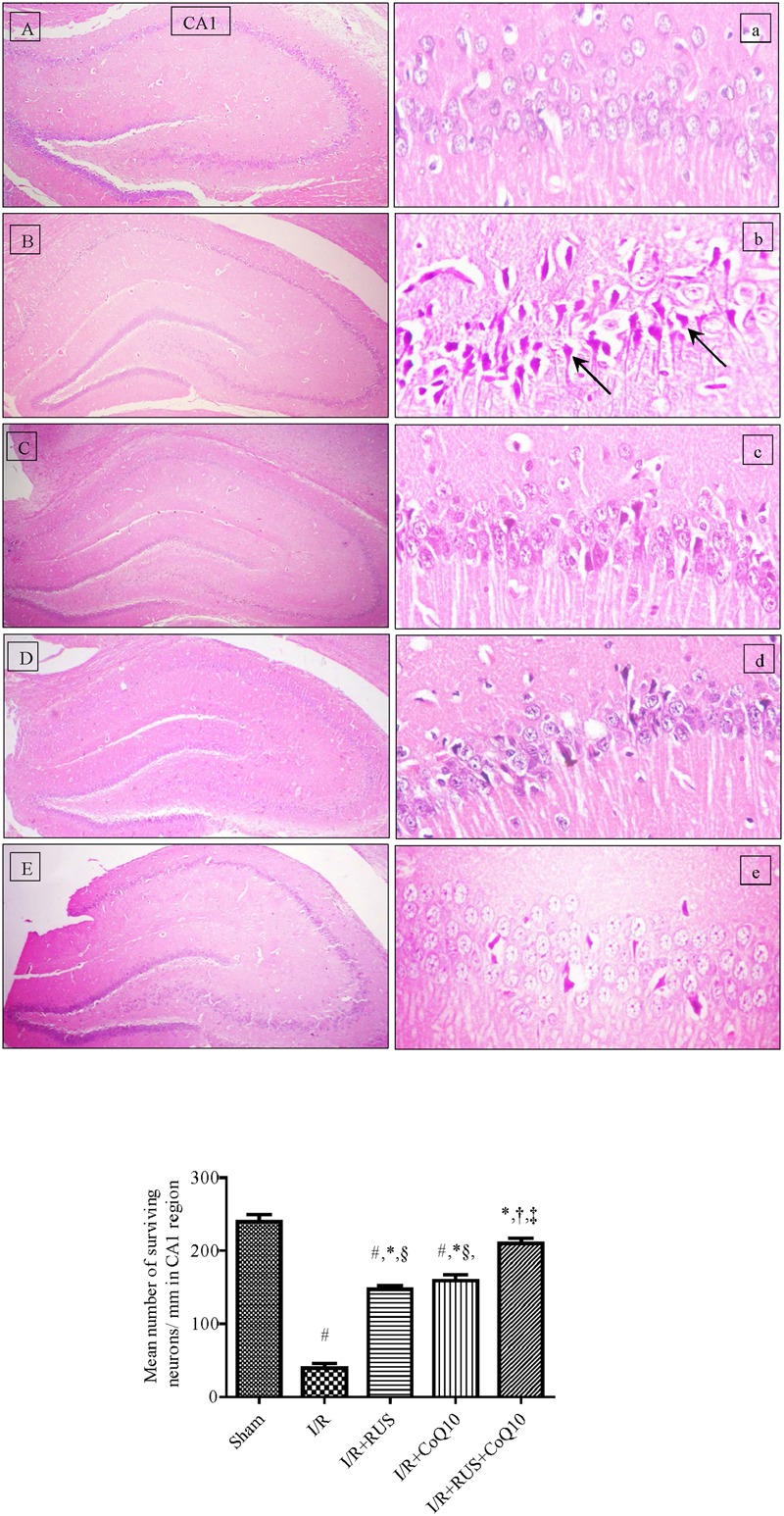
FIGURE 1
FIGURE 1
Descriptive images of H&E staining (top) displaying the neuroprotective effect of Rosuvastatin and/or CoQ10 on hippocampal CA1 area. (A,a) Sham group, (B,b) I/R, (C,c) I/R+RUS, (D,d) I/R+CoQ10, and (E,e) I/R+RUS+CoQ10. Histological examinations were achieved 5 days following 60 min ischemia. Arrows point to damaged neurons (x400). Lower panel indicates the mean number of salvaged neurons per mm in the CA1 subfield. Rosuvastatin (RUS; 10 mg/kg), CoQ10 (10 mg/kg), and their combination were administered p.o. for 7 days before ischemic insult. Values are presented as mean (n = 6) ± SEM. Statistical analysis was carried out using one-way ANOVA followed by Tukey’s post hoc multiple comparison test. As compared with (#) sham-operated, () I/R, (†) RUS, (‡) CoQ10, and (§) combination pretreated groups (P < 0.05).
FIGURE 2
FIGURE 2
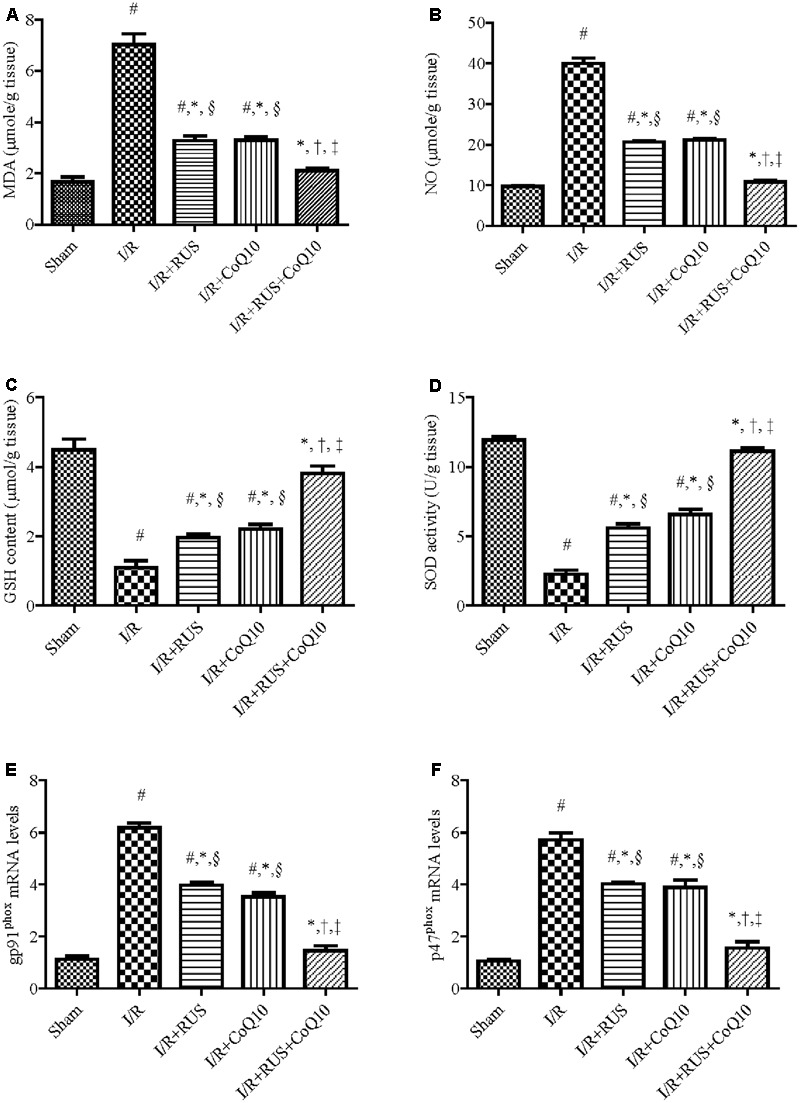
Modulatory effects of Rosuvastatin and/or CoQ10 on (A) MDA, (B) NO, (C) GSH, (D) SOD, and (E) mRNA expression of gp91phox and (F) p47phox subunits. Measurements were achieved 24 h following 60 min ischemia. Rosuvastatin (RUS; 10 mg/kg), CoQ10 (10 mg/kg), and their combination were administered p.o. for 7 days before ischemic insult. Values are presented as mean (n = 6) ± SEM. Statistical analysis was carried out using one-way ANOVA followed by Tukey’s post hoc multiple comparison test. As compared with (#) sham-operated, () I/R, (†) RUS, (‡) CoQ10, and (§) combination pretreated groups (P < 0.05).
FIGURE 3
FIGURE 3
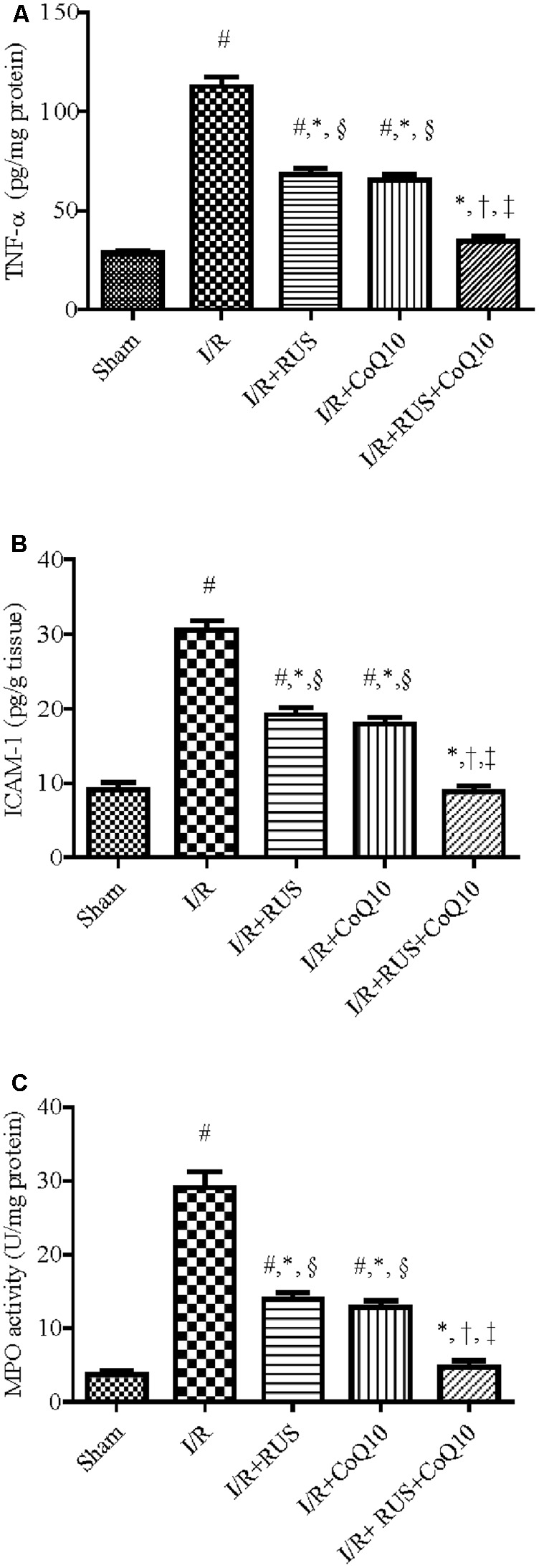
Rosuvastatin and/or CoQ10 attenuate inflammatory markers, (A) TNF-α, (B) ICAM-1, and (C) MPO activity. Measurements were achieved 24 h following 60 min ischemia. Rosuvastatin (RUS; 10 mg/kg), CoQ10 (10 mg/kg), and their combination were administered p.o. for 7 days before ischemic insult. Values are presented as mean (n = 6) ± SEM. Statistical analysis was carried out using one-way ANOVA followed by Tukey’s multiple comparison test. As compared with (#) sham-operated, () I/R, (†) RUS, and (‡) CoQ10, and (§) combination pretreated groups (P < 0.05).
FIGURE 4
FIGURE 4
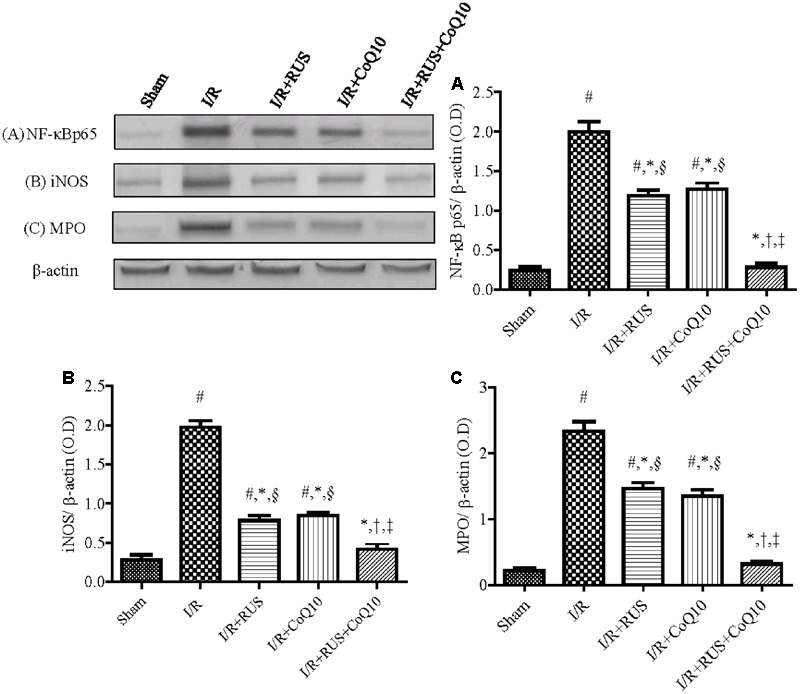
Rosuvastatin and/or CoQ10 downregulate the hippocampal protein expression of activated NF-κBp65, iNOS, and MPO in rats subjected to transient ischemia. Representative Western blots and optical densities of (A) NF-κBp65, (B) iNOS, and (C) MPO. Measurements were achieved 24 h following 60 min ischemia. Rosuvastatin (RUS; 10 mg/kg), CoQ10 (10 mg/kg), and their combination were administered p.o. for 7 days before ischemic insult. Values are presented as mean (n = 6) ± SEM. Statistical analysis was carried out using one-way ANOVA followed by Tukey’s post hoc multiple comparison test. As compared with (#) sham-operated, () I/R, (†) RUS, and (‡) CoQ10, and (§) combination pretreated groups (P < 0.05).
FIGURE 5
FIGURE 5
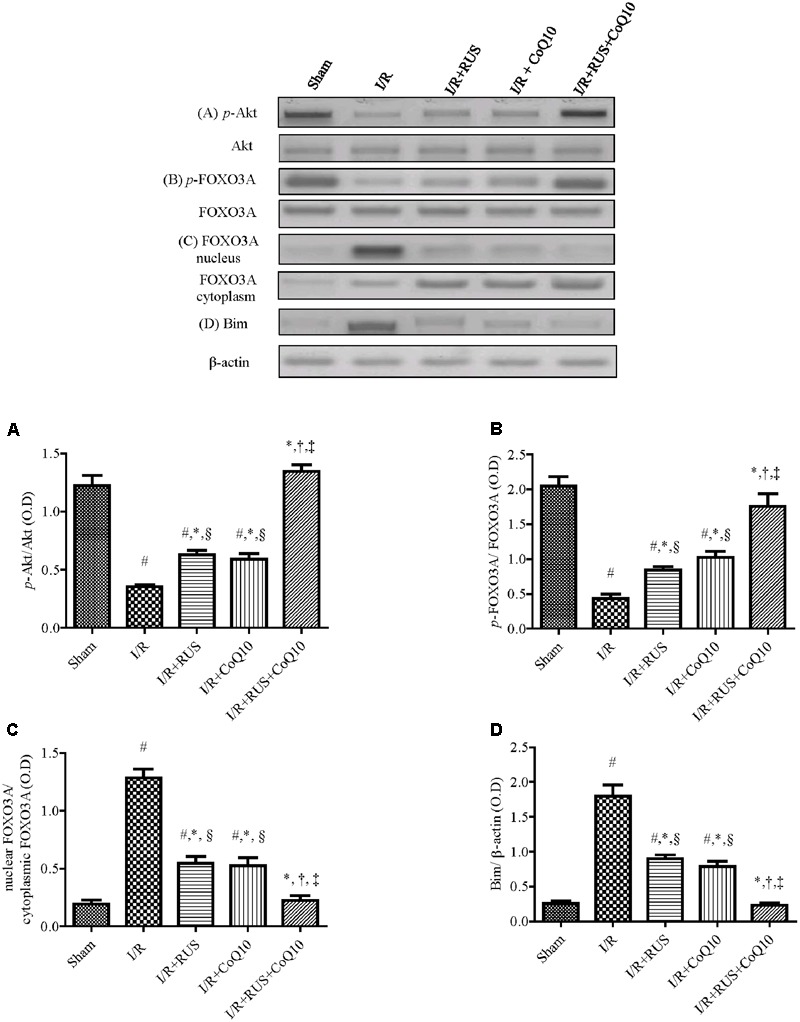
Rosuvastatin and/or CoQ10 upregulate the hippocampal protein expression of p-Akt and p-FOXO3A with the decline of FOXO3A nuclear translocation and Bim. Representative Western blots and optical densities of (A) p-Akt, (B) p-FOXO3A, (C) nuclear FOXO3A, and (D) Bim in rats subjected to transient ischemia. Measurements were achieved 24 h following 60 min ischemia. Rosuvastatin (RUS; 10 mg/kg), CoQ10 (10 mg/kg), and their combination were administered p.o. for 7 days before ischemic insult. Values are presented as mean (n = 6) ± SEM. Statistical analysis was carried out using one-way ANOVA followed by Tukey’s post hoc multiple comparison test. As compared with (#) sham-operated, () I/R, (†) RUS, and (‡) CoQ10, and (§) combination pretreated groups (P < 0.05).
FIGURE 6
FIGURE 6
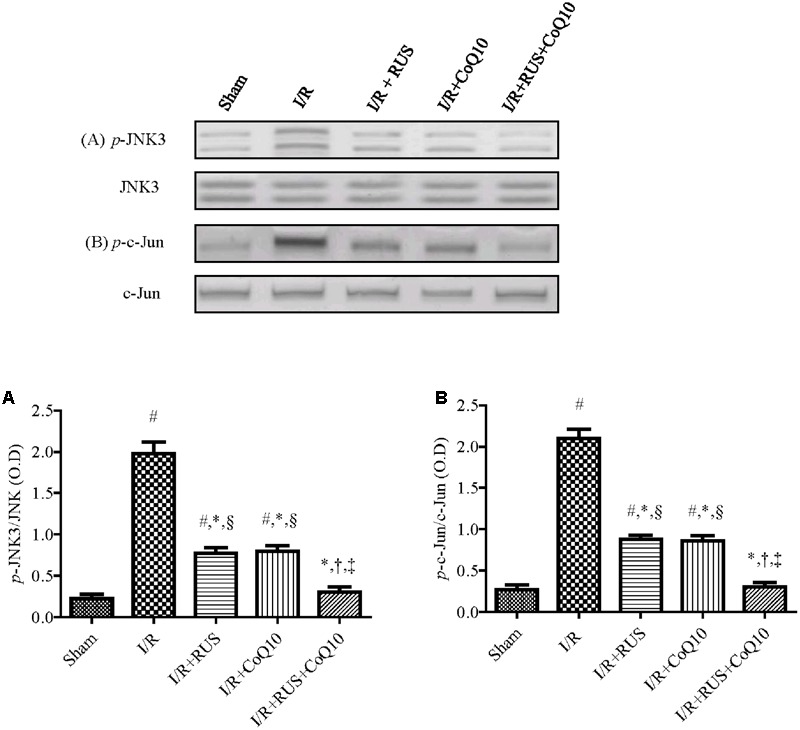
Rosuvastatin and/or CoQ10 mitigate the hippocampal protein expression of p-JNK3 and p-c-Jun. Representative Western blots and optical densities of (A) p-JNK3 and (B) p-c-Jun in rats subjected to transient ischemia. Measurements were achieved 24 h following 60 min ischemia. Rosuvastatin (RUS; 10 mg/kg), CoQ10 (10 mg/kg), and their combination were administered p.o. for 7 days before ischemic insult. Values are presented as mean (n = 6) ± SEM. Statistical analysis was carried out using one-way ANOVA followed by Tukey’s post hoc multiple comparison test. As compared with (#) sham-operated, () I/R, (†) RUS, and (‡) CoQ10, and (§) combination pretreated groups (P < 0.05).
FIGURE 7
FIGURE 7
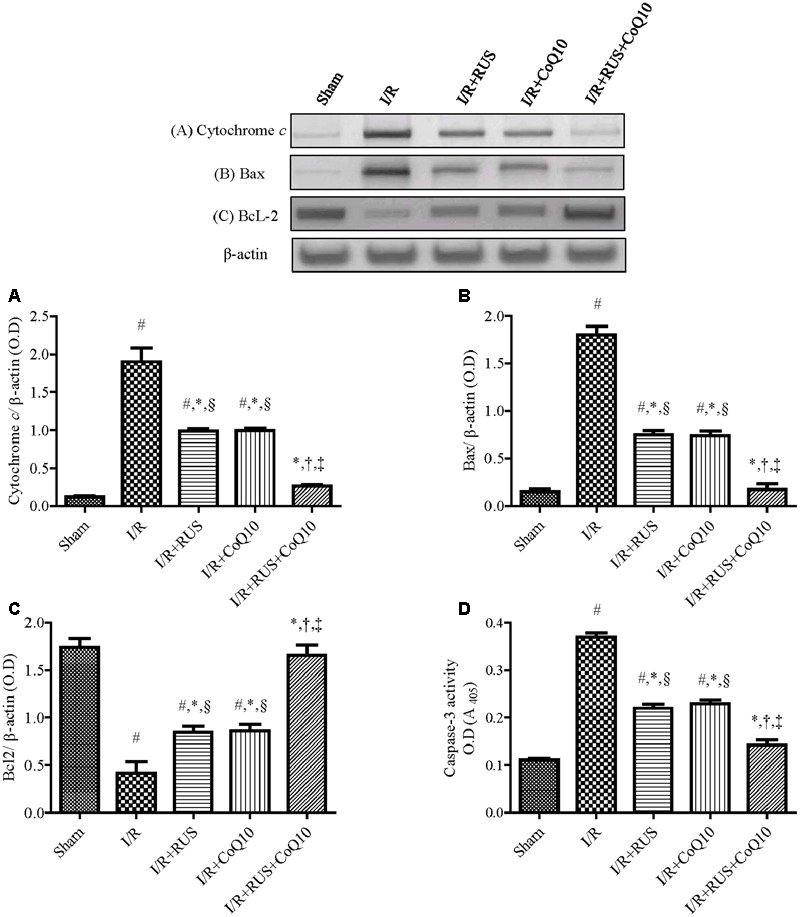
Rosuvastatin and/or CoQ10 abate hippocampal cytochrome c, Bax, and caspase-3 activity with the enhancement of Bcl2 levels. Representative Western blots and optical densities of (A) Cytochrome c, (B) Bax, (C) Bcl2, and (D) caspase-3 activity in rats subjected to transient ischemia. Measurements were achieved 24 h following 60 min ischemia. Rosuvastatin (RUS; 10 mg/kg), CoQ10 (10 mg/kg), and their combination were administered p.o. for 7 days before ischemic insult. Values are presented as mean (n = 6) ± SEM. Statistical analysis was carried out using one-way ANOVA followed by Tukey’s post hoc multiple comparison test. As compared with (#) sham-operated, () I/R, (†) RUS, (‡) CoQ10, and (§) combination pretreated groups (P < 0.05).
FIGURE 8
FIGURE 8
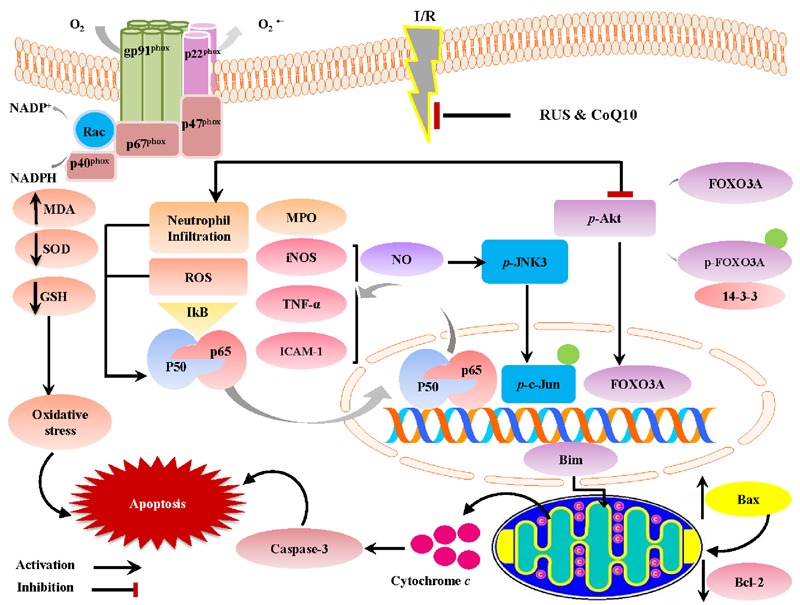
A proposed framework illustrating the versatile impacts of RUS and CoQ10 against I/R-induced hippocampal injury.

References

    1. Abd El-Aal S. A., El-Sawalhi M. M., Seif-El-Nasr M., Kenawy S. A. (2013). Effect of celecoxib and L-NAME on global ischemia-reperfusion injury in the rat hippocampus. Drug Chem. Toxicol. 36 385–395. 10.3109/01480545.2012.749270 - DOI - PubMed
    1. Abd-El-Fattah A. A., El-Sawalhi M. M., Rashed E. R., El-Ghazaly M. A. (2010). Possible role of vitamin E, coenzyme Q10 and rutin in protection against cerebral ischemia/reperfusion injury in irradiated rats. Int. J. Radiat. Biol. 86 1070–1078. 10.3109/09553002.2010.501844 - DOI - PubMed
    1. Aboul-Fotouh S. (2013). Coenzyme Q10 displays antidepressant-like activity with reduction of hippocampal oxidative/nitrosative DNA damage in chronically stressed rats. Pharmacol. Biochem. Behav. 104 105–112. 10.1016/j.pbb.2012.12.027 - DOI - PubMed
    1. Amin M. M., Asaad G. F., Salam R. M. A., El-Abhar H. S., Arbid M. S. (2014). Novel CoQ10 antidiabetic mechanisms underlie its positive effect: modulation of insulin and adiponectine receptors, tyrosine kinase, PI3K, glucose transporters, sRAGE and visfatin in insulin resistant/diabetic rats. PLOS ONE 9:e89169. 10.1371/journal.pone.0089169 - DOI - PMC - PubMed
    1. Balakrishnan P., Lee B.-J., Oh D. H., Kim J. O., Lee Y.-I., Kim D.-D., et al. (2009). Enhanced oral bioavailability of Coenzyme Q 10 by self-emulsifying drug delivery systems. Int. J. Pharm. 374 66–72. 10.1016/j.ijpharm.2009.03.008 - DOI - PubMed