Progressive realisation of universal health coverage: what are the required processes and evidence?
- PMID: 29082012
- PMCID: PMC5656135
- DOI: 10.1136/bmjgh-2017-000342
Progressive realisation of universal health coverage: what are the required processes and evidence?
Abstract
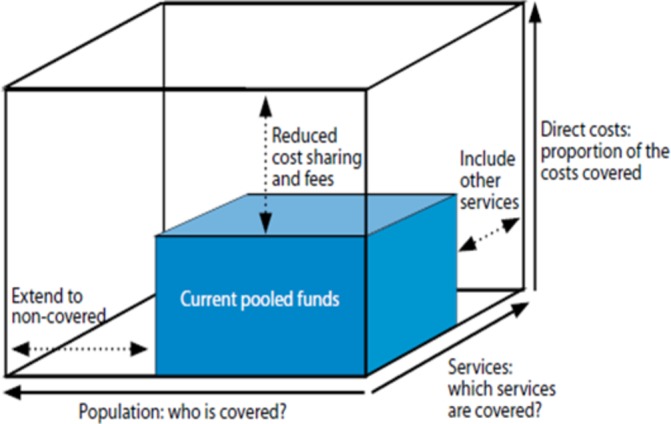
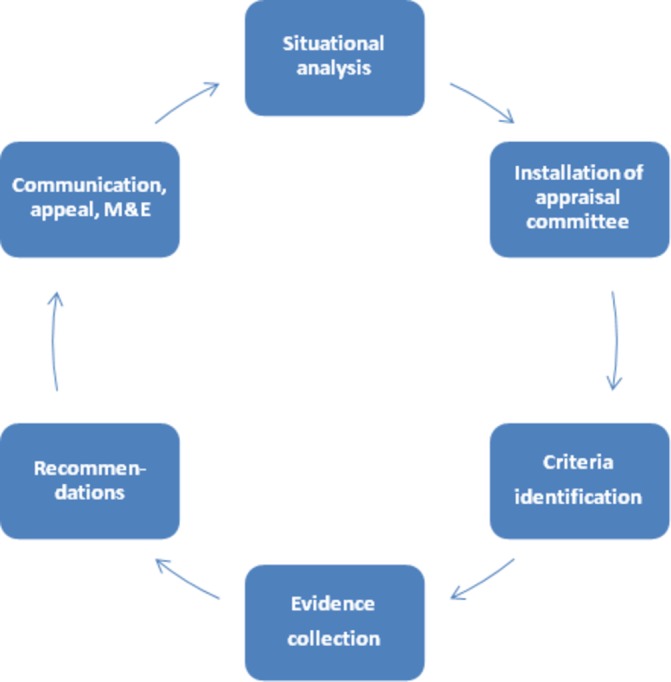
Progressive realisation is invoked as the guiding principle for countries on their own path to universal health coverage (UHC). It refers to the governmental obligations to immediately and progressively move towards the full realisation of UHC. This paper provides procedural guidance for countries, that is, how they can best organise their processes and evidence collection to make decisions on what services to provide first under progressive realisation. We thereby use 'evidence-informed deliberative processes', a generic value assessment framework to guide decision making on the choice of health services. We apply this to the concept of progressive realisation of UHC. We reason that countries face two important choices to achieve UHC. First, they need to define which services they consider as high priority, on the basis of their social values, including cost-effectiveness, priority to the worse off and financial risk protection. Second, they need to make tough choices whether they should first include more priority services, first expand coverage of existing priority services or first reduce co-payments of existing priority services. Evidence informed deliberative processes can facilitate these choices for UHC, and are also essential to the progressive realisation of the right to health. The framework informs health authorities on how they can best organise their processes in terms of composition of an appraisal committee including stakeholders, of decision-making criteria, collection of evidence and development of recommendations, including their communication. In conclusion, this paper fills in an important gap in the literature by providing procedural guidance for countries to progressively realise UHC.
Keywords: health economics; health policy; health systems.
Conflict of interest statement
Competing interests: None declared.
Figures
References
-
- United Nations. Sustainable Development Goals. Goal 3: ensure healthy lives and promote well-being for all at all ages, 2016. http://www.un.org/sustainabledevelopment/health/.
-
- WHO Consultative Group on Equity and Universal Health Coverage. making fair choices on the path to UHC. Geneva 2016.
-
- Glassman A, Chalkidou K. Priority setting in health: building institutions for smarter public spending. Washington: D.C.: center for Global Development, 2012.
-
- Yamin AE. Taking the Right to Health seriously: implications for Health Systems, Courts, and Achieving Universal Health Coverage. Hum Rights Q 2017;39:341–68. forthcoming 10.1353/hrq.2017.0021 - DOI
Publication types
LinkOut - more resources
Full Text Sources
Other Literature Sources
Miscellaneous