Review
. 2017:2017:9631435.
doi: 10.1155/2017/9631435. Epub 2017 Sep 26.

Role of the Gastrointestinal Tract Microbiome in the Pathophysiology of Diabetes Mellitus

Affiliations
Review

Role of the Gastrointestinal Tract Microbiome in the Pathophysiology of Diabetes Mellitus

Muhammad U Sohail et al. J Diabetes Res. 2017.

Abstract

The incidence of diabetes mellitus is rapidly increasing throughout the world. Although the exact cause of the disease is not fully clear, perhaps, genetics, ethnic origin, obesity, age, and lifestyle are considered as few of many contributory factors for the disease pathogenesis. In recent years, the disease progression is particularly linked with functional and taxonomic alterations in the gastrointestinal tract microbiome. A change in microbial diversity, referred as microbial dysbiosis, alters the gut fermentation profile and intestinal wall integrity and causes metabolic endotoxemia, low-grade inflammation, autoimmunity, and other affiliated metabolic disorders. This article aims to summarize the role of the gut microbiome in the pathogenesis of diabetes. Additionally, we summarize gut microbial dysbiosis in preclinical and clinical diabetes cases reported in literature in the recent years.


Figures
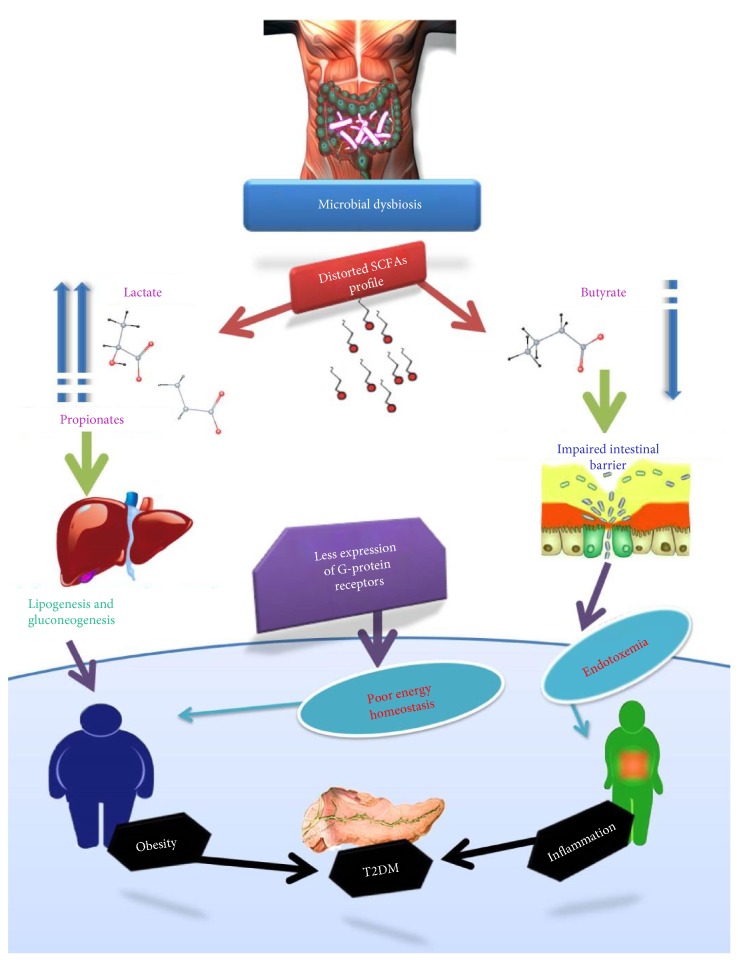
Figure 1
Figure 1
Change in the microbiome fermentation profile changes gut permeability and energy homeostasis which causes endotoxemia, low-grade inflammation, and obesity. Poor energy homeostasis leads to hyperglycemia and hyperlipidemia which may lead to obesity and ultimately insulin resistance.
Figure 2
Figure 2
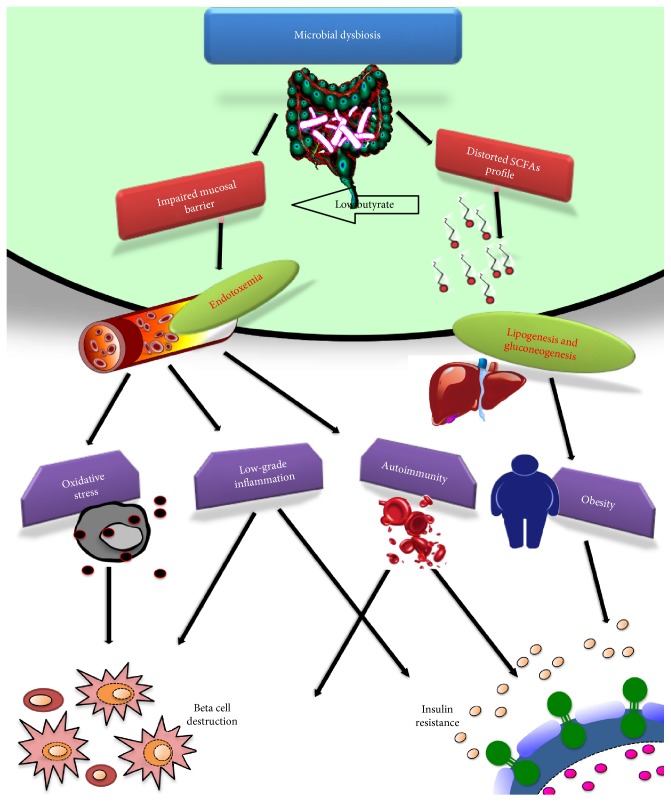
A schematic diagram describing the role of the gastrointestinal tract microbiome in the development of the metabolic syndrome that leads to diabetes mellitus pathogenesis. Microbial dysbiosis impairs intestinal wall integrity and allows translocation of toxins from the gut lumen to the systemic circulation. This endotoxemia leads to low-grade inflammation, autoimmunity, and oxidative stress that may lead to beta cell destruction or insulin resistance.

References

    1. McDermott A. J., Huffnagle G. B. The microbiome and regulation of mucosal immunity. Immunology. 2014;142(1):24–31. doi: 10.1111/imm.12231. - DOI - PMC - PubMed
    1. Galland L. The gut microbiome and the brain. Journal of Medicinal Food. 2014;17(12):1261–1272. doi: 10.1089/jmf.2014.7000. - DOI - PMC - PubMed
    1. Carabotti M., Scirocco A., Maselli M. A., Severi C. The gut-brain axis: interactions between enteric microbiota, central and enteric nervous systems. Annals of Gastroenterology: Quarterly Publication of the Hellenic Society of Gastroenterology. 2015;28(2):203–209. - PMC - PubMed
    1. Brown J. M., Hazen S. L. The gut microbial endocrine organ: bacterially derived signals driving cardiometabolic diseases. Annual Review of Medicine. 2015;66:343–359. doi: 10.1146/annurev-med-060513-093205. - DOI - PMC - PubMed
    1. Boulangé C. L., Neves A. L., Chilloux J., Nicholson J. K., Dumas M. E. Impact of the gut microbiota on inflammation, obesity, and metabolic disease. Genome Medicine. 2016;8(1):p. 42. doi: 10.1186/s13073-016-0303-2. - DOI - PMC - PubMed

MeSH terms

LinkOut - more resources