


Impact of E-cigarettes on Smoking and Related Outcomes in Veteran Smokers With Psychiatric Comorbidity
- PMID: 29083287
- PMCID: PMC7131866
- DOI: 10.1080/15504263.2017.1384877
Impact of E-cigarettes on Smoking and Related Outcomes in Veteran Smokers With Psychiatric Comorbidity
Abstract
Objective: Compared to the general U.S. population, smokers with comorbid psychiatric and/or substance use disorders have lower quit rates after evidence-based treatments and disproportionately high smoking-related deaths. Improved modalities for reducing tobacco-related harm in this subpopulation are needed. Because electronic cigarettes (e-cigarettes) can now deliver physiologically relevant levels of nicotine to consumers, they represent an additional nicotine delivery system that could be used in cessation interventions. While current data suggest that the use of e-cigarettes by smokers promotes a reduction in combustible cigarette use, smoking quit rates through use of e-cigarettes appears to be low. The goal of this study was to examine impact of e-cigarette use on combustible tobacco use as well as on the readiness to quit smoking and changes in nicotine dependence in a multimorbid population.
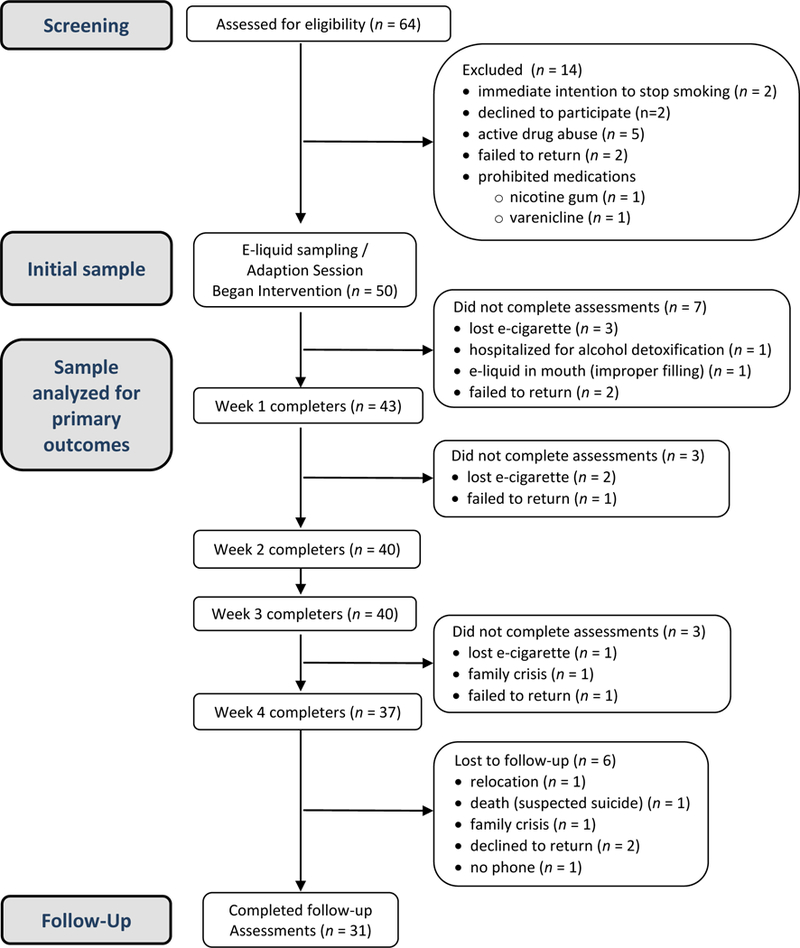
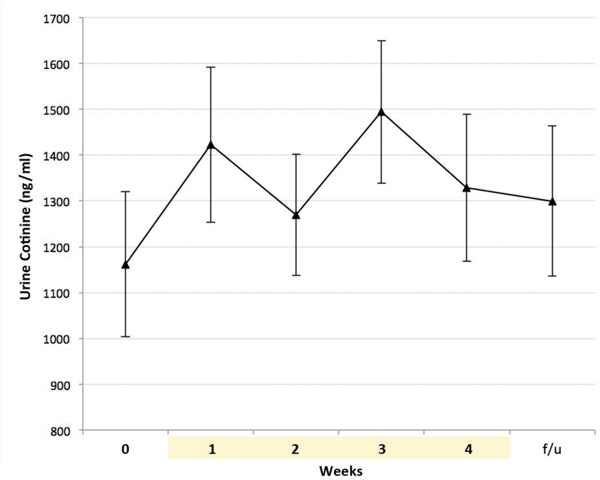
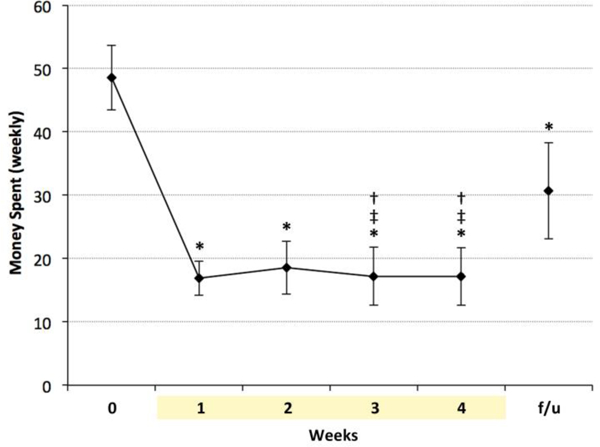
Methods: We conducted a 4-week, open-label study in 43 military veteran smokers who had no immediate intention to stop smoking and were currently receiving psychiatric services from the Department of Veterans Affairs health care system. Participants were provided with a study e-cigarette they could use ad libitum along with other tobacco products and were encouraged to attend weekly laboratory visits and a one-month follow-up visit. Main outcome measures were number of cigarettes smoked per day (CPD), the frequency of e-cigarette use, the amount of money spent on combustible cigarettes (U.S. dollars/week), alveolar carbon monoxide (CO) levels, and urine cotinine levels.
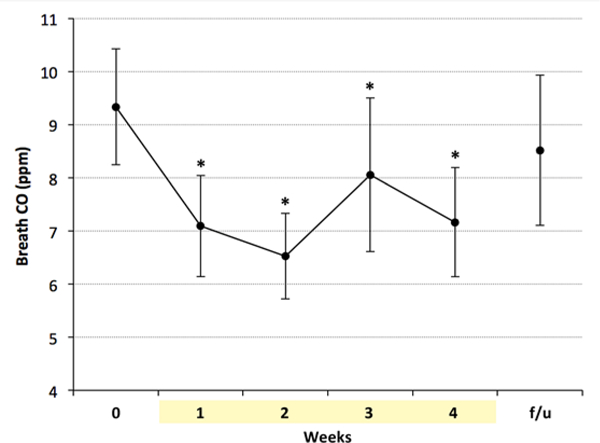
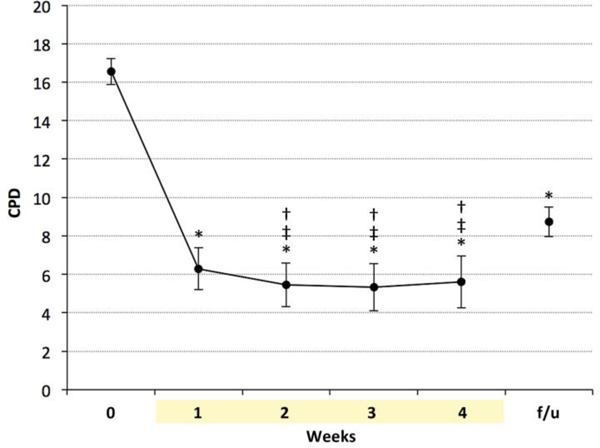
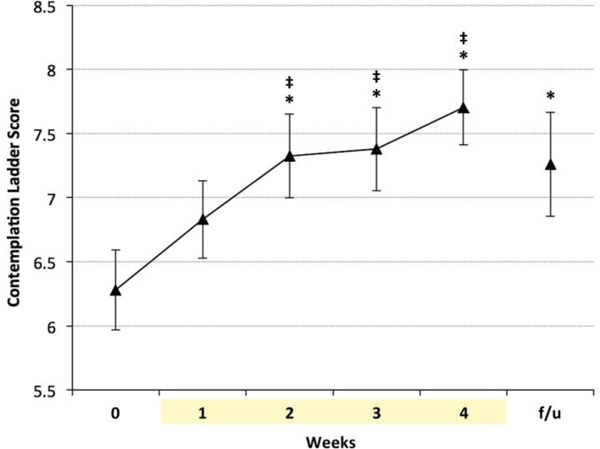
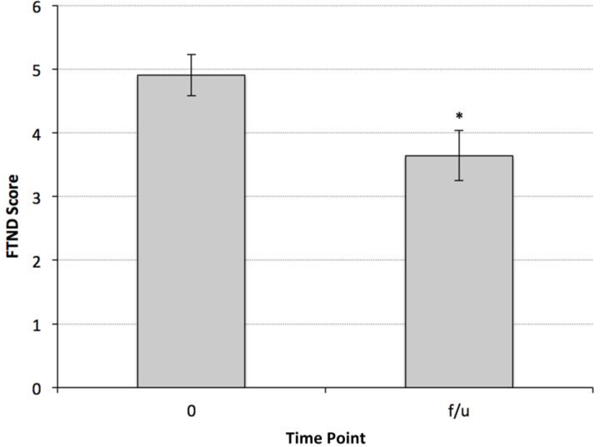
Results: Mean e-cigarette use was 5.7 days per week and only 9% of participants used the e-cigarette for fewer than 4 days per week. Significant reductions in breath CO (9.3 ppm to 7.3 ppm, p < .02) and CPD (from 16.6 to 5.7, p < .001) were observed across study weeks, and no serious adverse events were reported. Three participants (10% of completers) reported smoking cessation that was corroborated biochemically. At one-month follow-up, motivation to quit smoking remained significantly higher and the level of nicotine dependence was significantly lower than at baseline.
Conclusions: E-cigarettes are acceptable to smokers with psychiatric comorbidities, as indicated by sustained and frequent e-cigarette use by 90% of participants, and may promote reduction and/or cessation of combustible cigarette use. E-cigarettes appear to be a viable harm reduction modality in smokers with psychiatric comorbidities.
Keywords: Electronic cigarettes; cigarettes; e-cigarettes; smoking; tobacco harm reduction.
Figures
References
-
- Adriaens K, Van Gucht D, Declerck P, & Baeyens F (2014). Effectiveness of the electronic cigarette: An eight-week Flemish study with six-month follow-up on smoking reduction, craving and experienced benefits and complaints. International Journal of Environmental Research and Public Health, 11(11), 11220–11248. doi: 10.3390/ijerph111111220 - DOI - PMC - PubMed
Publication types
MeSH terms
Grants and funding
LinkOut - more resources
Full Text Sources
Other Literature Sources
Medical