Lyplal1 is dispensable for normal fat deposition in mice
- PMID: 29084768
- PMCID: PMC5769613
- DOI: 10.1242/dmm.031864
Lyplal1 is dispensable for normal fat deposition in mice
Abstract
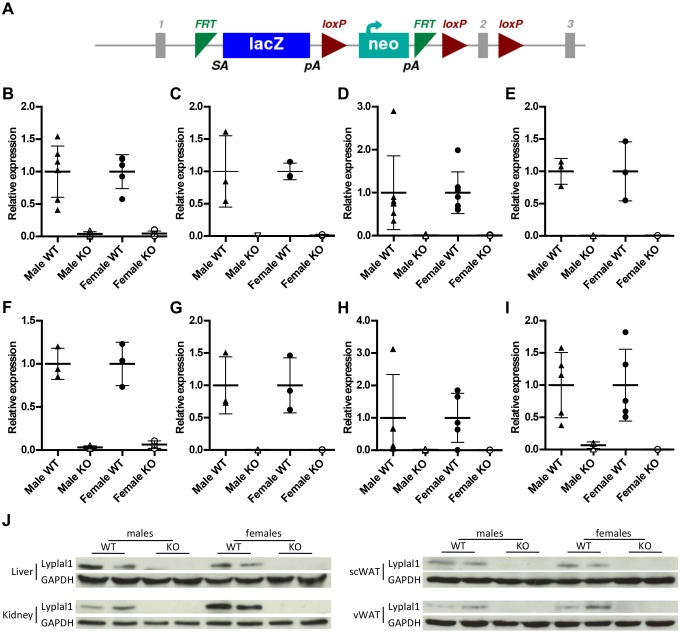
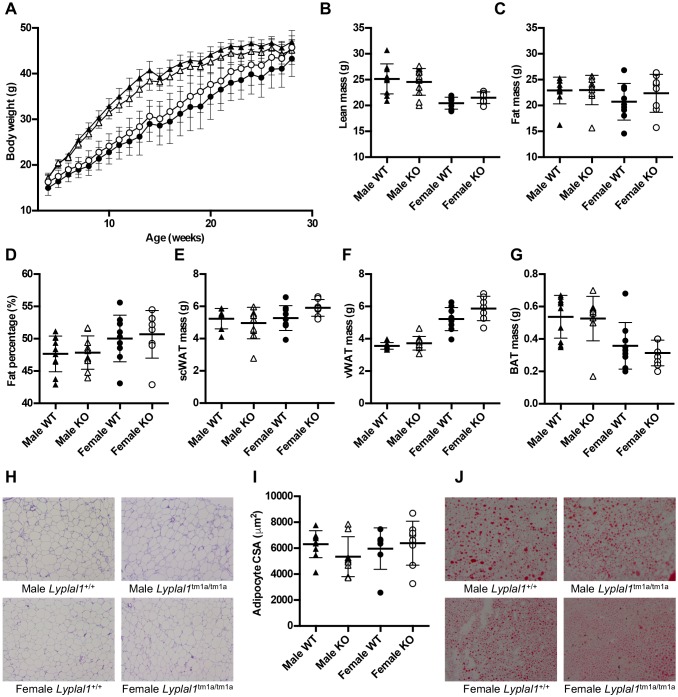
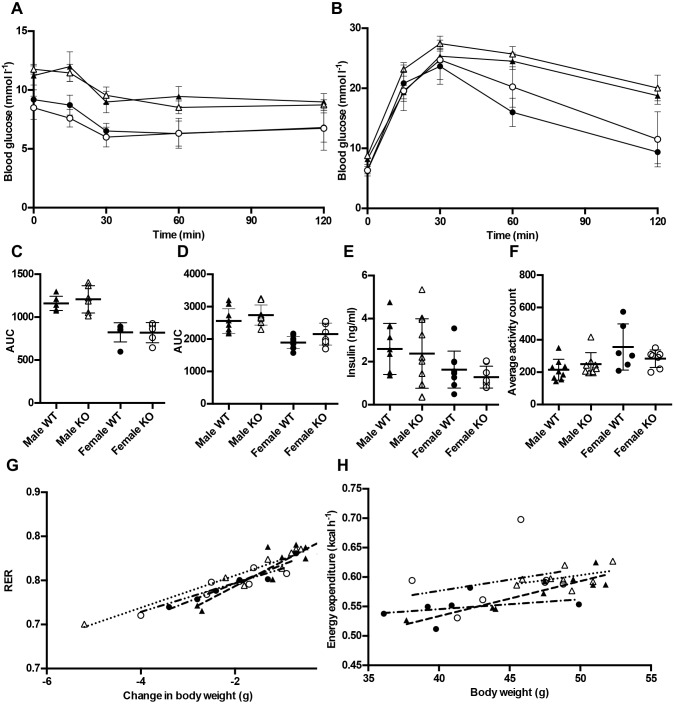
Genome-wide association studies (GWAS) have detected association between variants in or near the Lysophospholipase-like 1 (LYPLAL1) locus and metabolic traits, including central obesity, fatty liver and waist-to-hip ratio. LYPLAL1 is also known to be upregulated in the adipose tissue of obese patients. However, the physiological role of LYPLAL1 is not understood. To investigate the function of Lyplal1 in vivo we investigated the phenotype of the Lyplal1tm1a(KOMP)Wtsi homozygous mouse. Body composition was unaltered in Lyplal1 knockout mice as assessed by dual-energy X-ray absorptiometry (DEXA) scanning, both on normal chow and on a high-fat diet. Adipose tissue distribution between visceral and subcutaneous fat depots was unaltered, with no change in adipocyte cell size. The response to both insulin and glucose dosing was normal in Lyplal1tm1a(KOMP)Wtsi homozygous mice, with normal fasting blood glucose concentrations. RNAseq analysis of liver, muscle and adipose tissue confirmed that Lyplal1 expression was ablated with minimal additional changes in gene expression. These results suggest that Lyplal1 is dispensable for normal mouse metabolic physiology and that despite having been maintained through evolution Lyplal1 is not an essential gene, suggesting possible functional redundancy. Further studies will be required to clarify its physiological role.
Keywords: Adipose tissue; Genome-wide association study; Lyplal1; Model organism; Mouse; Obesity.
© 2017. Published by The Company of Biologists Ltd.
Conflict of interest statement
Competing interestsThe authors declare no competing or financial interests.
Figures
References
-
- Ahn K., Boehm M., Brown M. F., Calloway J., Che Y., Chen J., Fennell K. F., Geoghegan K. F., Gilbert A. M., Gutierrez J. A. et al. (2016). Discovery of a selective covalent inhibitor of lysophospholipase-like 1 (LYPLAL1) as a tool to evaluate the role of this serine hydrolase in metabolism. ACS Chem. Biol. 11, 2529-2540. 10.1021/acschembio.6b00266 - DOI - PubMed
-
- Bille D. S., Banasik K., Justesen J. M., Sandholt C. H., Sandbaek A., Lauritzen T., Jorgensen T., Witte D. R., Holm J.-C., Hansen T. et al. (2011). Implications of central obesity-related variants in LYPLAL1, NRXN3, MSRA, and TFAP2B on quantitative metabolic traits in adult Danes. PLoS ONE 6, e20640 10.1371/journal.pone.0020640 - DOI - PMC - PubMed
-
- Bürger M., Zimmermann T. J., Kondoh Y., Stege P., Watanabe N., Osada H., Waldmann H. and Vetter I. R. (2012). Crystal structure of the predicted phospholipase LYPLAL1 reveals unexpected functional plasticity despite close relationship to acyl protein thioesterases. J. Lipid Res. 53, 43-50. 10.1194/jlr.M019851 - DOI - PMC - PubMed
Publication types
MeSH terms
Substances
Grants and funding
LinkOut - more resources
Full Text Sources
Other Literature Sources
Molecular Biology Databases