


SEOM clinical guidelines for diagnosis and treatment of glioblastoma (2017)
- PMID: 29086250
- PMCID: PMC5785619
- DOI: 10.1007/s12094-017-1763-6
SEOM clinical guidelines for diagnosis and treatment of glioblastoma (2017)
Abstract
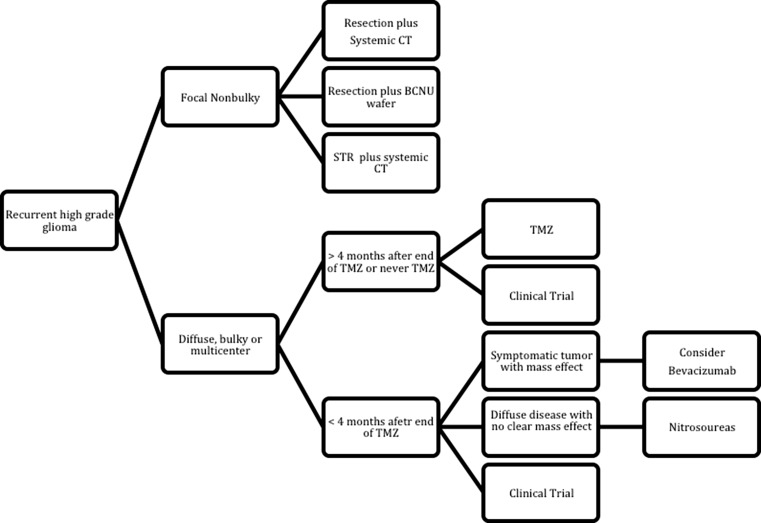
Glioblastoma (GB) is the most common brain malignancy and accounts for over 50% of all high-grade gliomas. Radiotherapy (RT) with concomitant and adjuvant temozolomide (TMZ) chemotherapy is the current standard of care for patients with newly diagnosed GB up to age 70. Recently, a new standard of care has been adopted for elderly patients (≥ 65 years) based on short course of RT and TMZ. Several clinically relevant molecular markers that assist in diagnosis and prognosis have recently been identified. The treatment for recurrent GB is not well defined, and decision-making is usually based on prior strategies as well as several clinical and radiological factors. The presence of neurologic deficits and seizures can significantly impact quality of life.
Keywords: Diagnosis; Glioblastoma; Guidelines; Treatment.
Conflict of interest statement
Conflict of interest
The authors declare that they have no conflict of interest.
Ethical approval
All procedures performed in studies involving human participants were in accordance with the ethical standards of the institutional and/or national research committee and with the 1964 Helsinki declaration and its later amendments or comparable ethical standards.
Informed consent
Informed consent was obtained from all individual participants included in the study.
Figures
References
-
- Galceran J, Ameijide A, Carulla M, Mateos A, Quirós JR, Rojas D, et al. Cancer incidence in Spain, 2015. Clin Transl Oncol. 2017;16:1–27. - PubMed
-
- Grade Definitions. US Preventive Services Task Force. 2016. https://www.uspreventiveservicestaskforce.org/Page/Name/grade-definitions.
Publication types
MeSH terms
LinkOut - more resources
Full Text Sources
Other Literature Sources
Medical
