


The Impact of Diet-Induced Weight Loss on Biomarkers for Colorectal Cancer: An Exploratory Study (INTERCEPT)
- PMID: 29086510
- PMCID: PMC8515939
- DOI: 10.1002/oby.21984
The Impact of Diet-Induced Weight Loss on Biomarkers for Colorectal Cancer: An Exploratory Study (INTERCEPT)
Abstract
Objective: The aim of this study was to explore the potential effects of diet-induced weight loss on molecular biomarkers of colorectal cancer risk in serum and colorectal tissue.
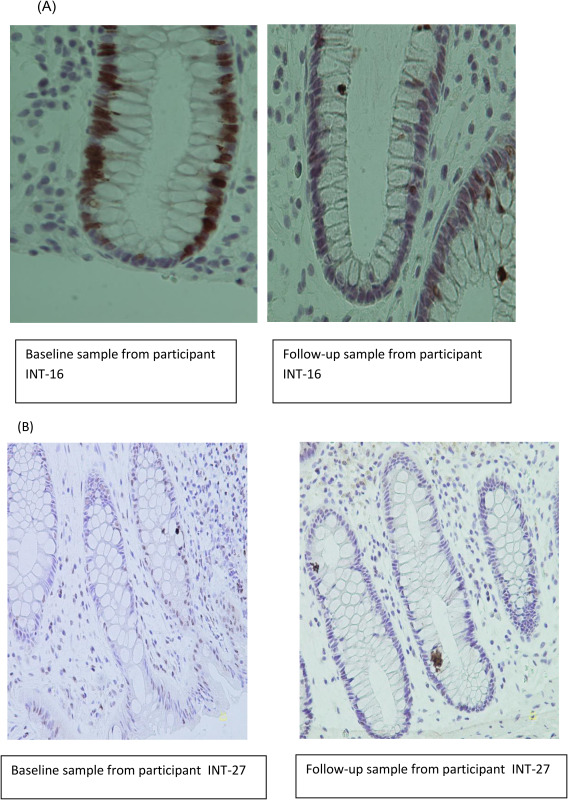
Methods: This single-arm exploratory study included 20 adults with BMI ≥ 30 kg/m2 completing an 8-week, complete, low-energy liquid diet. Pre- and postintervention anthropometric measurements, fasting blood draws, and endoscopic examinations to procure colorectal biopsies were performed. Fasting insulin, glucose, insulinlike growth factor 1 (IGF-1), C-reactive protein (CRP), and blood lipids were measured in serum, and tissue markers of apoptosis (M30), colonocyte proliferation (Ki-67), and insulin signaling (phospho-mTOR) were assessed using immunohistochemical staining.
Results: Participants achieved substantial weight loss (mean = 13.56%). Mean concentrations of insulin, glucose, and cholesterol were significantly reduced (P < 0.05), but IGF-1 and CRP were not. Colorectal tissue expression of Ki-67 was significantly reduced (preintervention mean score = 7, postintervention mean score = 3.9, mean % change -43.8; P = 0.027). There were no significant changes in M30 or phospho-mTOR.
Conclusions: Weight loss in individuals with obesity was associated with improvements in insulin sensitivity and blood lipid profiles and a significant reduction in tissue Ki-67 expression. This is one of the first studies to demonstrate potential cancer-relevant changes in colorectal tissue following weight loss achieved through diet.
© 2017 The Authors. Obesity published by Wiley Periodicals, Inc. on behalf of The Obesity Society (TOS).
Figures
References
-
- Cancer Research UK . Bowel cancer risk factors. http://www.cancerresearchuk.org/health-professional/cancer-statistics/st.... Accessed December 2015.
-
- Ning Y, Wang L, Giovannucci EL. A quantitative analysis of body mass index and colorectal cancer: findings from 56 observational studies. Obes Rev 2010;11:19‐30. - PubMed
-
- Health Survey for England 2011: health, social care, and lifestyles: summary of key findings 2011. Health and Social Care Information Centre. 2012.
-
- Adams TD, Hunt SC. Cancer and obesity: effect of bariatric surgery. World J Surg 2009;33:2028‐2033. - PubMed
MeSH terms
Substances
Associated data
Grants and funding
LinkOut - more resources
Full Text Sources
Other Literature Sources
Medical
Research Materials
Miscellaneous
