Circulating vitamin D concentration and risk of seven cancers: Mendelian randomisation study
- PMID: 29089348
- PMCID: PMC5666592
- DOI: 10.1136/bmj.j4761
Circulating vitamin D concentration and risk of seven cancers: Mendelian randomisation study
Abstract
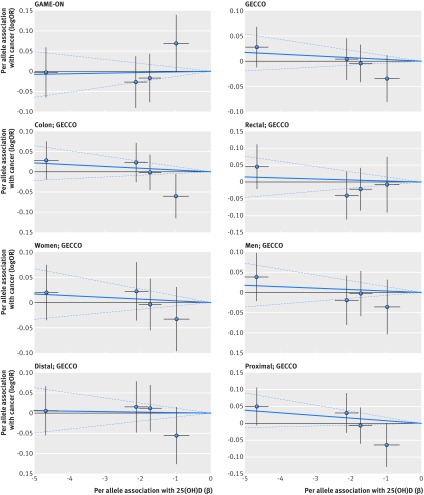
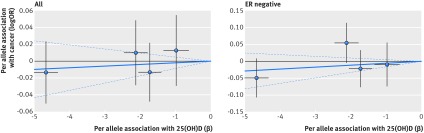
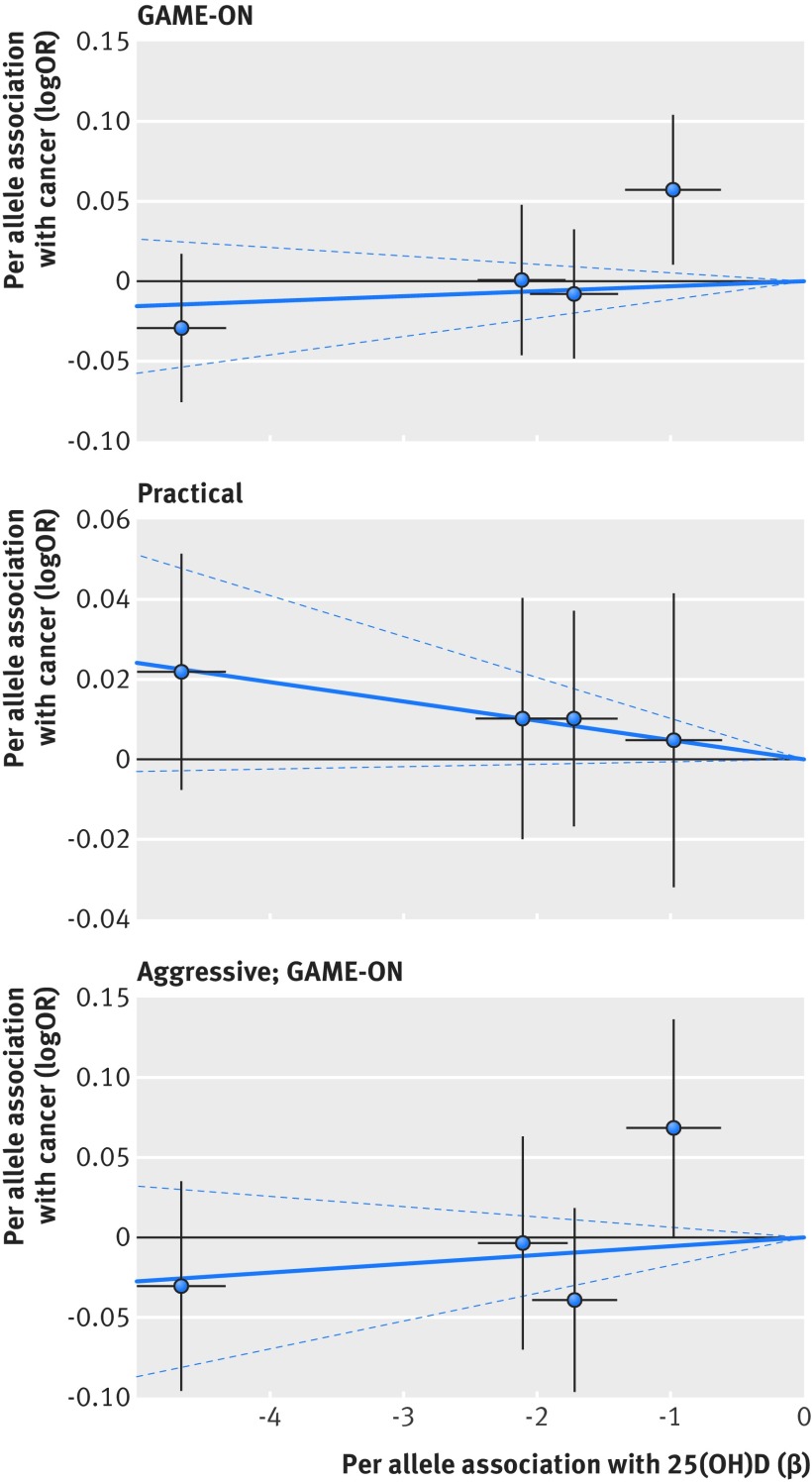
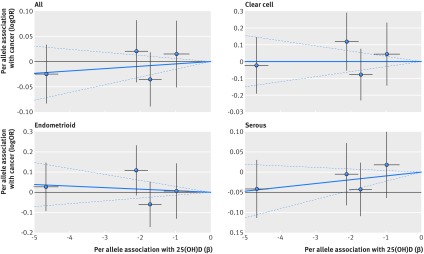
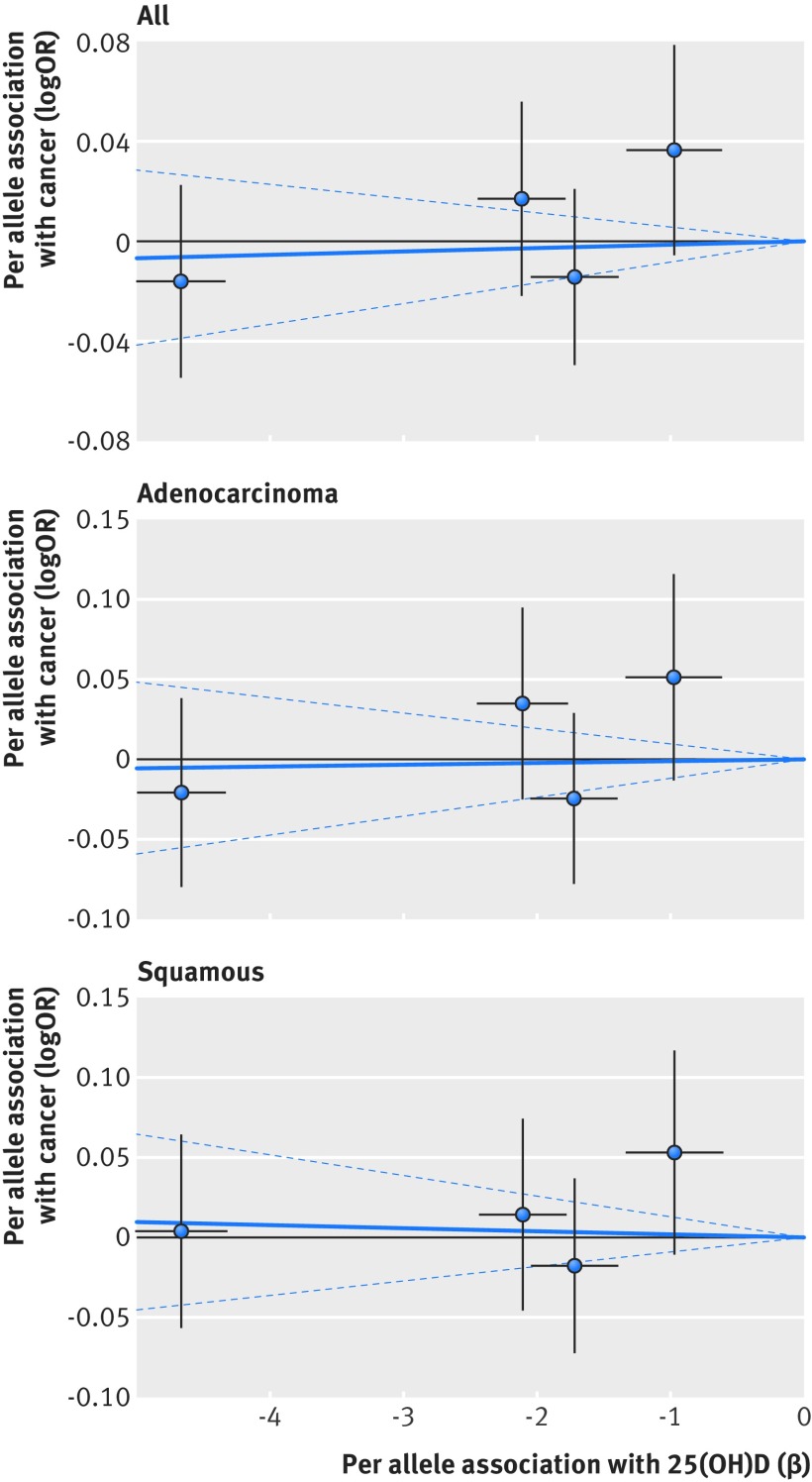
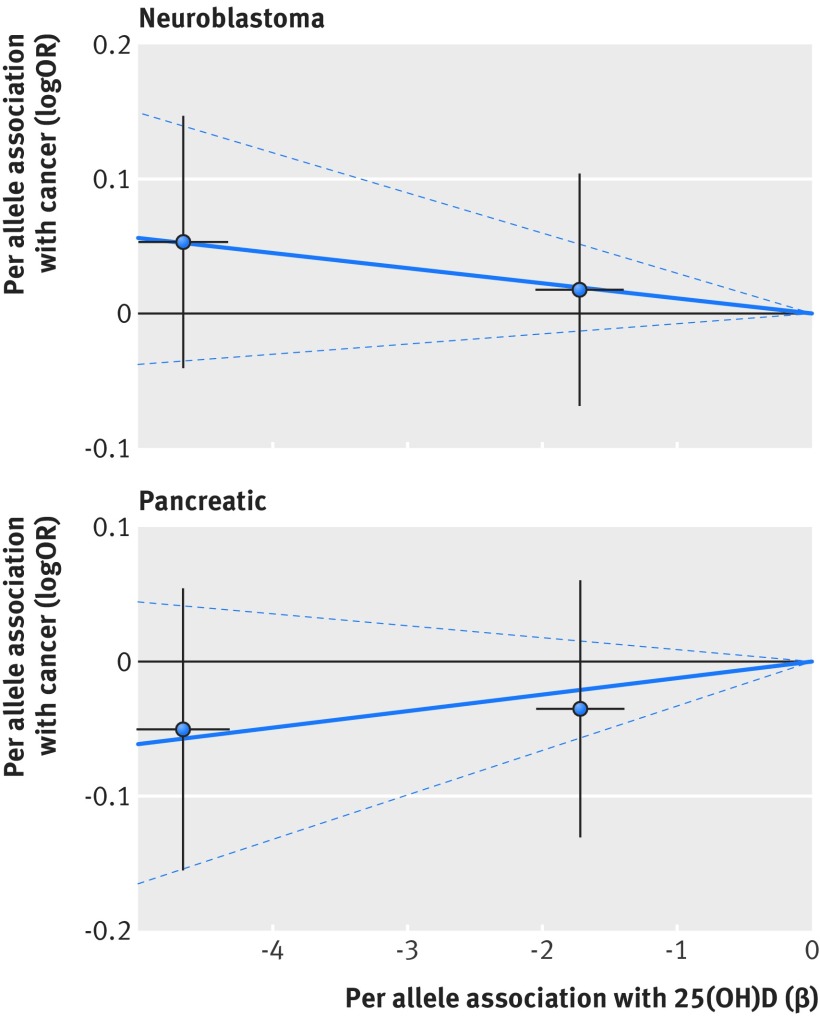
Objective To determine if circulating concentrations of vitamin D are causally associated with risk of cancer.Design Mendelian randomisation study.Setting Large genetic epidemiology networks (the Genetic Associations and Mechanisms in Oncology (GAME-ON), the Genetic and Epidemiology of Colorectal Cancer Consortium (GECCO), and the Prostate Cancer Association Group to Investigate Cancer Associated Alterations in the Genome (PRACTICAL) consortiums, and the MR-Base platform).Participants 70 563 cases of cancer (22 898 prostate cancer, 15 748 breast cancer, 12 537 lung cancer, 11 488 colorectal cancer, 4369 ovarian cancer, 1896 pancreatic cancer, and 1627 neuroblastoma) and 84 418 controls.Exposures Four single nucleotide polymorphisms (rs2282679, rs10741657, rs12785878 and rs6013897) associated with vitamin D were used to define a multi-polymorphism score for circulating 25-hydroxyvitamin D (25(OH)D) concentrations.Main outcomes measures The primary outcomes were the risk of incident colorectal, breast, prostate, ovarian, lung, and pancreatic cancer and neuroblastoma, which was evaluated with an inverse variance weighted average of the associations with specific polymorphisms and a likelihood based approach. Secondary outcomes based on cancer subtypes by sex, anatomic location, stage, and histology were also examined.Results There was little evidence that the multi-polymorphism score of 25(OH)D was associated with risk of any of the seven cancers or their subtypes. Specifically, the odds ratios per 25 nmol/L increase in genetically determined 25(OH)D concentrations were 0.92 (95% confidence interval 0.76 to 1.10) for colorectal cancer, 1.05 (0.89 to 1.24) for breast cancer, 0.89 (0.77 to 1.02) for prostate cancer, and 1.03 (0.87 to 1.23) for lung cancer. The results were consistent with the two different analytical approaches, and the study was powered to detect relative effect sizes of moderate magnitude (for example, 1.20-1.50 per 25 nmol/L decrease in 25(OH)D for most primary cancer outcomes. The Mendelian randomisation assumptions did not seem to be violated.Conclusions There is little evidence for a linear causal association between circulating vitamin D concentration and risk of various types of cancer, though the existence of causal clinically relevant effects of low magnitude cannot be ruled out. These results, in combination with previous literature, provide evidence that population-wide screening for vitamin D deficiency and subsequent widespread vitamin D supplementation should not currently be recommended as a strategy for primary cancer prevention.
Published by the BMJ Publishing Group Limited. For permission to use (where not already granted under a licence) please go to http://group.bmj.com/group/rights-licensing/permissions.
Conflict of interest statement
Competing interests: All authors have completed the ICMJE uniform disclosure form at www.icmje.org/coi_disclosure.pdf and declare: no undeclared support from any organisation for the submitted work; no financial relationships with any organisations that might have an interest in the submitted work in the previous three years; no other relationships or activities that could appear to have influenced the submitted work.
Figures
Comment in
-
Low vitamin D levels as a risk factor for cancer.BMJ. 2017 Oct 31;359:j4952. doi: 10.1136/bmj.j4952. BMJ. 2017. PMID: 29089329 No abstract available.
References
-
- Feldman D, Krishnan AV, Swami S, Giovannucci E, Feldman BJ. The role of vitamin D in reducing cancer risk and progression. Nat Rev Cancer 2014;14:342-57. 10.1038/nrc3691 pmid:24705652. - DOI - PubMed
-
- Lee JE, Li H, Chan AT, et al. Circulating levels of vitamin D and colon and rectal cancer: the Physicians’ Health Study and a meta-analysis of prospective studies. Cancer Prev Res (Phila) 2011;4:735-43. 10.1158/1940-6207.CAPR-10-0289 pmid:21430073. - DOI - PMC - PubMed
-
- Ordóñez Mena JM, Brenner H. Vitamin D and cancer: an overview on epidemiological studies. Adv Exp Med Biol 2014;810:17-32.pmid:25207358. - PubMed
-
- Theodoratou E, Tzoulaki I, Zgaga L, Ioannidis JP. Vitamin D and multiple health outcomes: umbrella review of systematic reviews and meta-analyses of observational studies and randomised trials. BMJ 2014;348:g2035 10.1136/bmj.g2035 pmid:24690624. - DOI - PMC - PubMed
-
- Shui I, Giovannucci E. Vitamin D status and cancer incidence and mortality. Adv Exp Med Biol 2014;810:33-51.pmid:25207359. - PubMed
MeSH terms
Substances
Grants and funding
LinkOut - more resources
Full Text Sources
Other Literature Sources
Medical
Miscellaneous