. 2018 Jan;29(1):118-137.
doi: 10.1681/ASN.2017020222. Epub 2017 Oct 31.

FXR/TGR5 Dual Agonist Prevents Progression of Nephropathy in Diabetes and Obesity

Affiliations

FXR/TGR5 Dual Agonist Prevents Progression of Nephropathy in Diabetes and Obesity

Xiaoxin X Wang et al. J Am Soc Nephrol. 2018 Jan.

Abstract

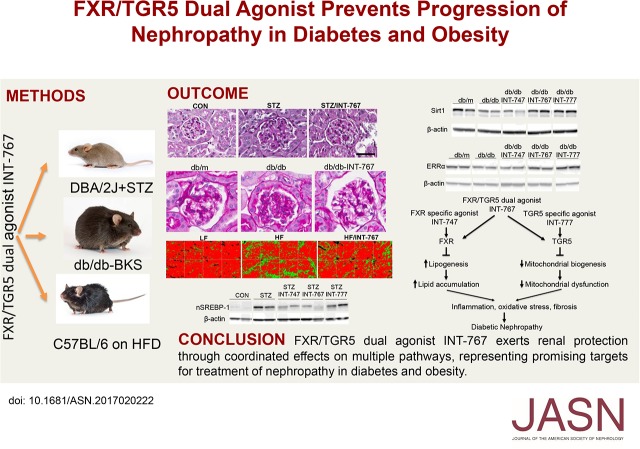
Bile acids are ligands for the nuclear hormone receptor farnesoid X receptor (FXR) and the G protein-coupled receptor TGR5. We have shown that FXR and TGR5 have renoprotective roles in diabetes- and obesity-related kidney disease. Here, we determined whether these effects are mediated through differential or synergistic signaling pathways. We administered the FXR/TGR5 dual agonist INT-767 to DBA/2J mice with streptozotocin-induced diabetes, db/db mice with type 2 diabetes, and C57BL/6J mice with high-fat diet-induced obesity. We also examined the individual effects of the selective FXR agonist obeticholic acid (OCA) and the TGR5 agonist INT-777 in diabetic mice. The FXR agonist OCA and the TGR5 agonist INT-777 modulated distinct renal signaling pathways involved in the pathogenesis and treatment of diabetic nephropathy. Treatment of diabetic DBA/2J and db/db mice with the dual FXR/TGR5 agonist INT-767 improved proteinuria and prevented podocyte injury, mesangial expansion, and tubulointerstitial fibrosis. INT-767 exerted coordinated effects on multiple pathways, including stimulation of a signaling cascade involving AMP-activated protein kinase, sirtuin 1, PGC-1α, sirtuin 3, estrogen-related receptor-α, and Nrf-1; inhibition of endoplasmic reticulum stress; and inhibition of enhanced renal fatty acid and cholesterol metabolism. Additionally, in mice with diet-induced obesity, INT-767 prevented mitochondrial dysfunction and oxidative stress determined by fluorescence lifetime imaging of NADH and kidney fibrosis determined by second harmonic imaging microscopy. These results identify the renal signaling pathways regulated by FXR and TGR5, which may be promising targets for the treatment of nephropathy in diabetes and obesity.

Keywords: diabetic nephropathy; metabolism; obesity.


Figures

None
Graphical abstract
Figure 1.
Figure 1.
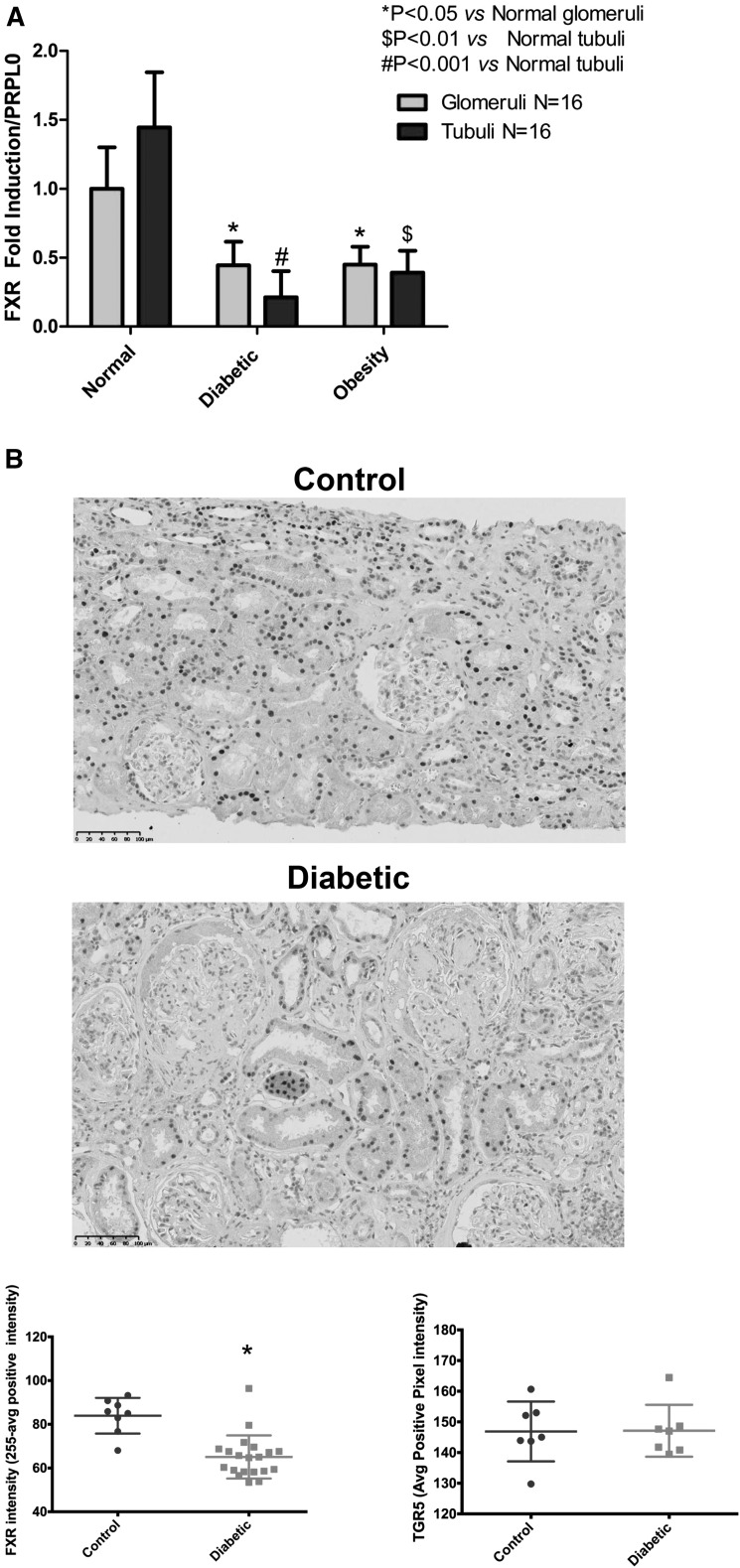
FXR mRNA and protein expression are decreased in human kidney biopsies with diabetes- and obesity-related kidney disease. (A) Glomerular and tubular FXR mRNA levels are decreased in kidney biopsy samples obtained from human subjects with diabetic- and obesity-related kidney disease. Glomerular and tubular cells were obtained by laser capture microdissection. (B) FXR protein expression as determined by immunohistochemistry is decreased in kidney biopsy samples obtained from human subjects with diabetic kidney disease (n=16 subjects in each group).
Figure 2.
Figure 2.
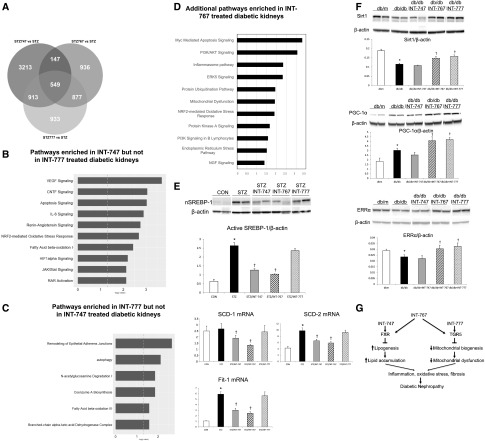
FXR and TGR5 regulate common and distinct pathways in the kidney. Regulation of pathways by FXR and TGR5. RNA-Seq analysis (A) shows the transcript numbers regulated by INT-767 compared with INT-747 or INT-777 in the Venn diagram and indicates differential pathways that are regulated by (B) the FXR selective agonist INT-747 and (C) the TGR5-specific agonist INT-777 as well as (D) the additional pathways regulated by INT-767 that are not included in B or C. VEGF, vascular endothelial growth factor. (E and F) Western blot analysis reveals pathways specifically for FXR and not TGR5 or vice versa, but all were regulated by INT-767. (G) Proposed model showing that dual agonist INT-767 can simultaneously activate both FXR and TGR5 signaling, and their nonoverlapping pathways, with potential additive effects. CON, nondiabetic DBA/2J. *P<0.05 versus CON or db/m (n=6 mice per group); P<0.05 versus STZ or db/db (n=6 mice per group).
Figure 3.
Figure 3.
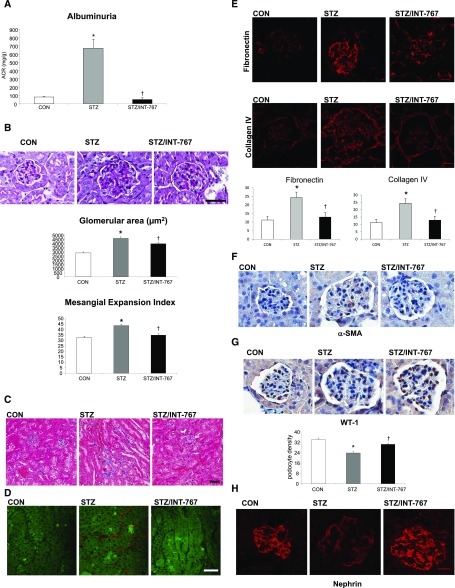
INT-767 treatment prevents renal disease in diabetic DBA/2J mice. (A) Albuminuria, defined by ACR, was markedly increased in diabetic mice and normalized by INT-767 treatment. (B) Representative periodic acid–Schiff (PAS) staining of kidney sections. Mesangial expansion index was defined by the percentage of mesangial area in glomerular tuft area. The mesangial area was determined by assessment of PAS-positive and nucleus-free areas in the mesangium. Glomerular area and mesangial expansion index were increased in diabetic mice, and INT-767 treatment prevented these effects. (C) Representative Masson trichrome staining of kidney sections showing increased tubulointerstitial fibrosis (blue) in diabetic mice, which is prevented by INT-767 treatment. (D) Representative merged two-photon excitation (green)-SHG (red) images of kidney sections showing increased tubulointerstitial fibrosis (red) in diabetic mice, which is prevented by treatment with INT-767. (E) Immunofluorescence staining of kidney sections for fibronectin and collagen 4 indicating increased expression in the glomeruli of the diabetic kidney, which are prevented by INT-767 treatment. (F) α-SMA expression in kidney determined by immunohistochemical staining indicates increased expression in the diabetic kidney, which is prevented by INT-767 treatment. (G) Immunohistochemical detection of WT-1 in glomeruli. Podocyte density is presented as numbers of podocytes per glomerular area. There is decreased expression of WT-1 in the diabetic kidney, and treatment with INT-767 prevents this decrease. (H) Immunofluorescence staining of kidney sections for the podocyte marker nephrin indicates decreased expression in the diabetic kidney, which is prevented by INT-767 treatment. CON, nondiabetic DBA/2J; STZ, diabetic DBA/2J without treatment; STZ/INT-767, diabetic DBA/2J treated with INT-767. Scale bar, 50 μm in B and D; 20 μm in E and G. ACR, albumin-to-creatinine ratio. *P<0.05 versus CON (n=6 mice per group); P<0.05 versus STZ (n=6 mice per group).
Figure 4.
Figure 4.
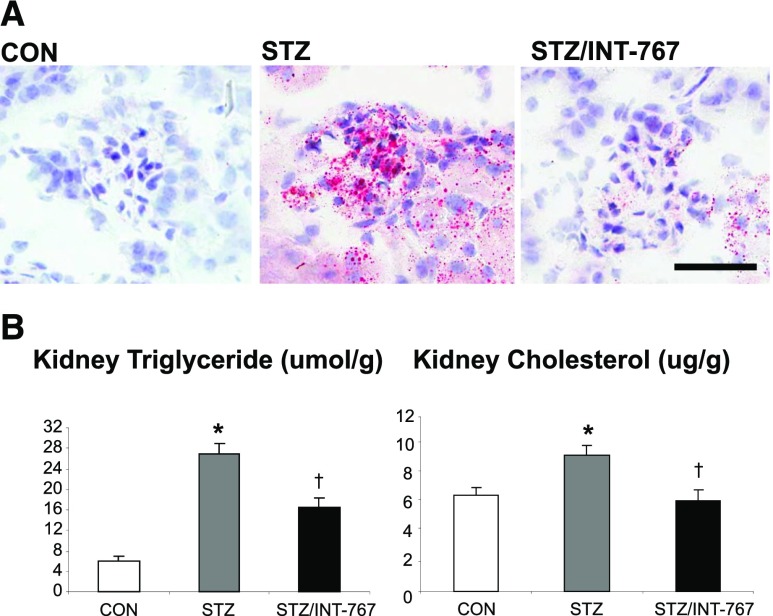
INT-767 treatment prevents renal lipid accumulation in diabetic DBA/2J mice. (A) Oil red O staining of kidney sections. (B) Kidney lipid content analysis indicating increased triglyceride and cholesterol accumulation in diabetic DBA/2J kidneys, which is prevented by INT-767 treatment. CON, nondiabetic DBA/2J; STZ, diabetic DBA/2J without treatment; STZ/INT-767, diabetic DBA/2J treated with INT-767. Scale bar, 50 μm. *P<0.05 versus CON (n=6 mice per group); P<0.05 versus STZ (n=6 mice per group).
Figure 5.
Figure 5.
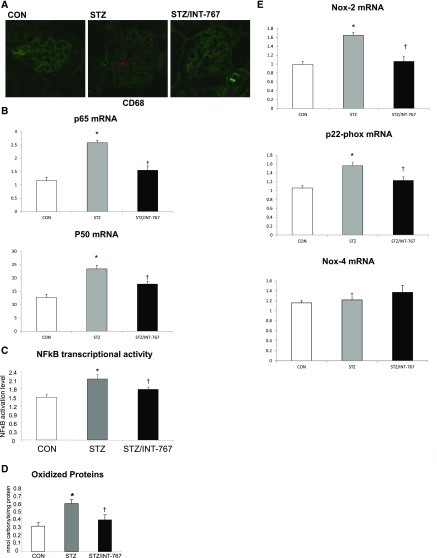
INT-767 treatment prevents the increase in renal inflammation and oxidative stress in diabetic DBA/2J mice. (A) Immunofluorescence staining of kidney sections for CD68 (red) and wheat germ agglutinin (staining whole nephron; green) indicates increased CD68 staining in the diabetic kidney, which is prevented by INT-767. (B) p65 and p50 mRNA abundance is increased in the diabetic kidney, which is prevented by INT-767. (C) Renal NF-κB transcriptional activation determined by DNA binding assay is increased in the diabetic kidney, which is prevented by INT-767. (D) Oxidative carbonylation of proteins in kidney homogenate as measured by ELISA is increased in the diabetic kidney, which is prevented by INT-767. (E) Nox-2 and p22-phox mRNA are increased in the diabetic kidney, which is prevented by INT-767. Nox-4 gene is not regulated. CON, nondiabetic DBA/2J. *P<0.05 versus CON (n=6 mice per group); P<0.05 versus STZ (n=6 mice per group).
Figure 6.
Figure 6.
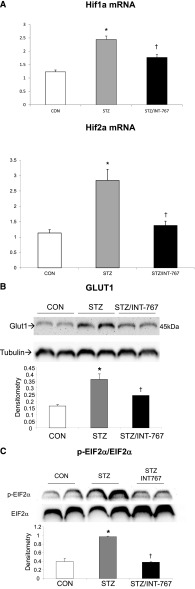
INT-767 treatment prevents the increase in renal HIF and Glut1 expression and ER stress in diabetic DBA/2J mice. (A) HIF-1α and HIF-2α mRNA expression is increased in the diabetic kidney, which is prevented by INT-767. (B) Glut1 protein is increased in the diabetic kidney, which is prevented by INT-767. (C) INT-767 treatment prevents the increase in renal ER stress in diabetic DBA/2J mice as determined by phospho–EIF-2α versus total EIF-2α protein abundance. CON, nondiabetic DBA/2J; STZ, diabetic DBA/2J without treatment; STZ/INT-767, diabetic DBA/2J treated with INT-767. *P<0.05 versus CON (n=6 mice per group); P<0.05 versus STZ (n=6 mice per group).
Figure 7.
Figure 7.
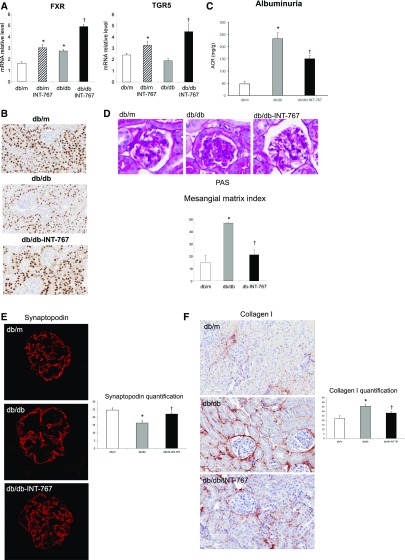
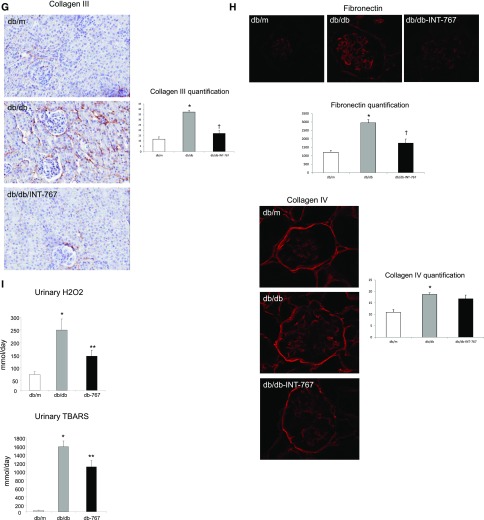
INT-767 treatment regulates nephropathy in db/db mice. INT-767 (A) increases FXR and TGR5 mRNA in db/m and db/db mice, (B) prevents the decrease in FXR protein expression in db/db mice as determined by immunohistochemistry, (C) prevents the increase in urinary albumin excretion in db/db mice, (D) prevents the increase in mesangial matrix as determined by periodic acid–Schiff (PAS) staining, (E) prevents the decrease in the podocyte marker synaptopodin expression as determined by immunofluorescence microscopy, (F and G) prevents increases in periglomerular and tubulointerstitial accumulation of (F) type 1 collagen and (G) type 3 collagen as determined by immunohistochemistry, (H) prevents the increase in glomerular accumulation of fibronectin as determined by immunofluorescence microscopy, and (I) prevents the increases in urinary H2O2 and urinary TBARS. ACR, albumin-to-creatinine ratio. *P<0.05 db/db versus db/m (n=6 mice per group); P<0.05 db/db + INT-767 versus db/db (n=6 mice per group).
Figure 7.
Figure 7.
INT-767 treatment regulates nephropathy in db/db mice. INT-767 (A) increases FXR and TGR5 mRNA in db/m and db/db mice, (B) prevents the decrease in FXR protein expression in db/db mice as determined by immunohistochemistry, (C) prevents the increase in urinary albumin excretion in db/db mice, (D) prevents the increase in mesangial matrix as determined by periodic acid–Schiff (PAS) staining, (E) prevents the decrease in the podocyte marker synaptopodin expression as determined by immunofluorescence microscopy, (F and G) prevents increases in periglomerular and tubulointerstitial accumulation of (F) type 1 collagen and (G) type 3 collagen as determined by immunohistochemistry, (H) prevents the increase in glomerular accumulation of fibronectin as determined by immunofluorescence microscopy, and (I) prevents the increases in urinary H2O2 and urinary TBARS. ACR, albumin-to-creatinine ratio. *P<0.05 db/db versus db/m (n=6 mice per group); P<0.05 db/db + INT-767 versus db/db (n=6 mice per group).
Figure 8.
Figure 8.
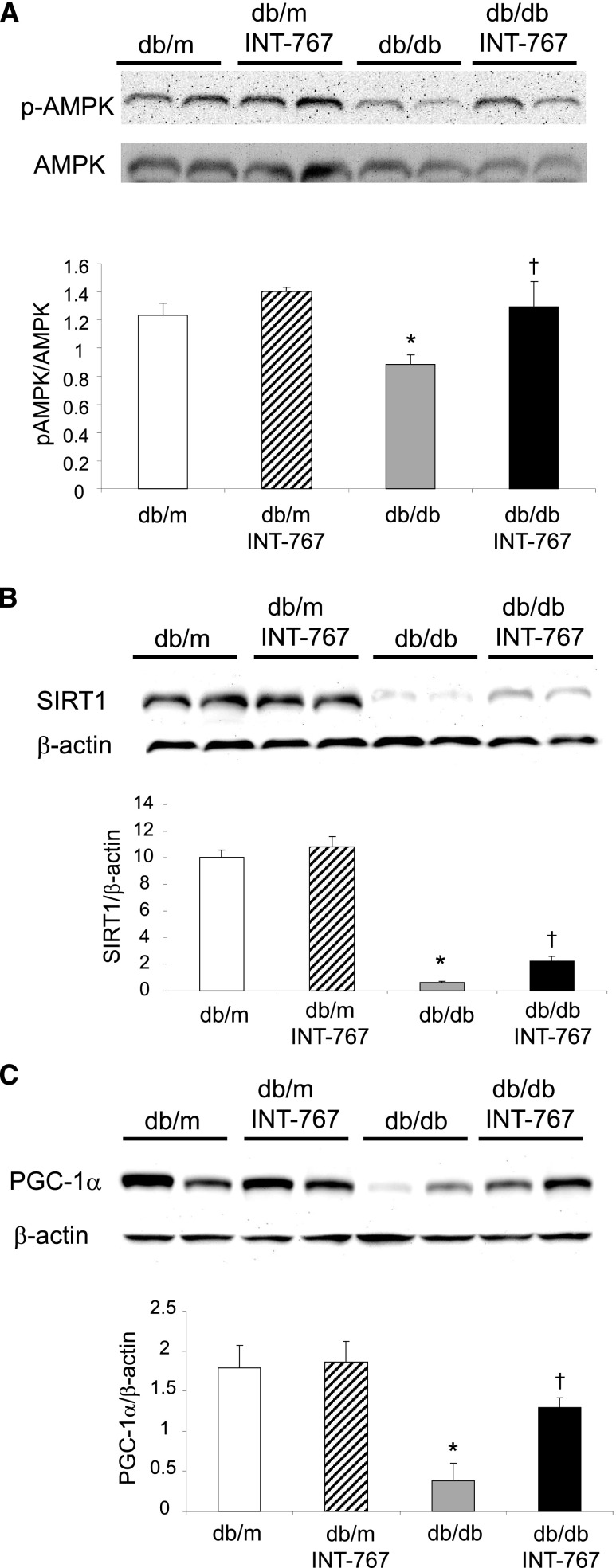
INT-767 treatment regulates renal mitochondrial biogenesis and metabolism pathways in db/db mice. INT-767 prevents (A) the decreased expression of phospho-AMPK versus total AMPK, (B) SIRT1, and (C) PGC-1α as determined by Western blotting. *P<0.05 db/db versus db/m (n=6 mice per group); P<0.05 db/db + INT-767 versus db/db (n=6 mice per group).
Figure 9.
Figure 9.
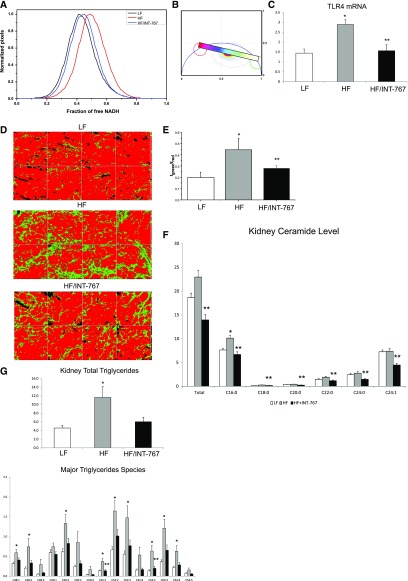
INT-767 treatment regulates mitochondrial function, inflammation, fibrosis, and lipid metabolism in high-fat diet–induced obesity mice. INT-767 (A and B) prevents the increase in free NADH in HF diet–fed mice as determined FLIM and the phasor plot, (C) prevents the increase in the proinflammatory TLR4 mRNA, (D and E) prevents the increase in fibrosis in HF diet–fed mice as determined by SHG and FLIM, (F) total and major ceramide species accumulation as determined by liquid chromatography-tandem mass spectrometry (LC-MS/MS), and (G) total triglycerides and major triglycerides species accumulation as determined by LC-MS/MS. LF, low fat; HF, high fat. *P<0.05 HF versus LF (n=6 mice per group); **P<0.05 HF + INT-767 compared to HF; P<0.05 HF + INT-767 versus LF (n=6 mice per group).
Figure 10.
Figure 10.
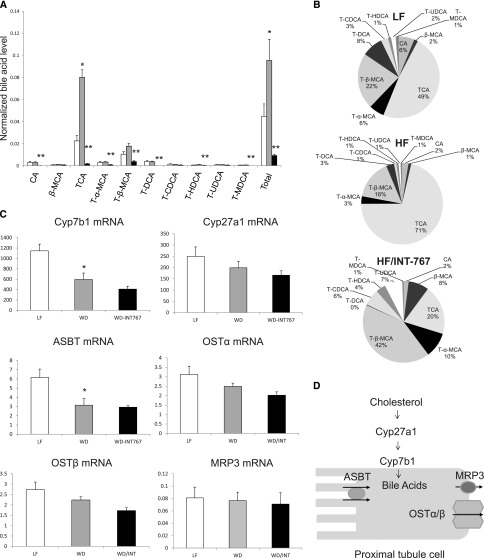
INT-767 treatment regulates kidney bile acid composition, bile acid synthesis, and bile acid transporters in high-fat diet–induced obesity mice. (A and B) In mice fed a high-fat diet, there was a significant increase in total bile acid levels. The increases in absolute and relative trichloroacetic acid (TCA) levels were most marked and significant. Treatment with INT-767 induced significant decreases in total bile acid levels and absolute and relative TCA, T-α-MCA, T-β-MCA, T-DCA, and T-HDCA levels. (C and D) High-fat diet induced decreases in Cyp7B1 mRNA, which mediates bile acid synthesis, and ASBT mRNA, which mediates bile acid transport from the urine. Treatment with INT-767 did not cause any significant changes in Cyp7B1 or ASBT mRNA or other bile acid synthesis and bile acid transporter genes. LF, low fat; HF= high fat. WD, Western diet. *P< 0.05 WD compared to LF, **P<0.05 WD/INT compared to WD.

References

    1. Thomas MC, Brownlee M, Susztak K, Sharma K, Jandeleit-Dahm KA, Zoungas S, Rossing P, Groop PH, Cooper ME: Diabetic kidney disease. Nat Rev Dis Primers 1: 15018, 2015 - PMC - PubMed
    1. Reidy K, Kang HM, Hostetter T, Susztak K: Molecular mechanisms of diabetic kidney disease. J Clin Invest 124: 2333–2340, 2014 - PMC - PubMed
    1. Breyer MD, Coffman TM, Flessner MF, Fried LF, Harris RC, Ketchum CJ, Kretzler M, Nelson RG, Sedor JR, Susztak K; Kidney Research National Dialogue (KRND) : Diabetic nephropathy: A national dialogue. Clin J Am Soc Nephrol 8: 1603–1605, 2013 - PMC - PubMed
    1. Boyle JP, Thompson TJ, Gregg EW, Barker LE, Williamson DF: Projection of the year 2050 burden of diabetes in the US adult population: Dynamic modeling of incidence, mortality, and prediabetes prevalence. Popul Health Metr 8: 29, 2010 - PMC - PubMed
    1. Gregg EW, Li Y, Wang J, Burrows NR, Ali MK, Rolka D, Williams DE, Geiss L: Changes in diabetes-related complications in the United States, 1990-2010. N Engl J Med 370: 1514–1523, 2014 - PubMed

Publication types

MeSH terms