


Inflammatory and Anti-Inflammatory Equilibrium, Proliferative and Antiproliferative Balance: The Role of Cytokines in Multiple Myeloma
- PMID: 29089667
- PMCID: PMC5635476
- DOI: 10.1155/2017/1852517
Inflammatory and Anti-Inflammatory Equilibrium, Proliferative and Antiproliferative Balance: The Role of Cytokines in Multiple Myeloma
Abstract
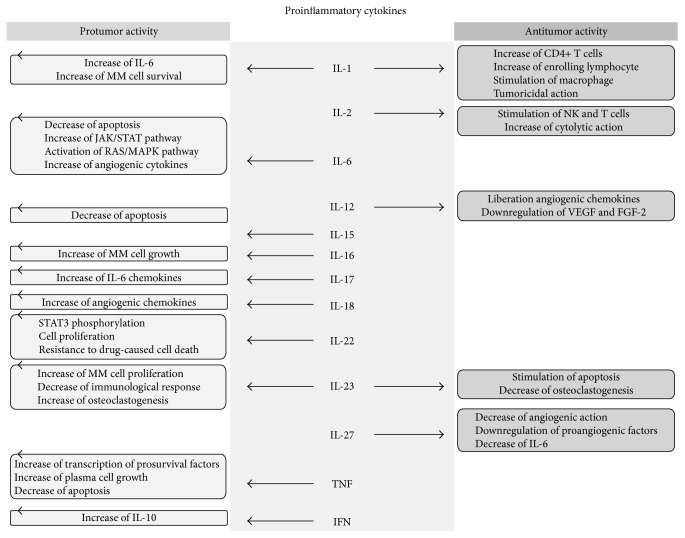
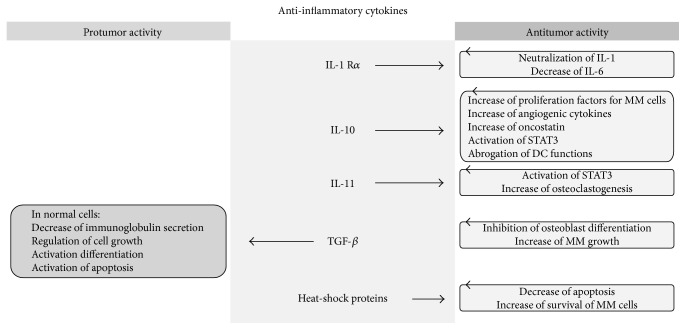
Multiple myeloma (MM) is typically exemplified by a desynchronized cytokine system with increased levels of inflammatory cytokines. We focused on the contrast between inflammatory and anti-inflammatory systems by assessing the role of cytokines and their influence on MM. The aim of this review is to summarize the available information to date concerning this equilibrium to provide an overview of the research exploring the roles of serum cytokines in MM. However, the association between MM and inflammatory cytokines appears to be inadequate, and other functions, such as pro-proliferative or antiproliferative effects, can assume the role of cytokines in the genesis and progression of MM. It is possible that inflammation, when guided by cancer-specific Th1 cells, may inhibit tumour onset and progression. In a Th1 microenvironment, proinflammatory cytokines (e.g., IL-6 and IL-1) may contribute to tumour eradication by attracting leucocytes from the circulation and by increasing CD4 + T cell activity. Hence, caution should be used when considering therapies that target factors with pro- or anti-inflammatory activity. Drugs that may reduce the tumour-suppressive Th1-driven inflammatory immune response should be avoided. A better understanding of the relationship between inflammation and myeloma will ensure more effective therapeutic interventions.
Figures
References
-
- Van Riet I. Homing mechanisms of myeloma cells. Pathologie-biologie. 1999;47:98–108. - PubMed
Publication types
MeSH terms
Substances
LinkOut - more resources
Full Text Sources
Other Literature Sources
Medical
Research Materials
