Outcomes of comprehensive fixed appliance orthodontic treatment: A systematic review with meta-analysis and methodological overview
- PMID: 29090128
- PMCID: PMC5653689
- DOI: 10.4041/kjod.2017.47.6.401
Outcomes of comprehensive fixed appliance orthodontic treatment: A systematic review with meta-analysis and methodological overview
Abstract
Objective: The aim of this systematic review was to assess the occlusal outcome and duration of fixed orthodontic therapy from clinical trials in humans with the Objective Grading System (OGS) proposed by the American Board of Orthodontics.
Methods: Nine databases were searched up to October 2016 for prospective/retrospective clinical trials assessing the outcomes of orthodontic therapy with fixed appliances. After duplicate study selection, data extraction, and risk of bias assessment according to the Cochrane guidelines, random-effects meta-analyses of the mean OGS score and treatment duration were performed and 95% confidence intervals (CIs) were calculated.
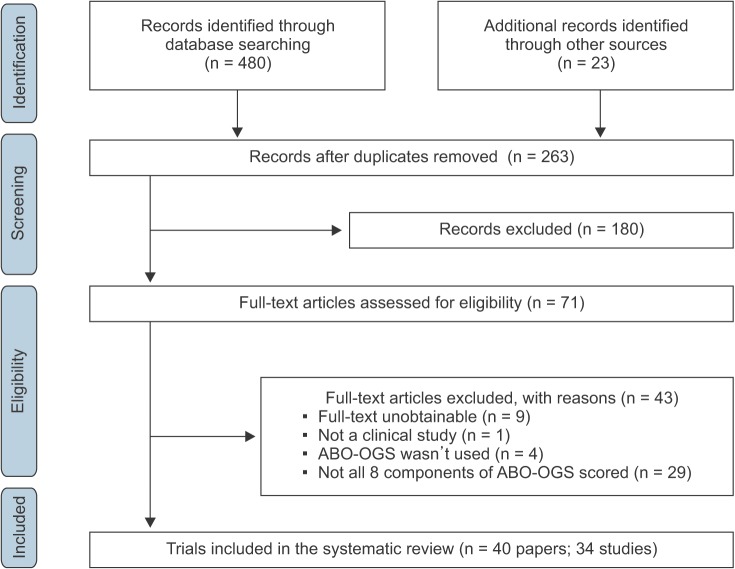
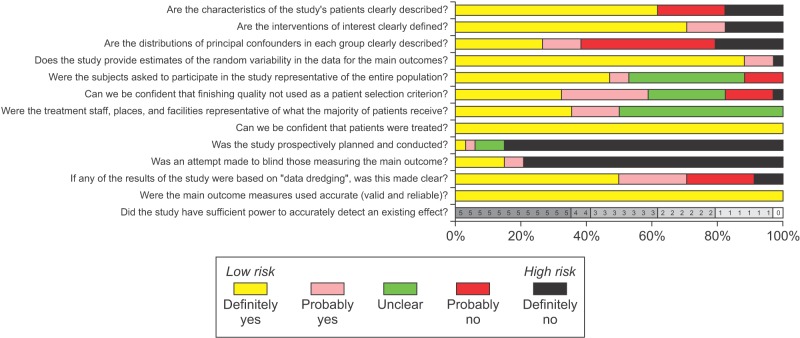
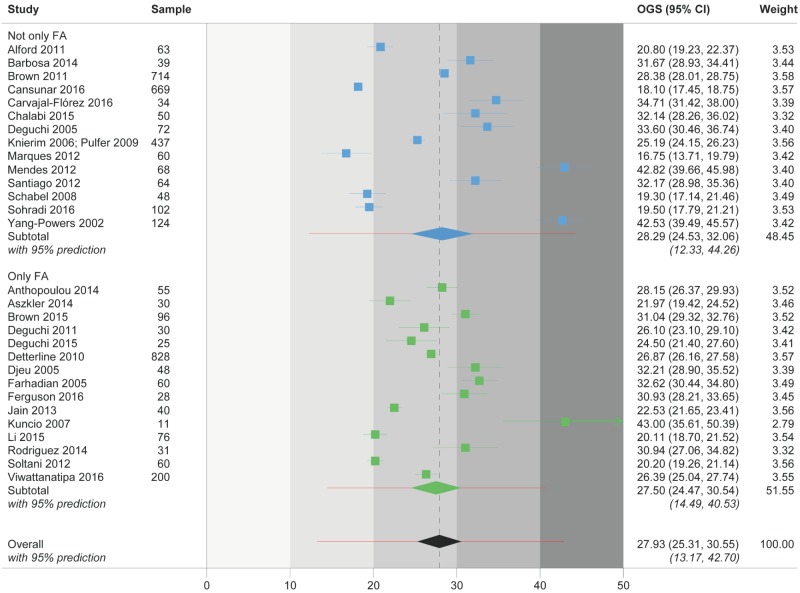
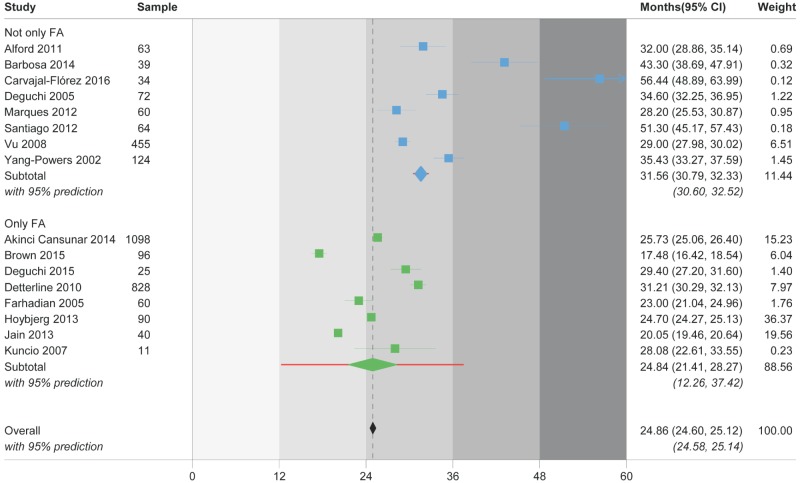
Results: A total of 34 relevant clinical trials including 6,207 patients (40% male, 60% female; average age, 18.4 years) were identified. The average OGS score after treatment was 27.9 points (95% CI, 25.3-30.6 points), while the average treatment duration was 24.9 months (95% CI, 24.6-25.1 months). There was no significant association between occlusal outcome and treatment duration, while considerable heterogeneity was identified. In addition, orthodontic treatment involving extraction of four premolars appeared to have an important effect on both outcomes and duration of treatment. Finally, only 10 (39%) of the identified studies matched compared groups by initial malocclusion severity, although meta-epidemiological evidence suggested that matching may have significantly influenced their results.
Conclusions: The findings from this systematic review suggest that the occlusal outcomes of fixed appliance treatment vary considerably, with no significant association between treatment outcomes and duration. Prospective matched clinical studies that use the OGS tool are needed to compare the effectiveness of orthodontic appliances.
Keywords: Meta-analysis; Orthodontics; Treatment duration; Treatment outcome.
Conflict of interest statement
The authors report no commercial, proprietary, or financial interest in the products or companies described in this article.
Figures
References
-
- Pandis N, Polychronopoulou A, Eliades T. Active or passive self-ligating brackets? A randomized controlled trial of comparative efficiency in resolving maxillary anterior crowding in adolescents. Am J Orthod Dentofacial Orthop. 2010;137:12.e1–12.e6. discussion 12-3. - PubMed
-
- Pandis N, Polychronopoulou A, Katsaros C, Eliades T. Comparative assessment of conventional and self-ligating appliances on the effect of mandibular intermolar distance in adolescent nonextraction patients: a single-center randomized controlled trial. Am J Orthod Dentofacial Orthop. 2011;140:e99–e105. - PubMed
-
- Papageorgiou SN, Konstantinidis I, Papadopoulou K, Jäger A, Bourauel C. A systematic review and metaanalysis of experimental clinical evidence on initial aligning archwires and archwire sequences. Orthod Craniofac Res. 2014;17:197–215. - PubMed
-
- Papageorgiou SN, Konstantinidis I, Papadopoulou K, Jäger A, Bourauel C. Clinical effects of pre-adjusted edgewise orthodontic brackets: a systematic review and meta-analysis. Eur J Orthod. 2014;36:350–363. - PubMed
-
- Papageorgiou SN, Gölz L, Jäger A, Eliades T, Bourauel C. Lingual vs. labial fixed orthodontic appliances: systematic review and meta-analysis of treatment effects. Eur J Oral Sci. 2016;124:105–118. - PubMed
Publication types
LinkOut - more resources
Full Text Sources
Other Literature Sources