Intrinsically disordered linkers determine the interplay between phase separation and gelation in multivalent proteins
- PMID: 29091028
- PMCID: PMC5703641
- DOI: 10.7554/eLife.30294
Intrinsically disordered linkers determine the interplay between phase separation and gelation in multivalent proteins
Abstract
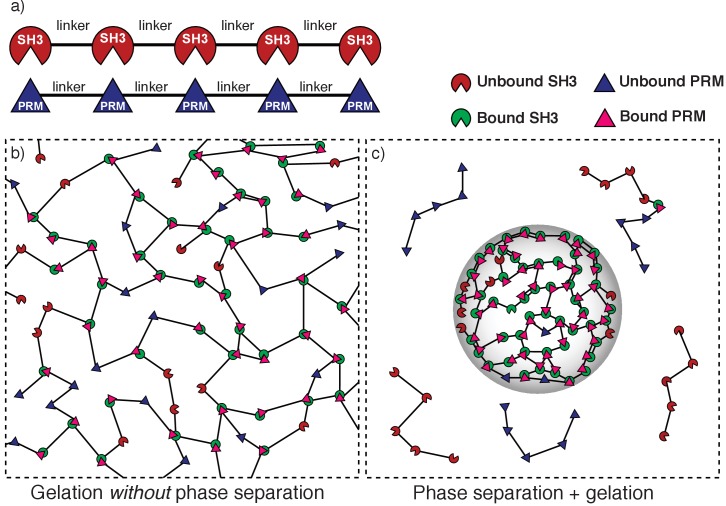
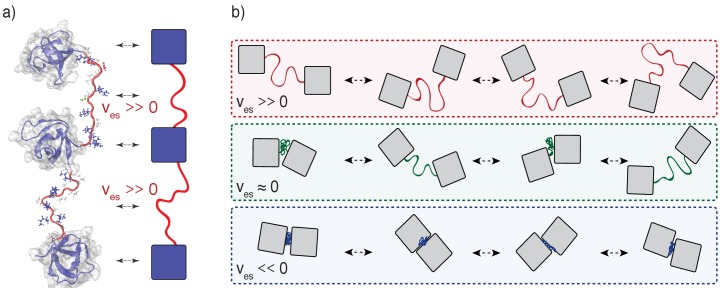
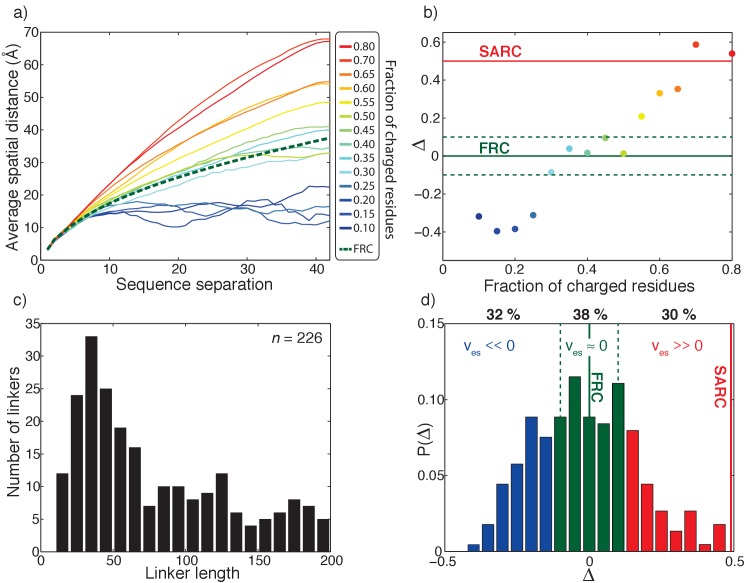
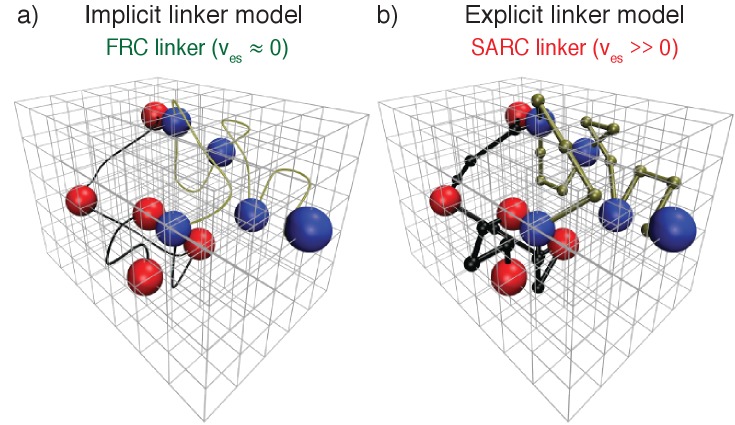
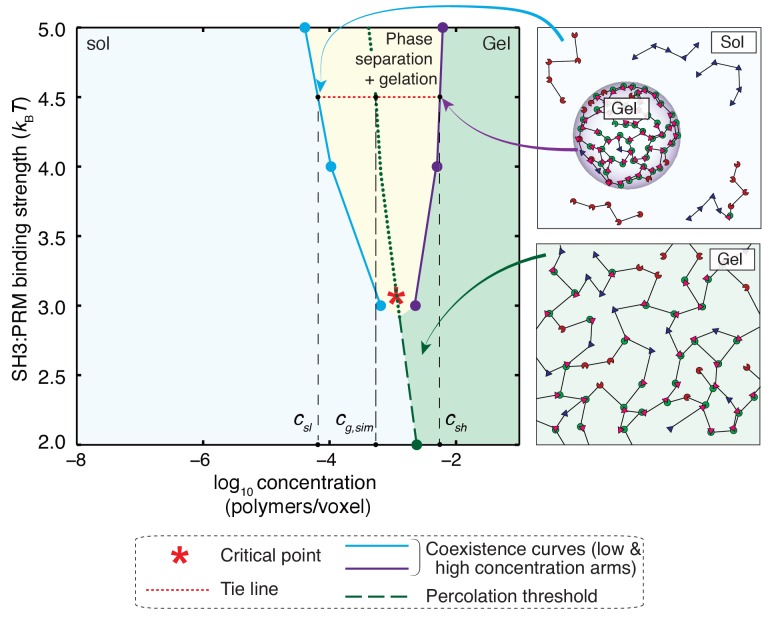
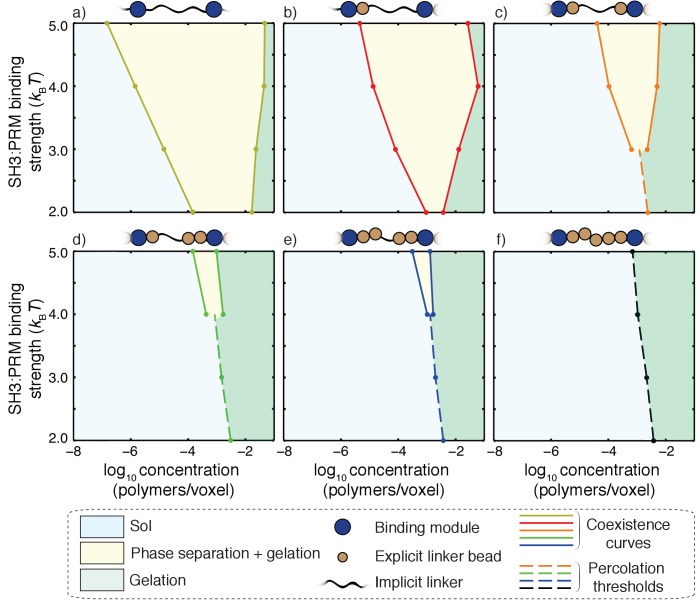
Phase transitions of linear multivalent proteins control the reversible formation of many intracellular membraneless bodies. Specific non-covalent crosslinks involving domains/motifs lead to system-spanning networks referred to as gels. Gelation transitions can occur with or without phase separation. In gelation driven by phase separation multivalent proteins and their ligands condense into dense droplets, and gels form within droplets. System spanning networks can also form without a condensation or demixing of proteins into droplets. Gelation driven by phase separation requires lower protein concentrations, and seems to be the biologically preferred mechanism for forming membraneless bodies. Here, we use coarse-grained computer simulations and the theory of associative polymers to uncover the physical properties of intrinsically disordered linkers that determine the extent to which gelation of linear multivalent proteins is driven by phase separation. Our findings are relevant for understanding how sequence-encoded information in disordered linkers influences phase transitions of multivalent proteins.
Keywords: cell biology; computation; computational biology; gelation; intrinsically disordered proteins; multivalent proteins; none; phase separation; phase transitions; systems biology.
Conflict of interest statement
No competing interests declared.
Figures
References
-
- Almdal K, Dyre J, Hvidt S, Kramer O. Towards a phenomenological definition of the term ‘gel’. Polymer Gels and Networks. 1993;1:5–17. doi: 10.1016/0966-7822(93)90020-I. - DOI
Publication types
MeSH terms
Substances
Grants and funding
LinkOut - more resources
Full Text Sources
Other Literature Sources